This is the first of four posts about a selection of woven linens in the collection of the Victoria & Albert Museum.
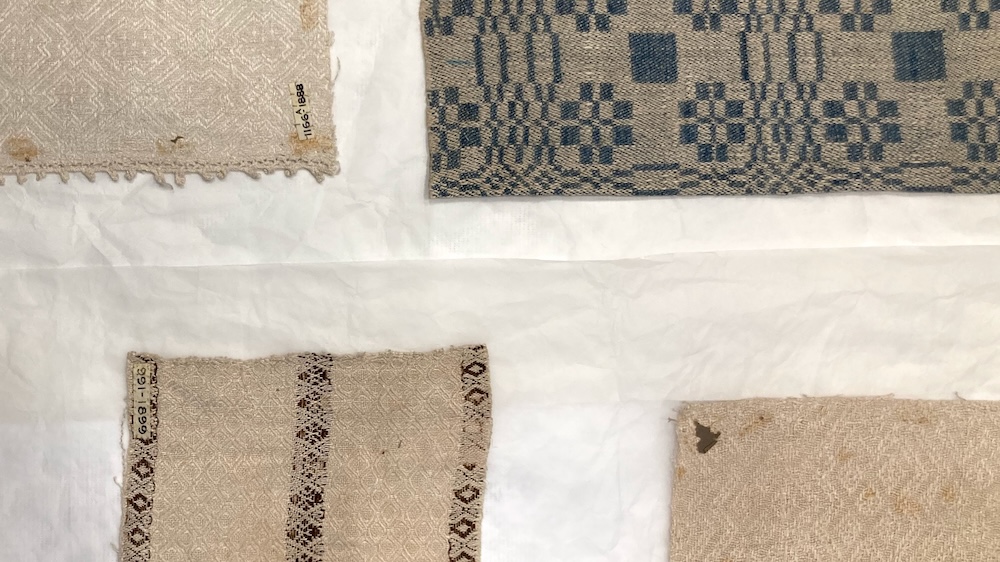
The V & A’s textile collection has been phyically inaccessible to researchers for the last few years whilst preparations were made for a move from South Kensington to the new V & A East Storehouse in Hackney Wick. During that time I scoured the online collection in search of woven linen, and in June 2026 I made a long awaited appointment to examine a selection of these in the new Study Centre. Many thanks to V & A staff for assistance.
In these posts I present my analysis of the linens from a weaver’s perspective.
.
Barley Corn
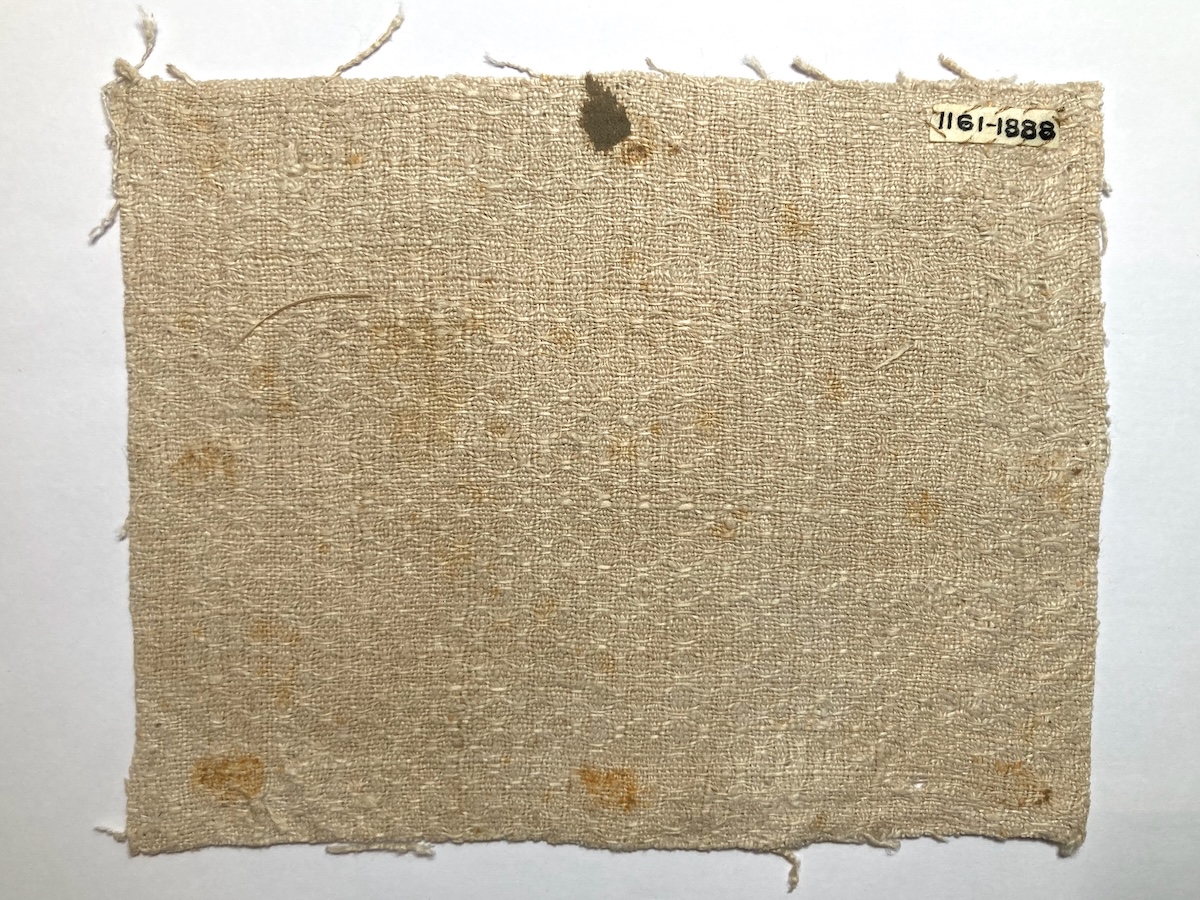
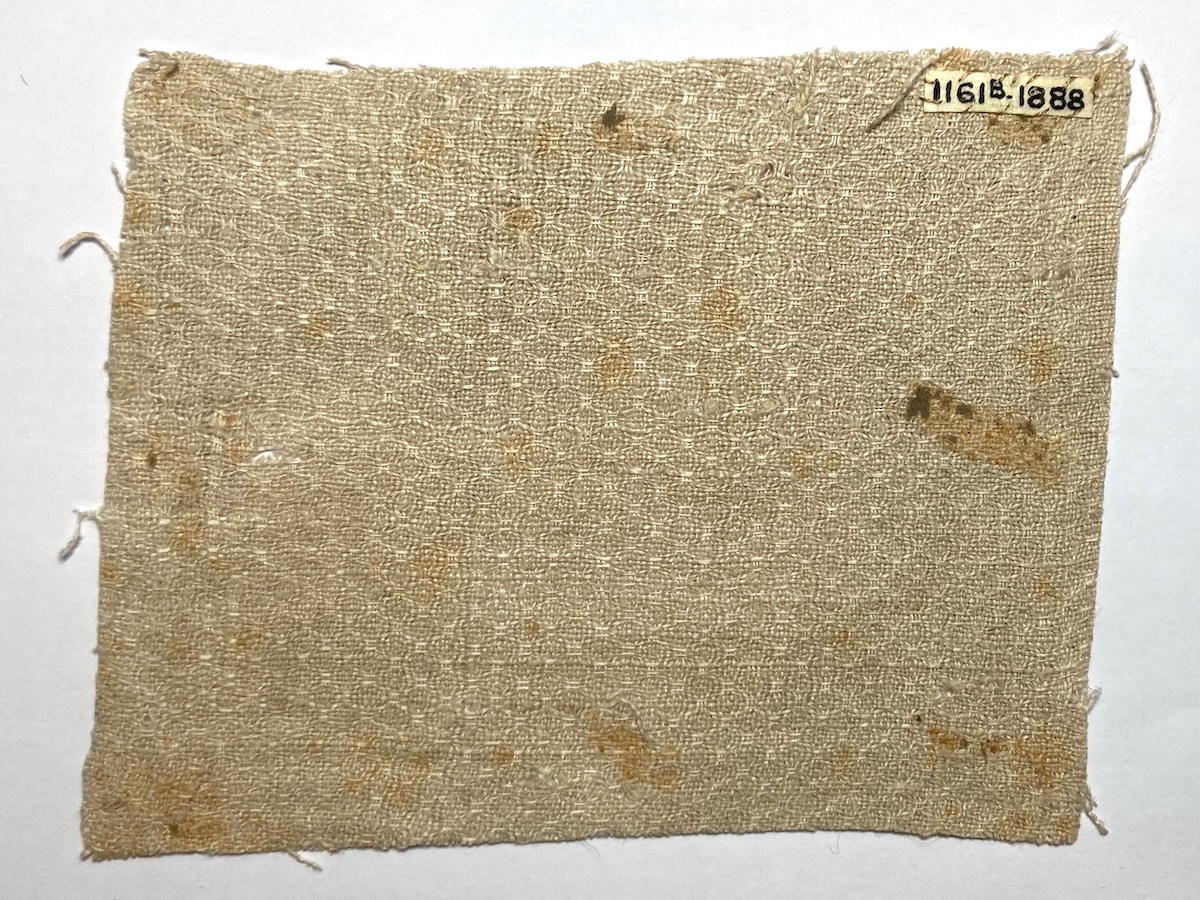
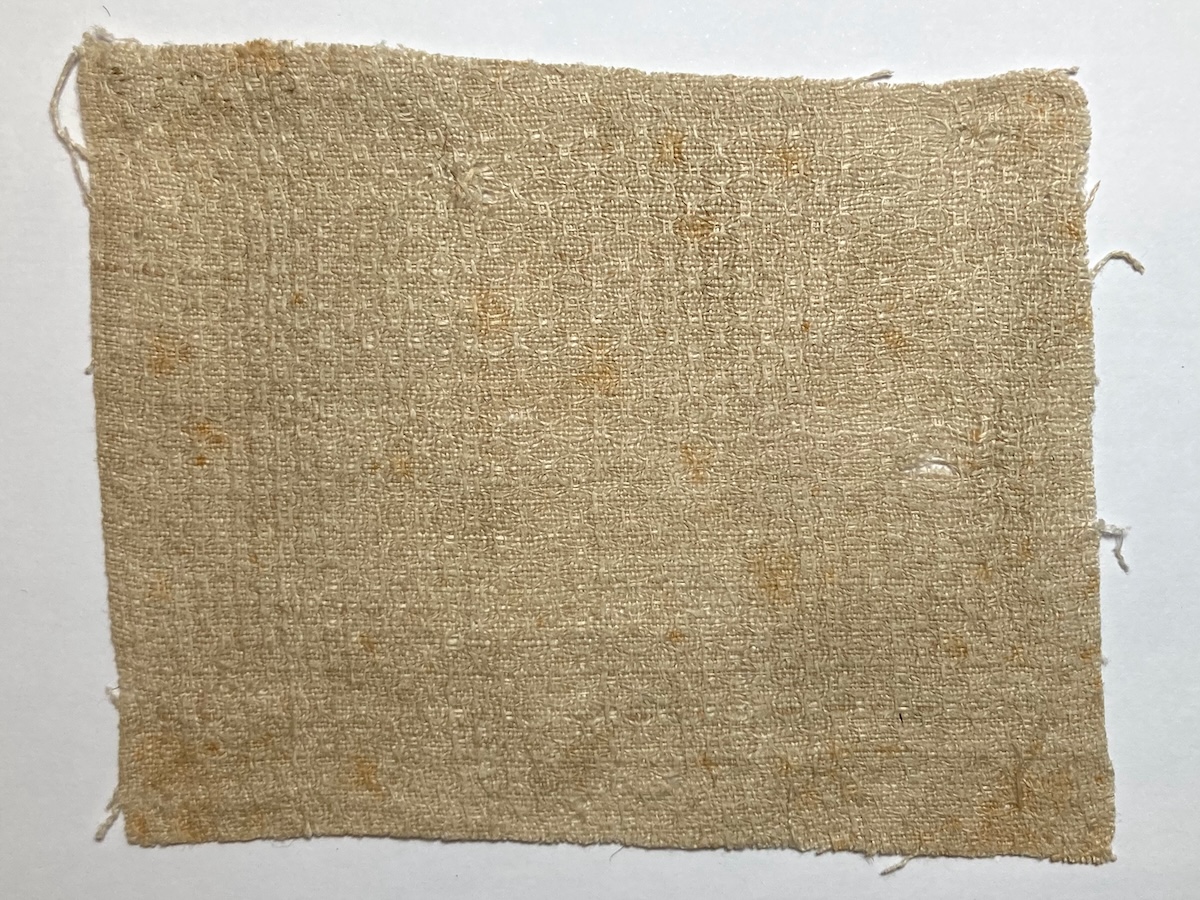
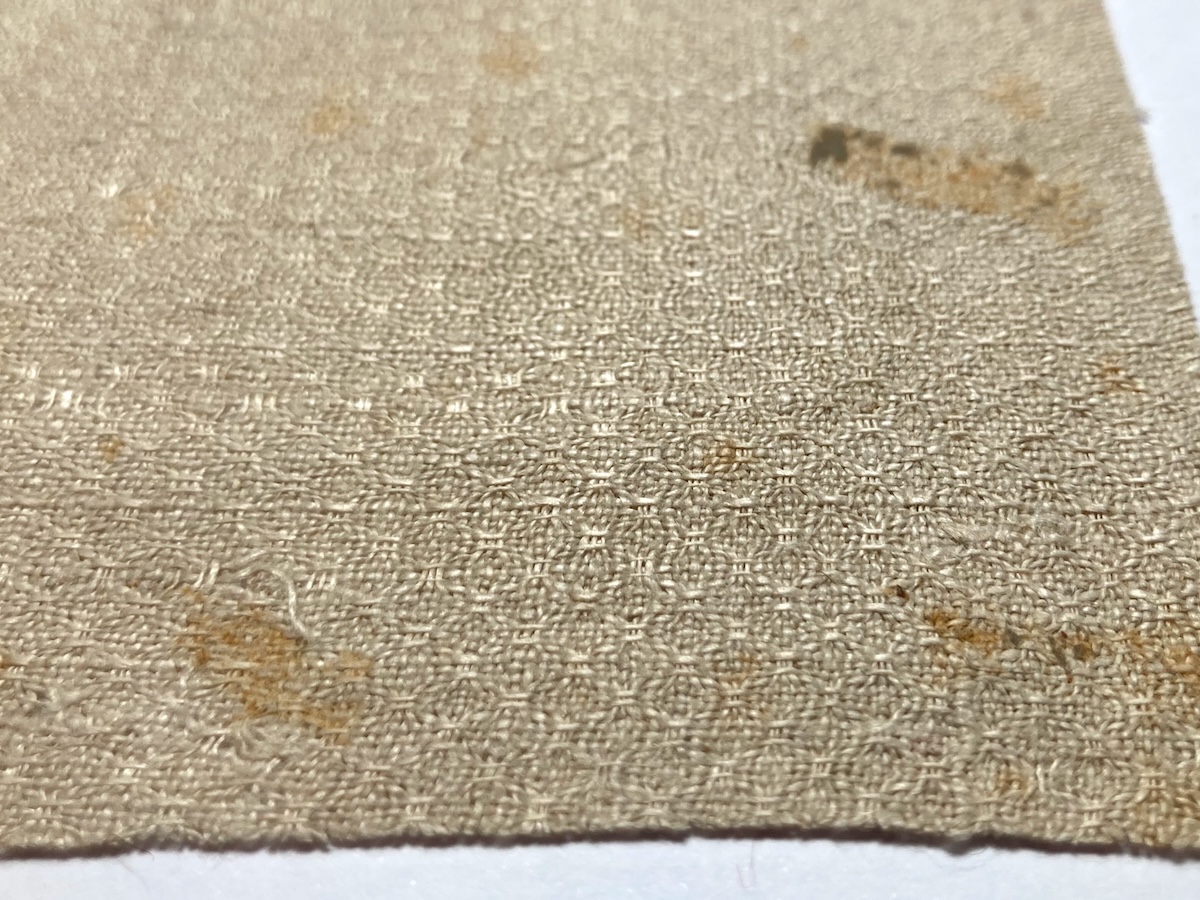
This post is about three pieces of linen woven with a Barley Corn structure, 1 with acquisition numbers 1161-1888, 1161A-1888 and 1161B-1888. I believe 1888 refers to the date of acquisition, suggesting they were acquired together from the same source. All are described as German and dated 1200s – 1300s. The museum apparently holds no further information. All three have the grey-brown colour of undyed, unbleached flax or hemp, with some damage and staining.
A description and diagram of the Barley Corn weave structure is included at the bottom of this post.
.
1161-1888




.
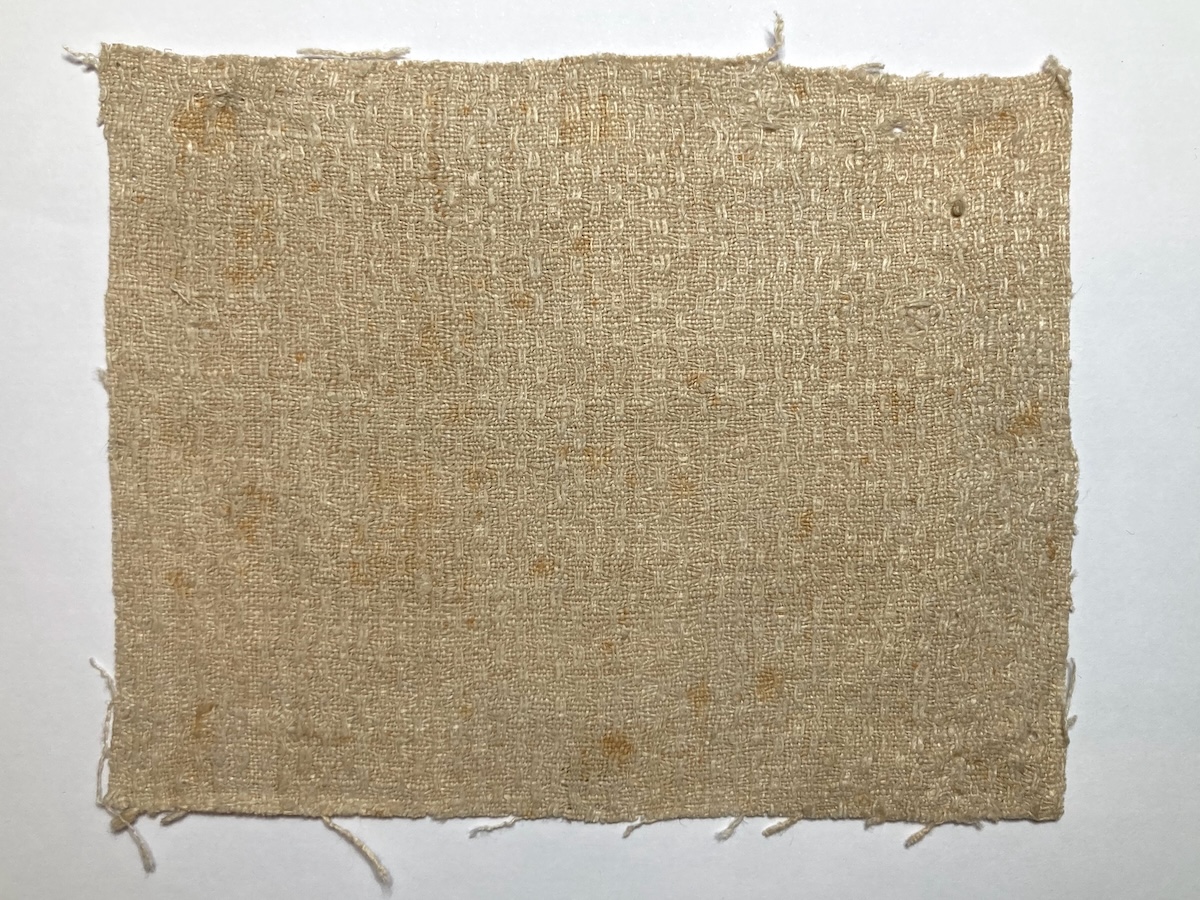
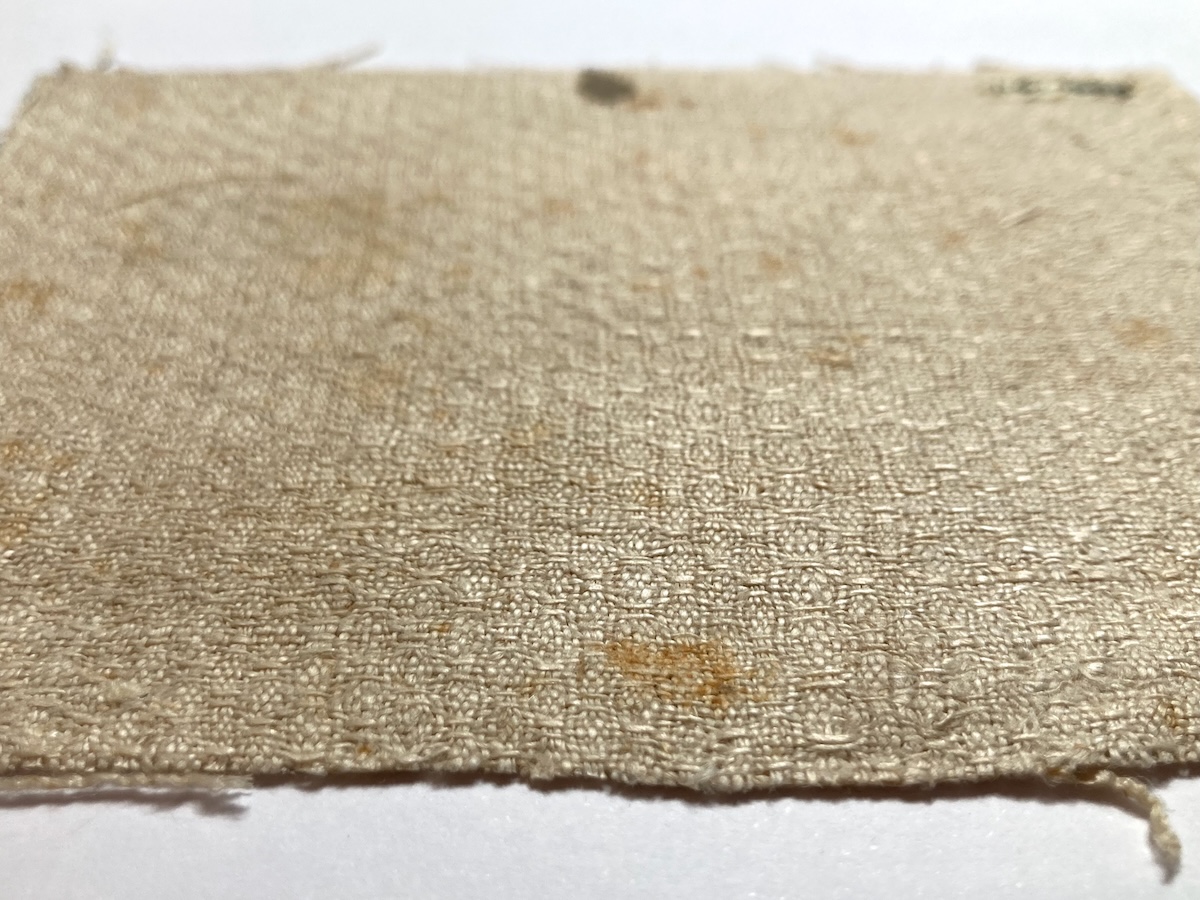
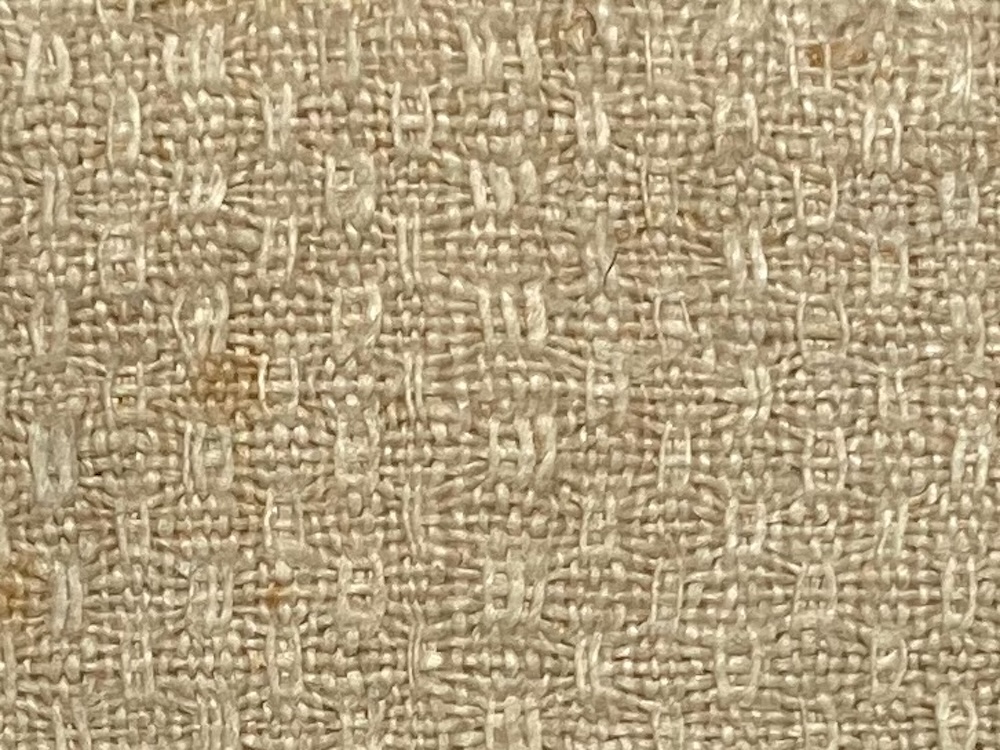
1161-1888 measures approximately 115 x 145mm.
There is some irregularity in the weaving which is clearly shown in the fourth photograph above, with float threads occasionally occurring in groups of three rather than in pairs as expected. Such additional threads are more likely to occur in the weft, suggesting that the warp runs along the length of the piece, i.e. left to right in the photographs above. The sett is about 48 ends per inch with about 32 picks per inch.
V & A catalogue record URL: https://collections.vam.ac.uk/item/O259585/woven-linen/
.
.
1161A-1888
.
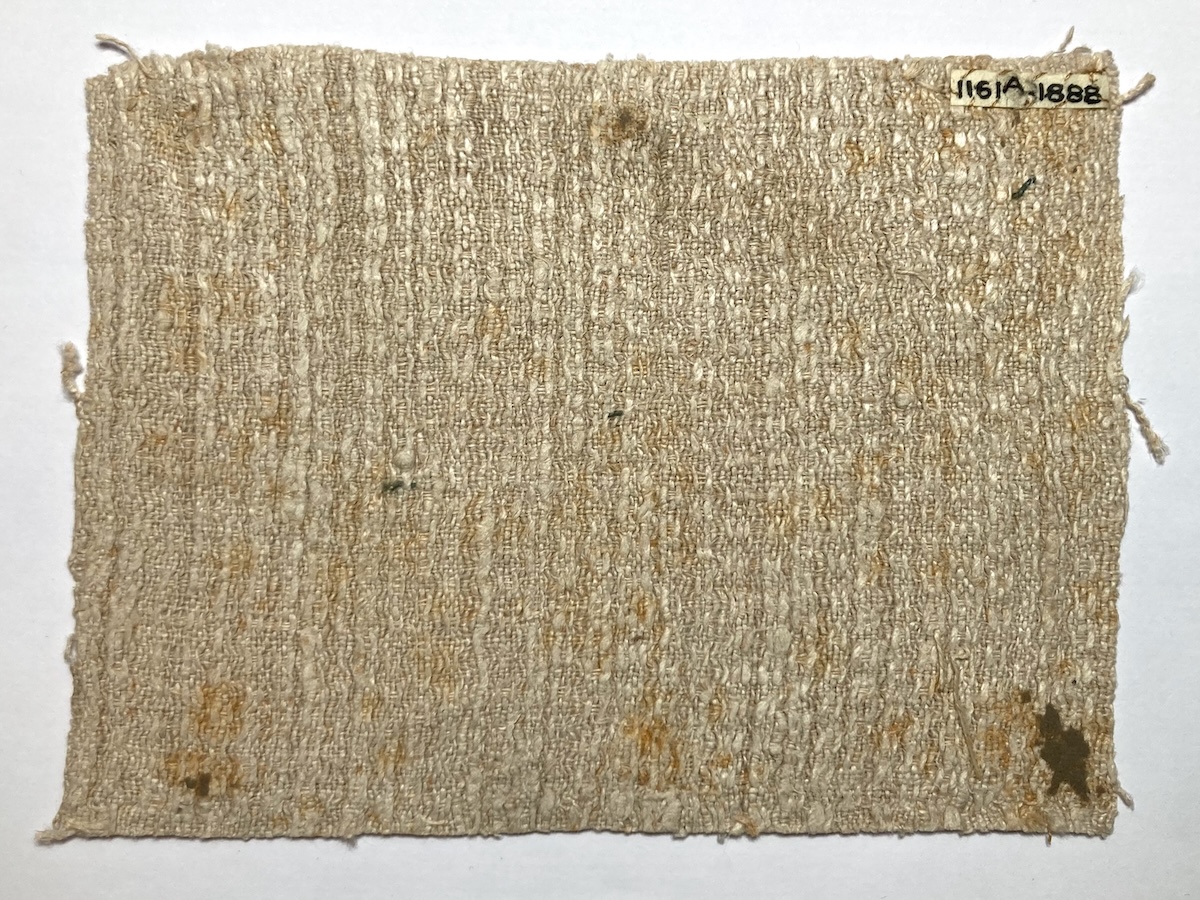
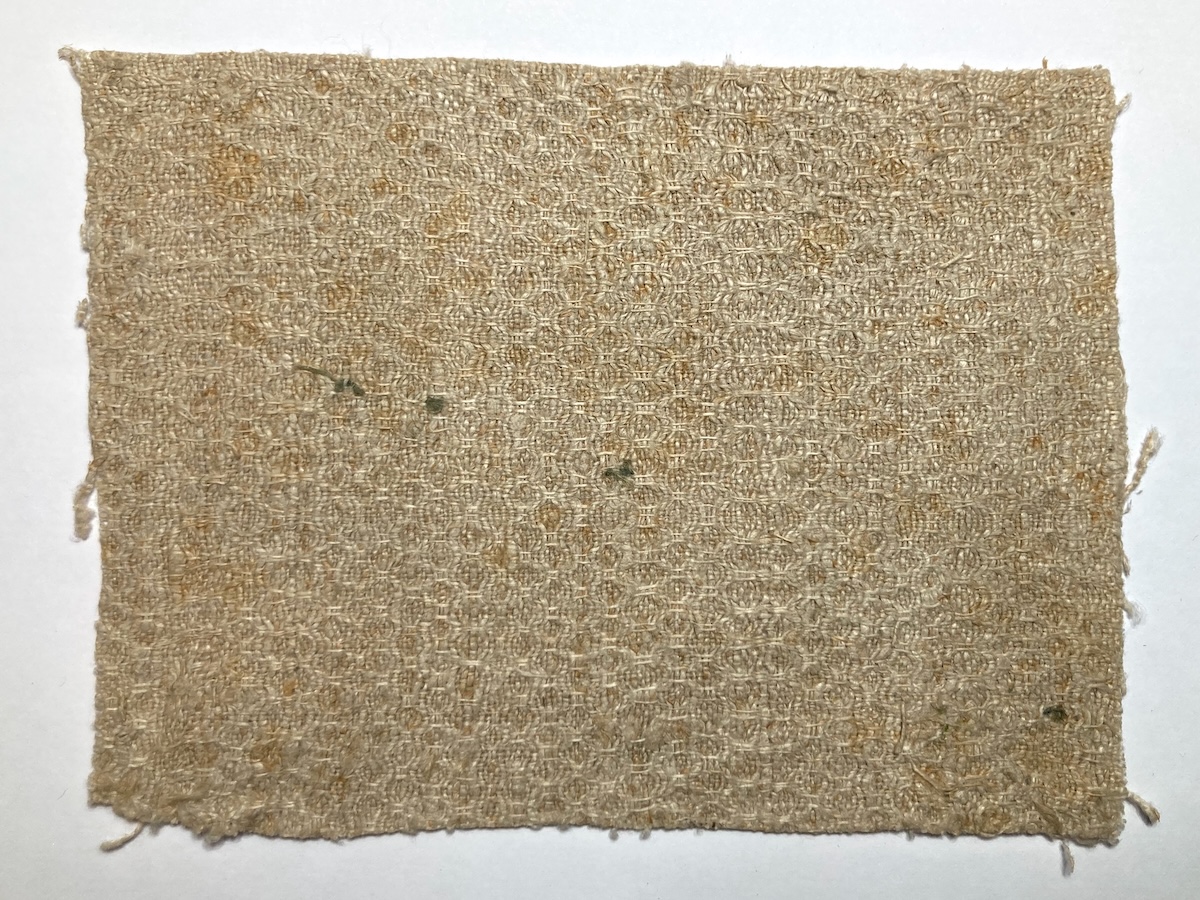
1161A-1888 measures approximately 110 x 140mm.
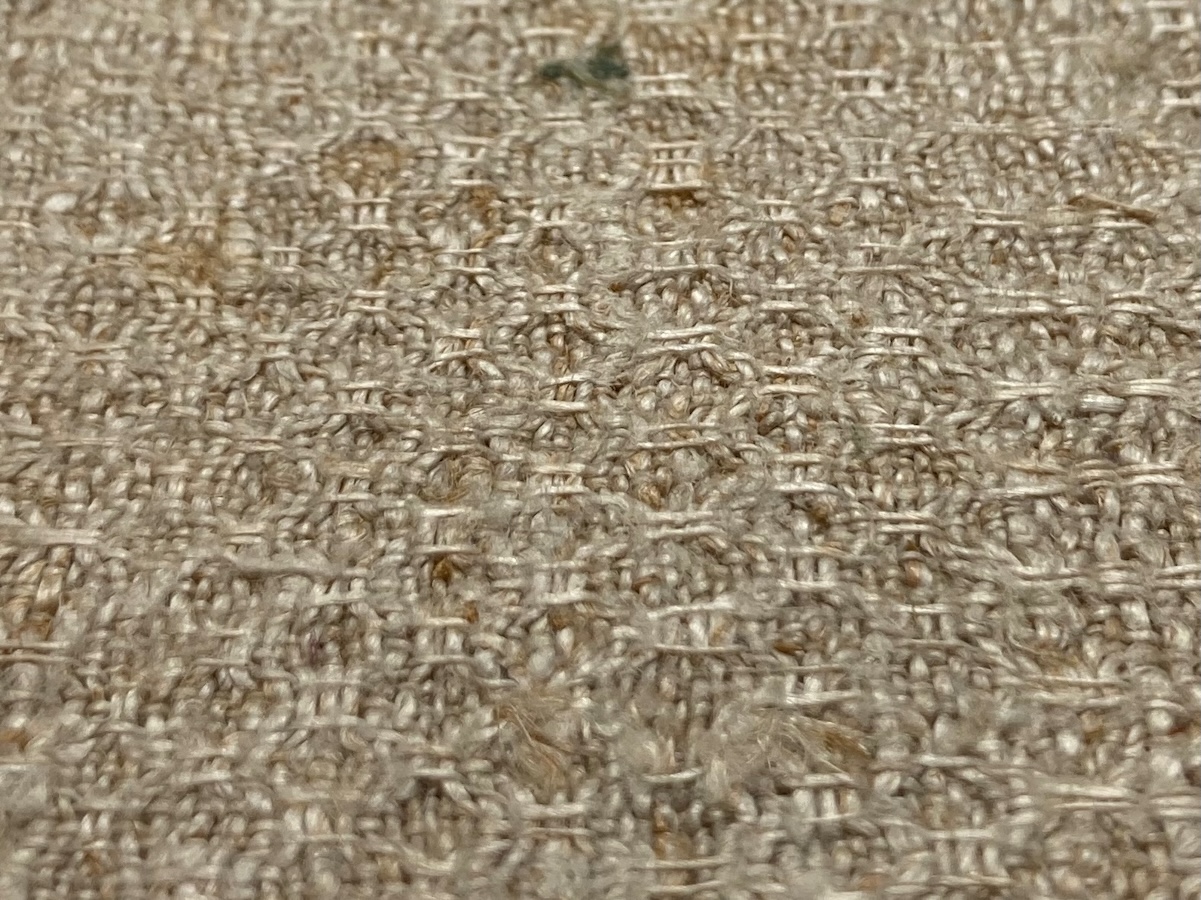
It is the most rustic of the three pieces, with large variations in yarn thickness, the weft rather heavier than the warp. It contains similar irregularities in weaving, and I assume the warp runs along the length of the piece, for the same reasons as above. About 42 ends per inch / 32 picks per inch.
It is described on the V & A Collections online as “diaper pattern”. (The term ‘diaper’ is often used by historians to designate textiles with any diagonally repeating pattern. In my view this lacks specificity with regard to structure. The term diaper (or damask diaper) was used in the 18th and 19th centuries in reference to linen textiles with blocks of alternating warp-faced and weft faced twill- or satin-weave.)
V & A catalogue record URL: https://collections.vam.ac.uk/item/O259584/woven-linen/
.
.
1161B-1888
.
1161B-1888 measures approximately 100 x 125mm. The weaving is more regular than the other pieces. Threads running along the length (left to right in the photographs) are more densely packed, leading me to assume warp runs lengthwise, as in the other two pieces, in which case sett is about 46 ends per inch / 33 picks per inch.
V & A catalogue record URL: https://collections.vam.ac.uk/item/O259583/woven-linen/
.
The Barley Corn weave structure
All three pieces have a weave structure known as Barley Corn (or sometimes Bronson weave in the USA). I am told that its name in German is Gerstenkorn and that it was also woven in Galicia where its Spanish name is Ollo de Servilleta.
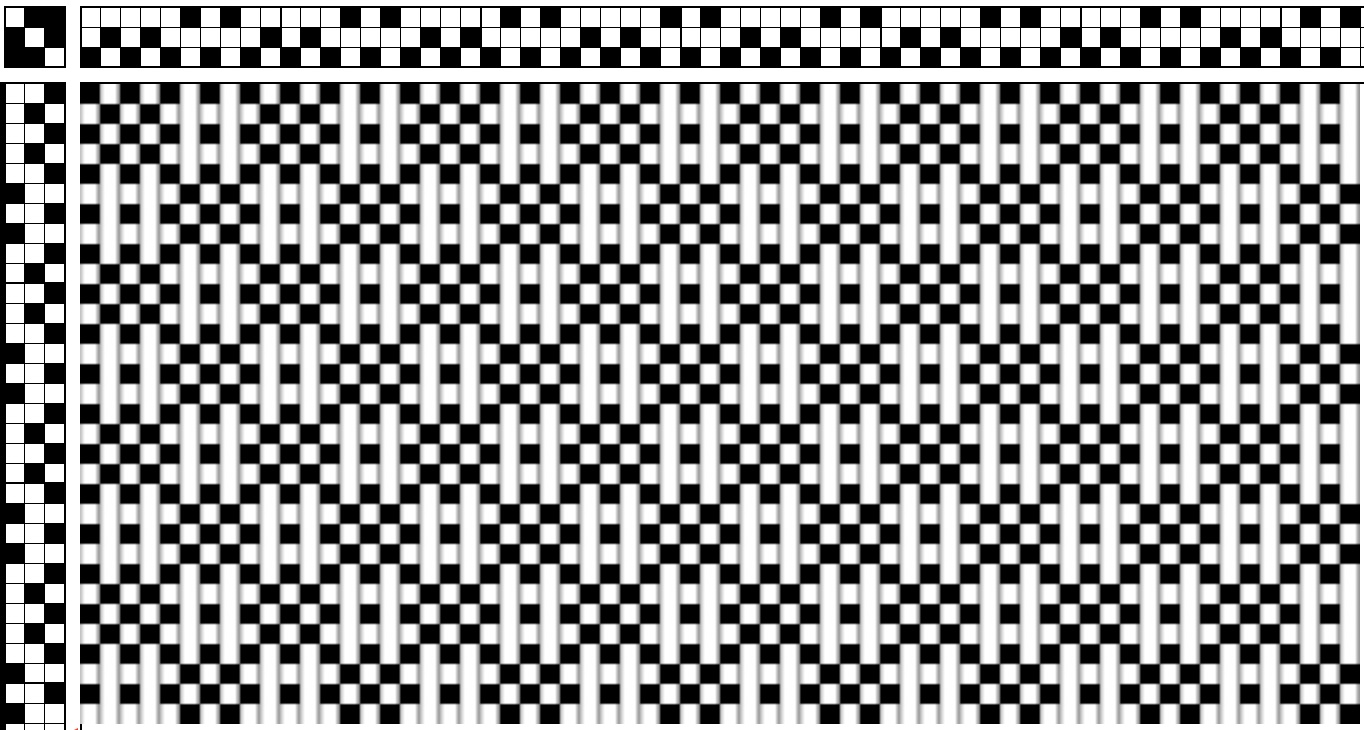
The structure has 8 ends and picks in one repeat and consists of units of 4 ends and picks, alternating between a plain weave unit and a unit with two floats running warp-ways on one side and weft-ways on the other. It is very similar to a common huckaback weave which has five ends and picks in each unit. The advantage of the Barley Corn structure is that it can be used to create a variety of patterns if four or more leaves of heddles are used. In its simplest form, as here, it can be woven on three leaves, although in my opinion common huckaback, requiring four leaves, makes a more attractive cloth.
I show a draft of the Barley Corn weave structure below.
.
.
Notes
- The ‘Barley Corn’ weave structure is described in Baines, Patricia (1989) Linen: Hand Spinning and Weaving; and in Davison, Marguerite (1944) A Handweaver’s Pattern Book. In the late 1800’s the weavers in Lopham, Norfolk, used the name “Queen’s Huck” to refer to a patterned Barley Corn, and I can see a strong argument for considering this weave as a variant of huckaback. ↩︎