This is the third of four posts about a selection of woven linens in the collection of the Victoria & Albert Museum, from my study visits to the V&A East Storehouse in 2026.
.
.
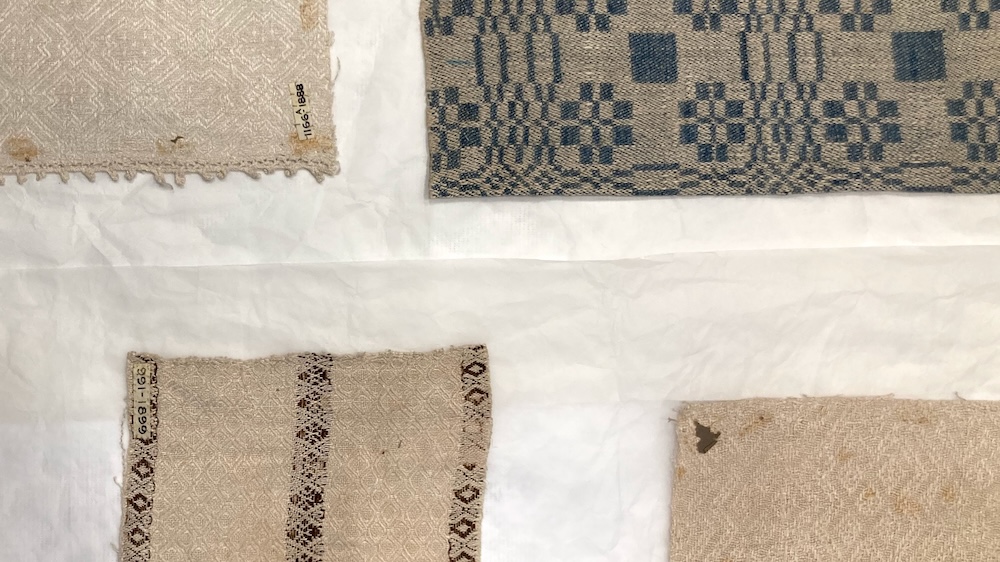
This post is about a two pieces of woven linen which I include together because they do not belong with the weave categories discussed in the other posts. The first is a piece of damask diaper, the second is a simple striped tabby weave. Both have some dyed yarn in the weft.
Damask Diaper (989-1899)
.




.
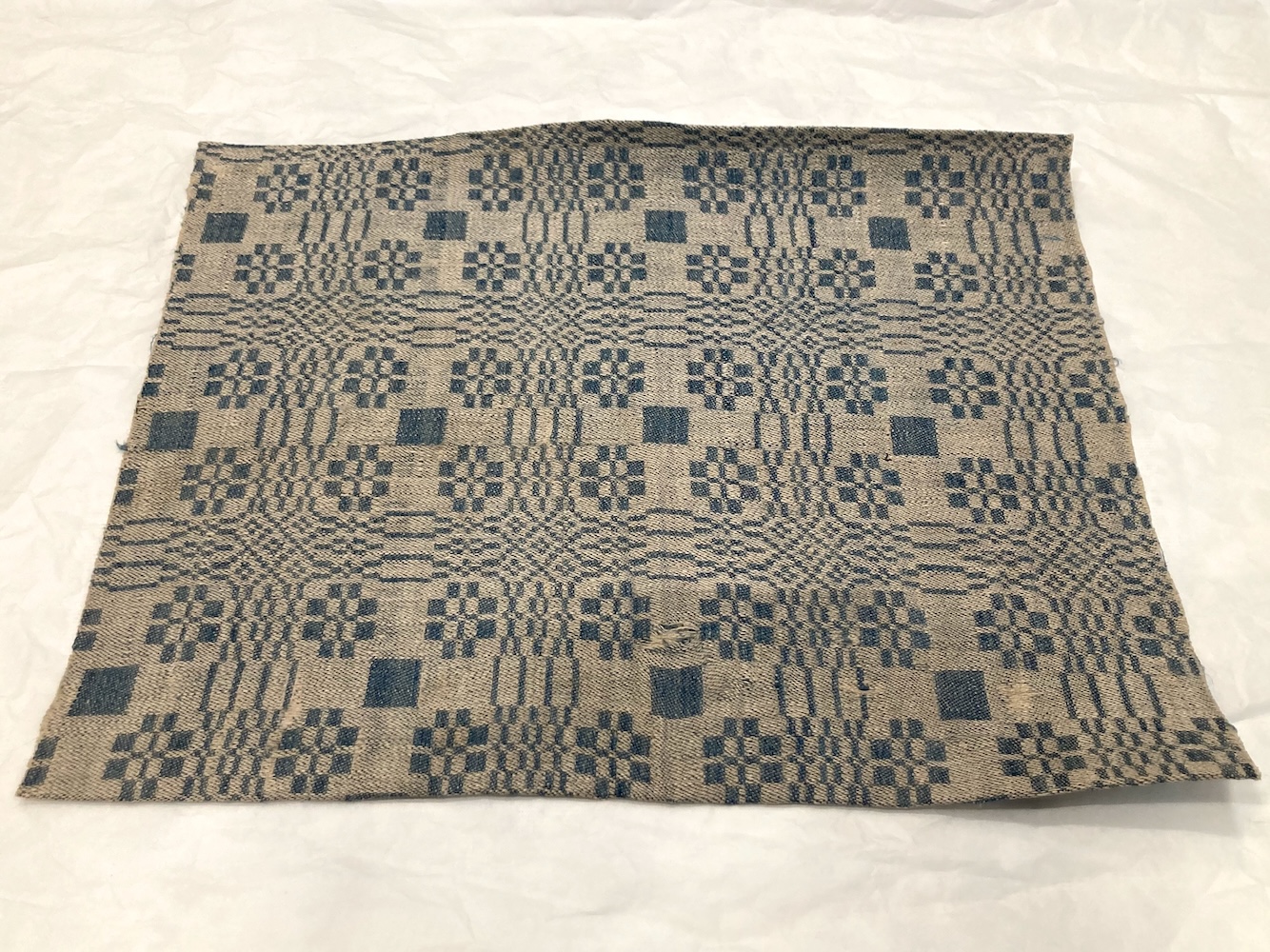
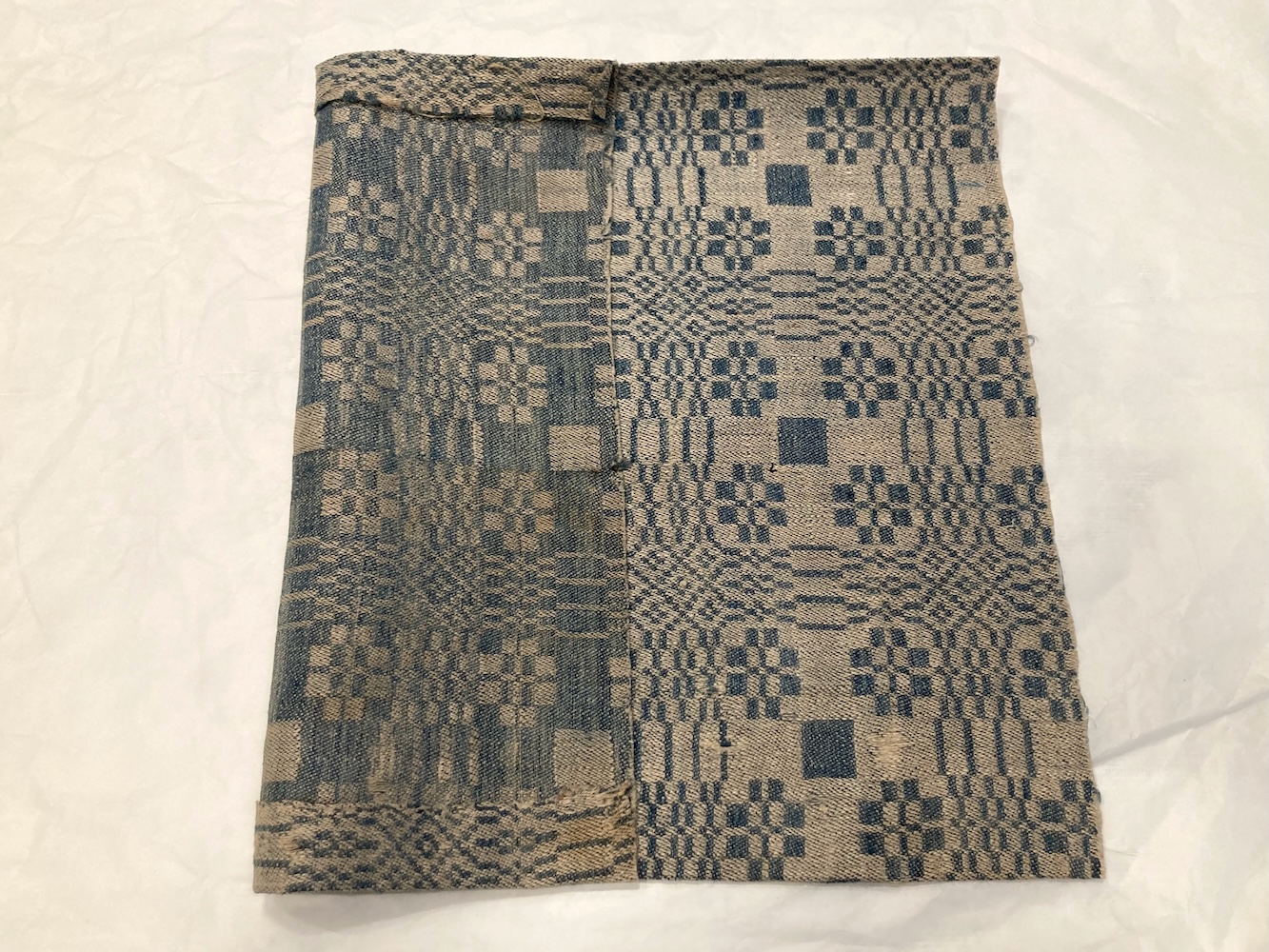
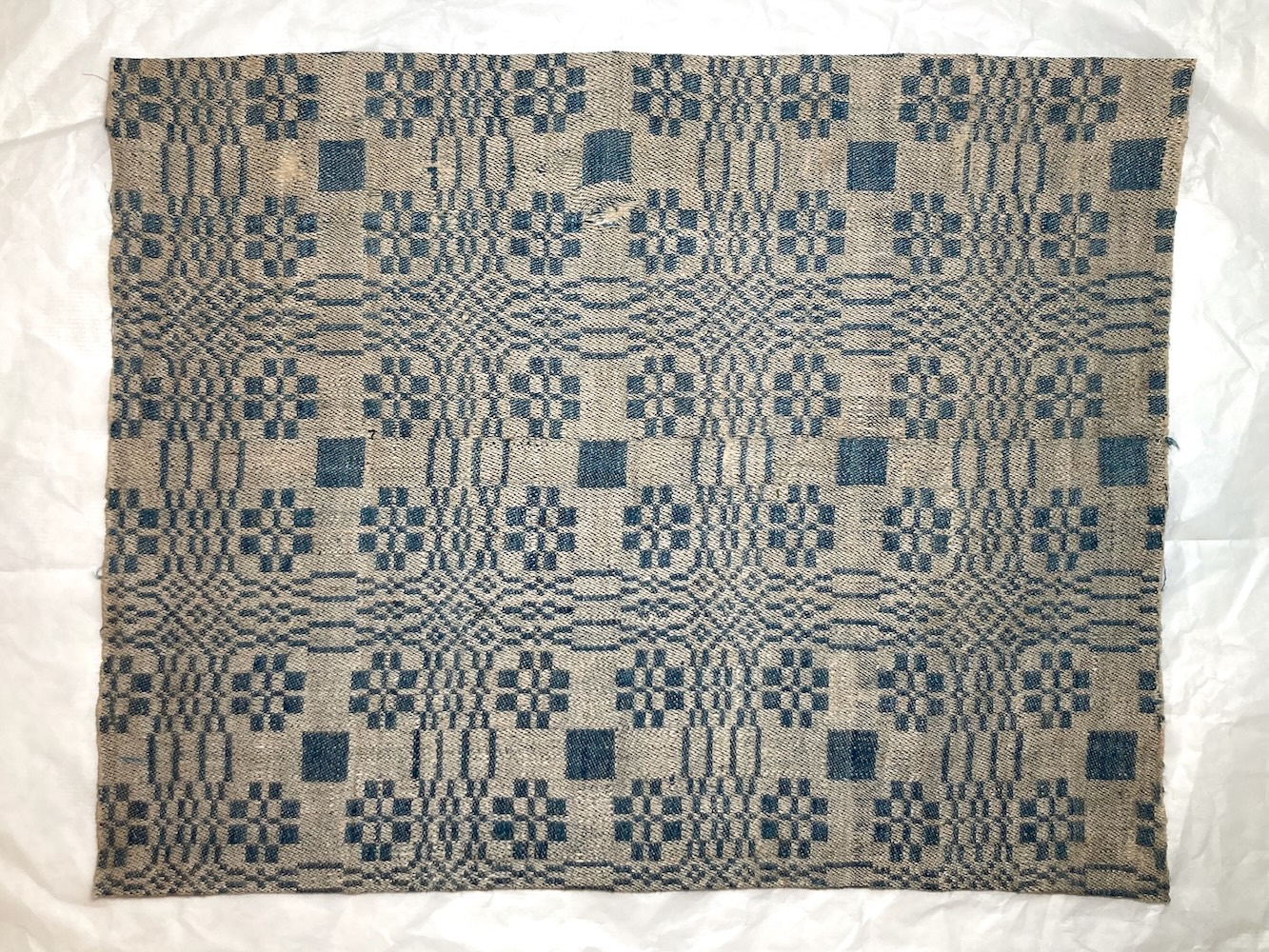
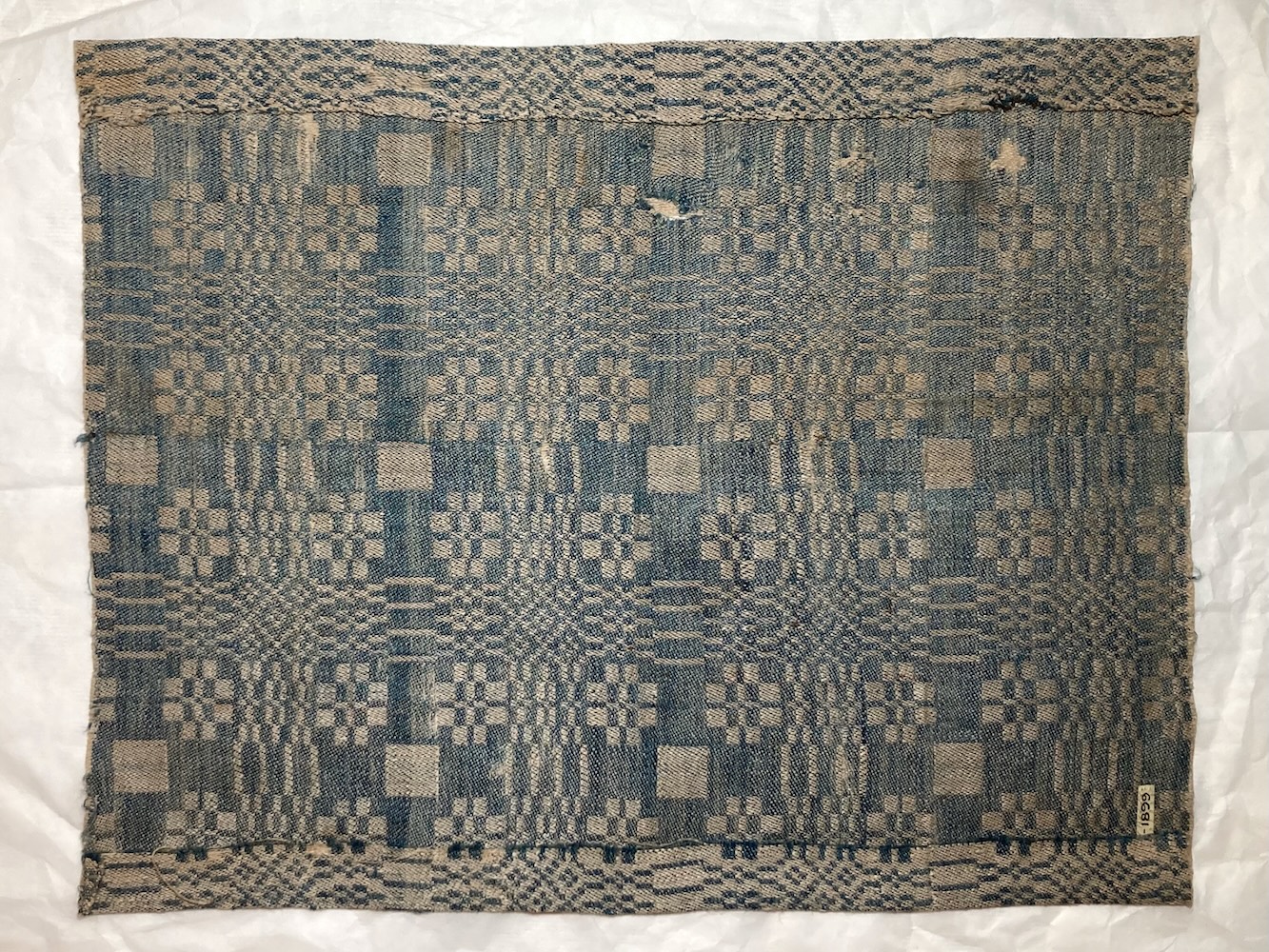
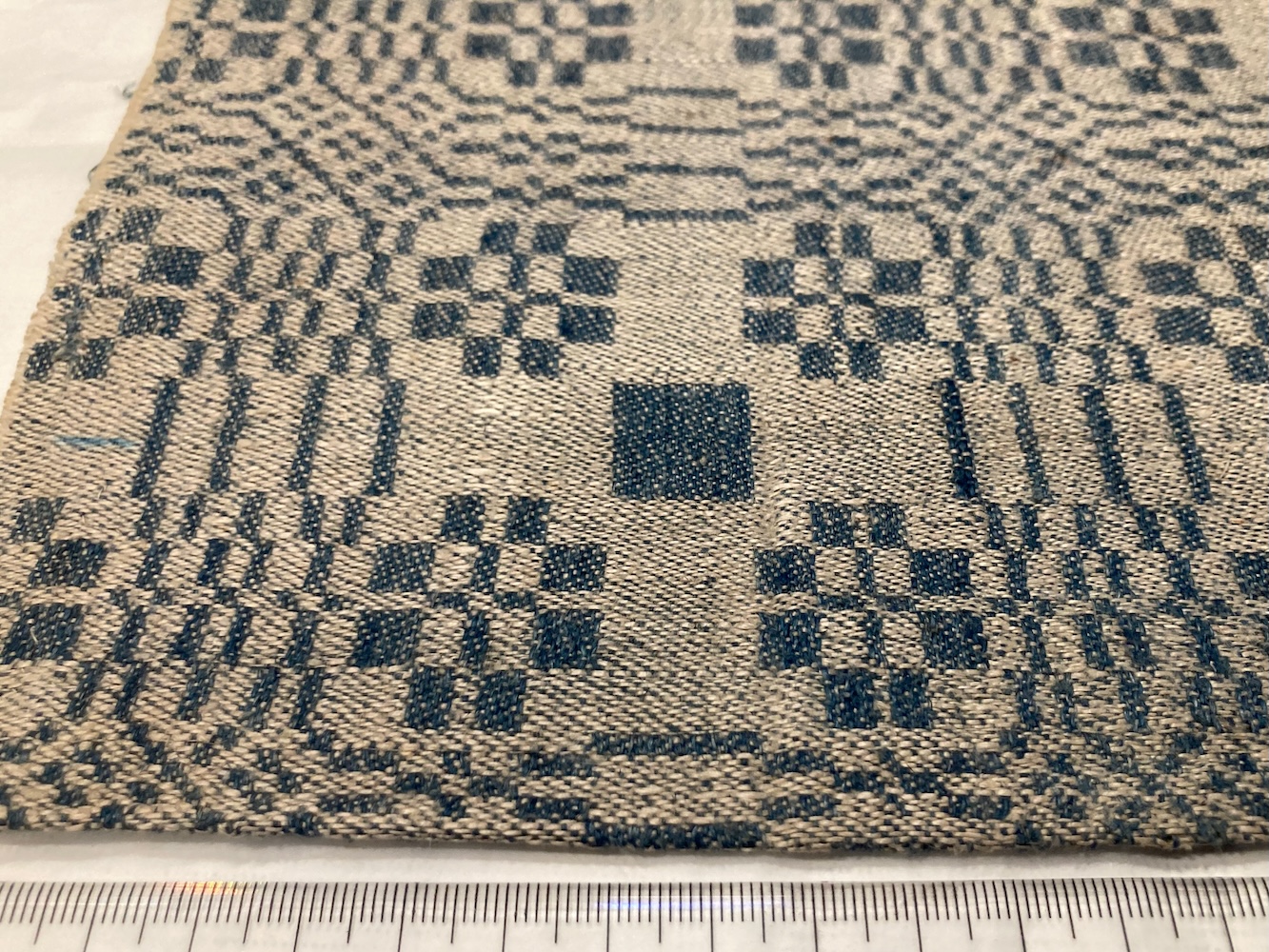
This piece of damask diaper (Acquisition number 989-1899; System No: O264220) is described by the V & A as “woven linen, German,1670 – 1699.” The cloth is folded along two sides with 2-3cm folded under. Dimensions are 320 x 400mm folded.
V & A catalogue record URL: https://collections.vam.ac.uk/item/O264220/woven-linen
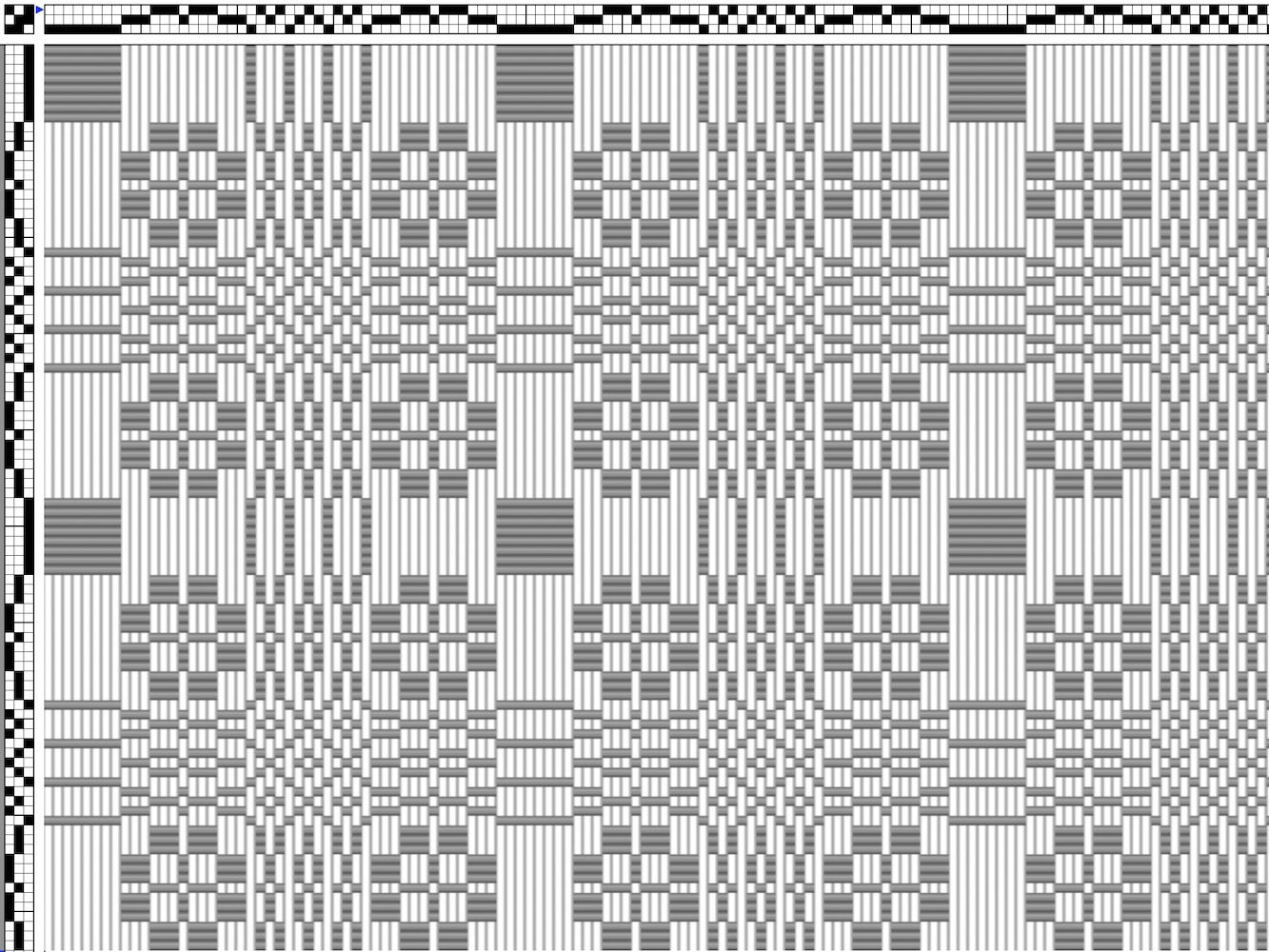
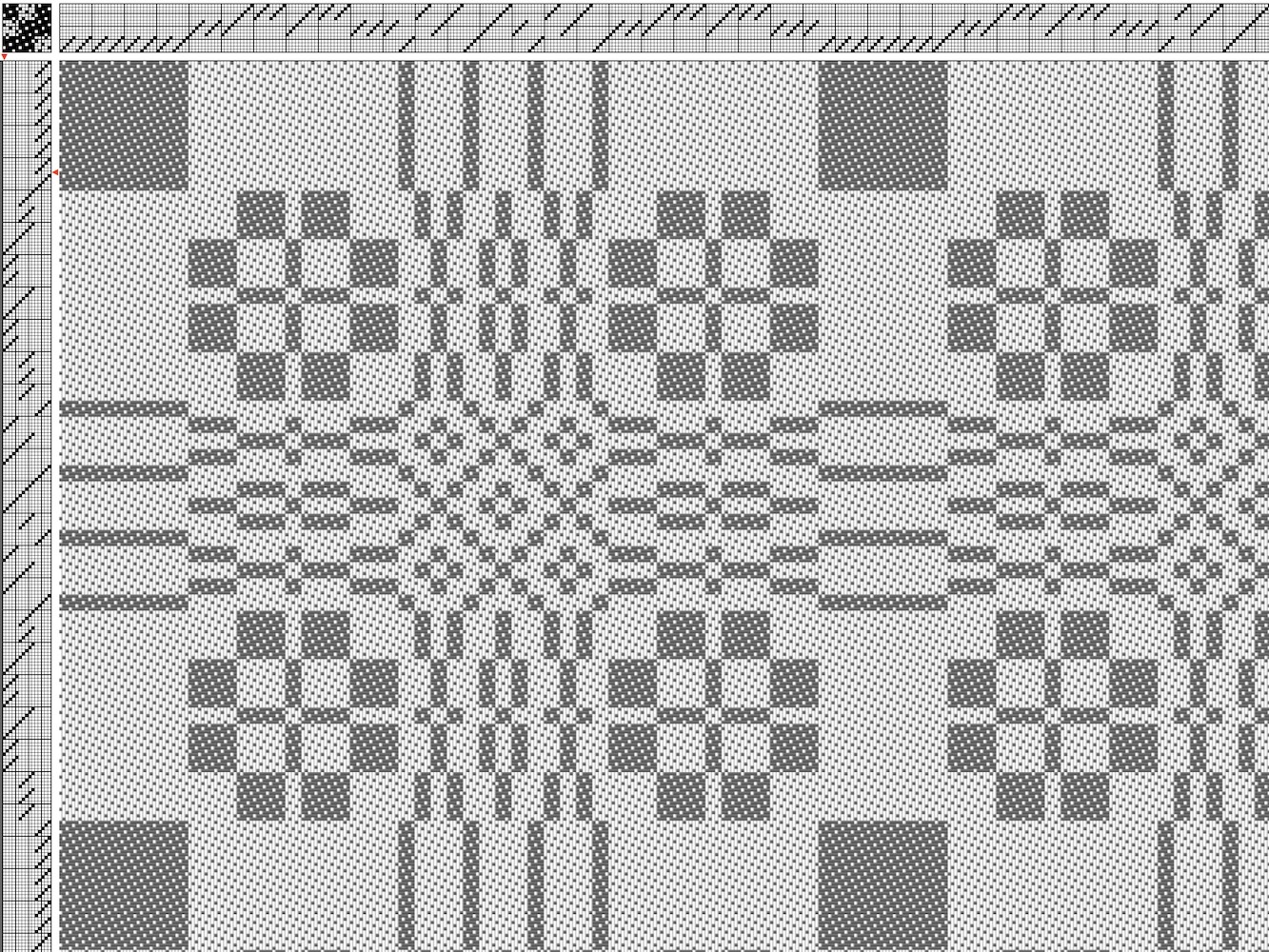
‘Damask diaper’ is the name widely used in Britain in the eighteenth and nineteenth centuries for a type of linen cloth with a block pattern of alternating warp- and weft-faced satin. Unlike true damask which is woven on a draw-loom or jacquard-loom, damask diaper can be woven on a single harness loom with mutliple leaves of heddles. This particular damask diaper has three divisions in the pattern and requires 15 leaves (three sets of five). 1 It was woven with a grey-ish warp and a dark blue weft (presumably indigo-dyed) which emphasises the pattern. The illustrations below show this as a profile draft and a full draft.
.
.
Striped tabby (1163E-1888)
.
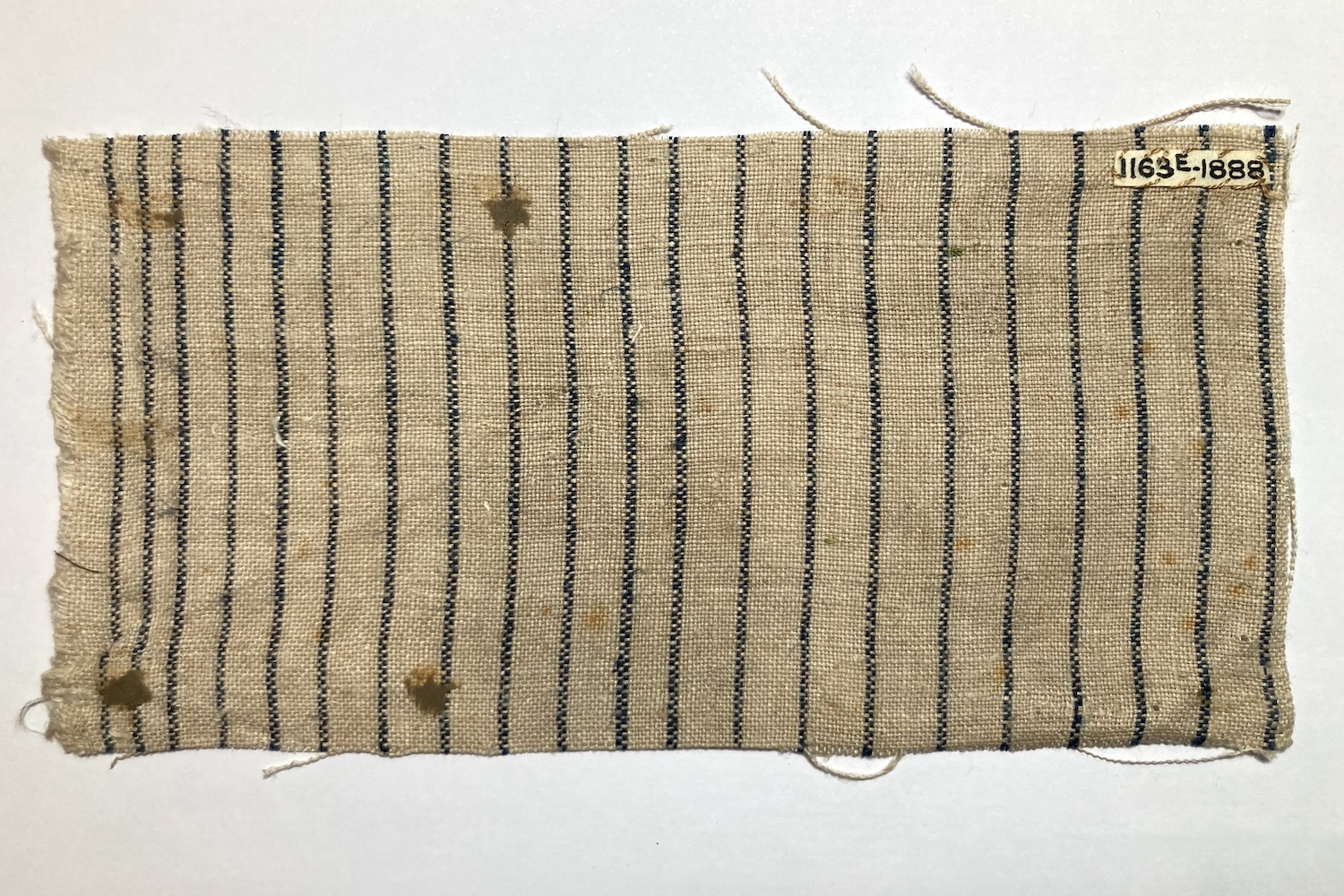
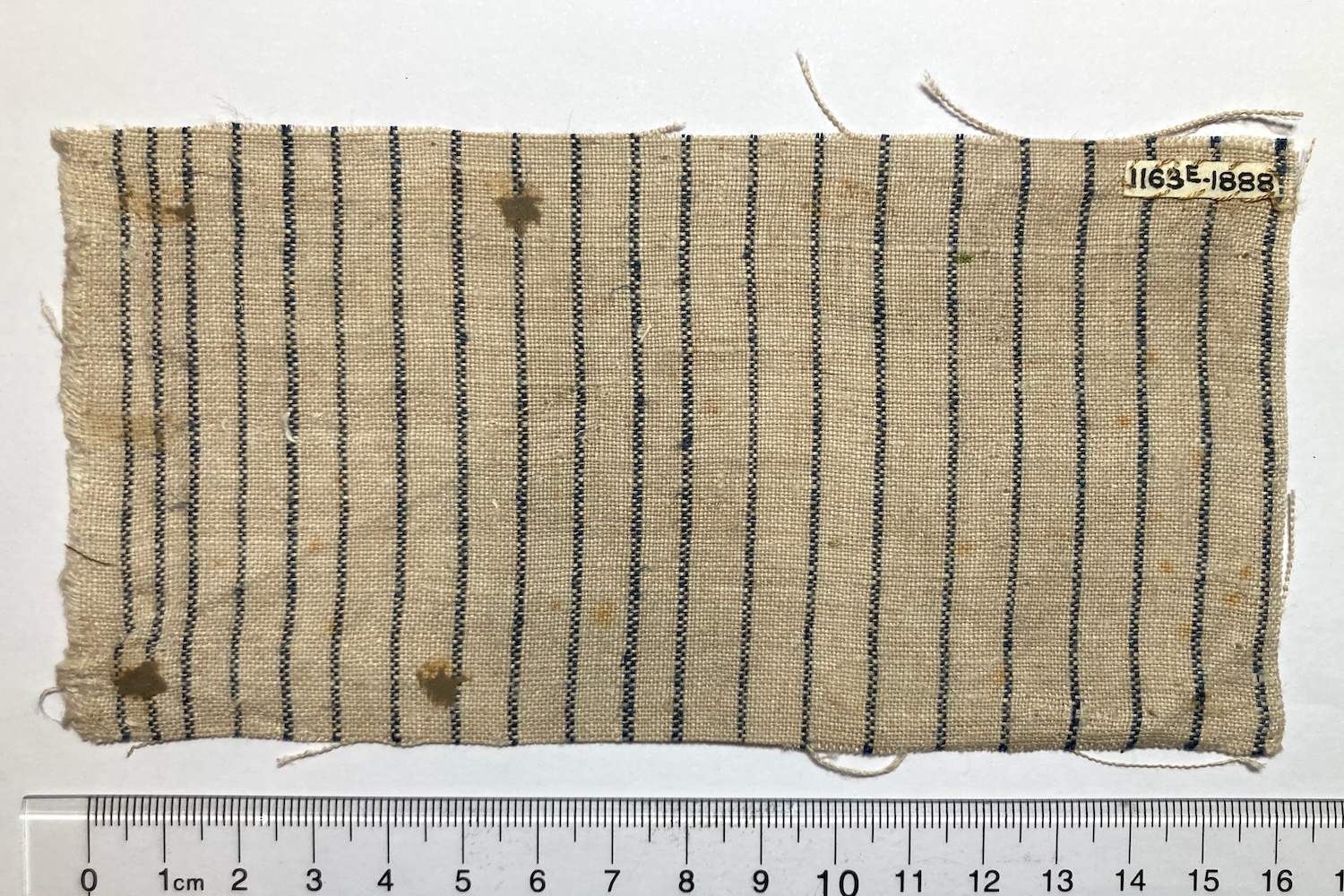
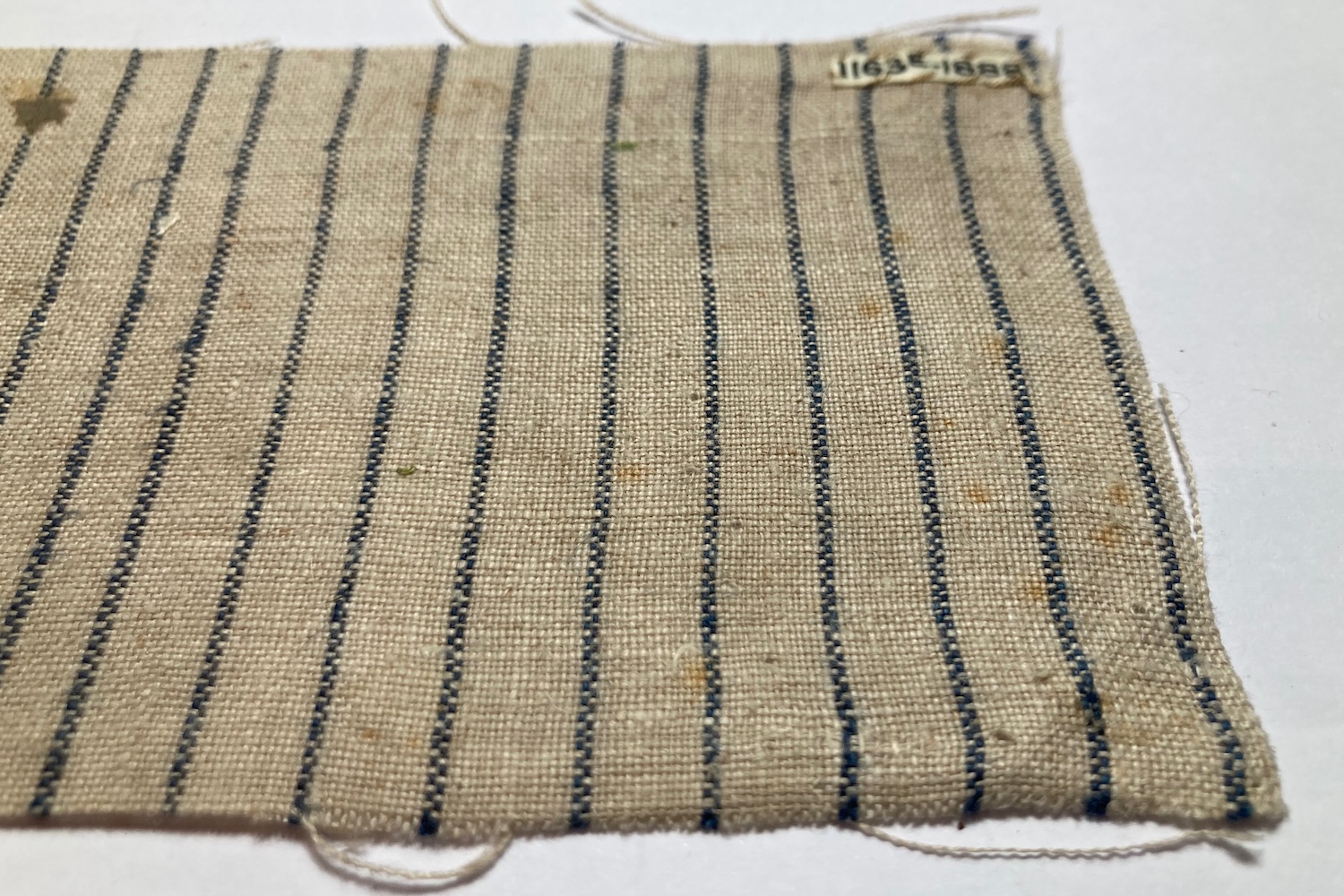
.
This piece of linen (Acquisition number 1163E-1888; System No: O258695) is catalogued as “1300s, German.”
Dimensions are 85 x 165mm. Stripes are formed by pairs of black shots in the weft, with 6 to 16 shots in between stripes. The weave is nicely balanced, with about 18 – 19 ends and picks per cm / 45 – 47 per inch.
V & A catalogue record URL: https://collections.vam.ac.uk/item/O258695/woven-linen
.
Notes
- Some nineteenth century authors describe an alternative method for weaving damask diaper, using two harnesses: a front harness of five leaves of long-eyed heddles for making the satin ground weave, with a second back harness with one leaf for each division of the pattern. See for example John Murphy (1827) A Treatise on the Art of Weaving, page 373-4 and Plate 8. From a detailed examination of the weave structure of 989-1899 I am convinced it was woven on a single harness loom with 15 leaves rather than a two harness loom. ↩︎