Experimental working reconstruction of linen weaving ‘gear’ from North Lopham, Norfolk, c. 1920.
This post describes my project to make a working reconstruction of some clasped heddles from Lopham in Norfolk. It follows on from Handmade Clasped Heddles from Lopham in Norfolk (Part 1) in which I gave a detailed description of the original gear. The project was generously supported by the Association for Industrial Archaeology. This post is an edited version of an article written for association’s newsletter.
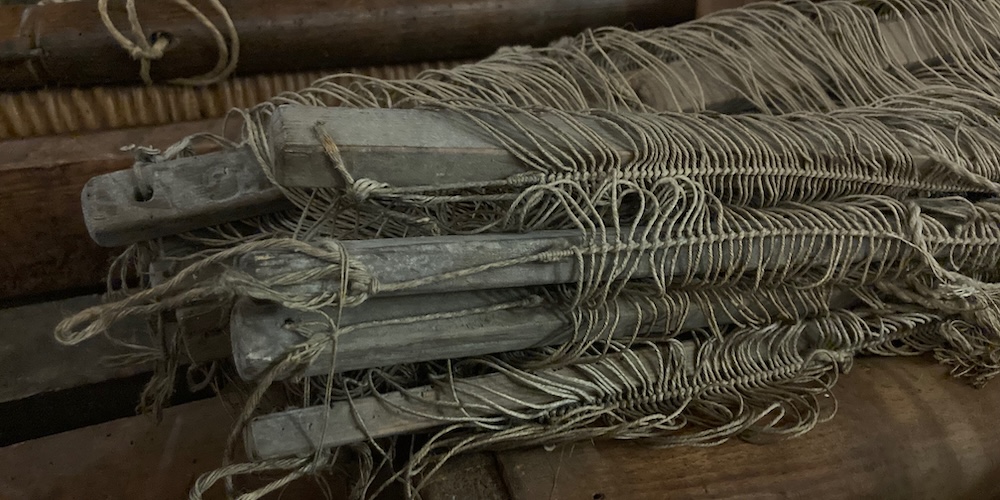
This project involved the working reconstruction of a set of weaver’s ‘gear’ with handmade clasped heddles used for weaving huckaback linen in Norfolk around 1920. It began following the discovery of the gear amongst artefacts from the linen weaving villages of North & South Lopham in storage at Gressenhall Farm & Workhouse in 2024 and provided an opportunity to further my interest in the lost skills of heddle making. What are the advantages and drawbacks of clasped heddles, once widely used in the weaving industry but now obsolete in craft practice?
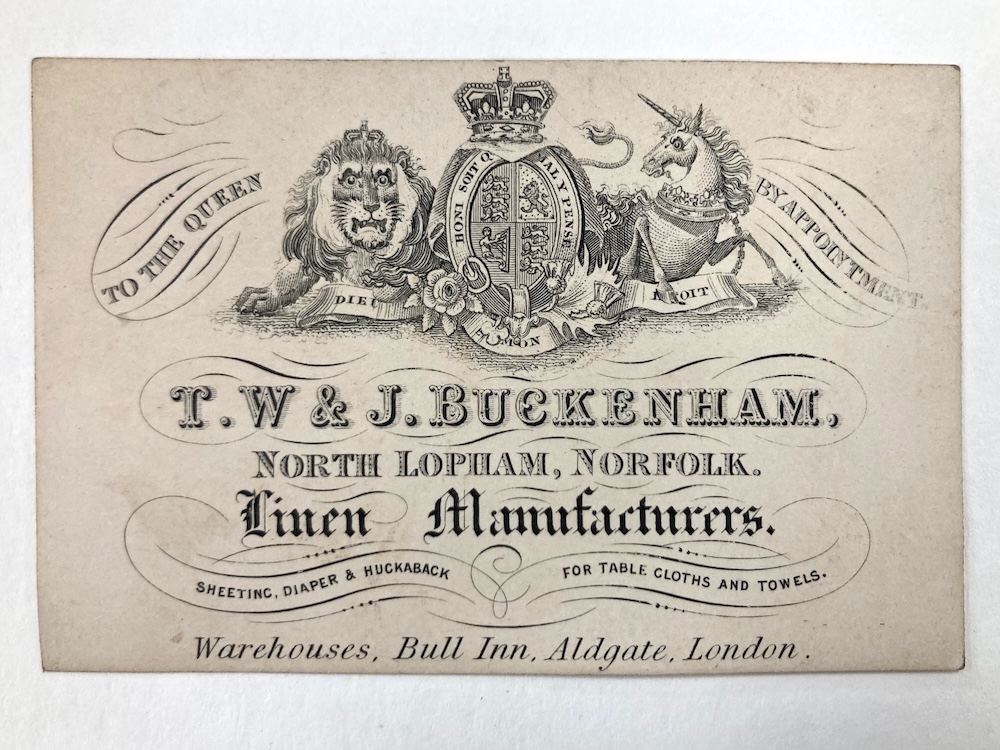
The villages of North and South Lopham were a centre for linen weaving during the eighteenth and nineteenth centuries. The firm of T. W. & J. Buckenham acquired the Royal Warrant as suppliers of Diaper and Huckaback Table Cloths to Queen Victoria in 1837. The industry survived until 1925 by manufacturing high-quality linen for prestigious clients including the Royal Household, City Livery Companies and aristocracy. Material evidence of this lost industrial tradition survives in the form of woven linen and equipment in the collection of Norfolk Museums Service. 1
Before the introduction of mass-produced wire or polyester heddles, handweavers used string heddles tailor-made by the weavers or professional heddle makers. The reed, heddles and shafts were collectively referred to as ‘gear’. The survival of such gear – both fragile and easily lost – is rare.

The gear found at Gressenhall contains unusual ‘clasped’ heddles. Instead of passing through an eyelet, the warp yarn is pinched in the intersection between upper and lower ‘doups’. Clasped heddles were described in early nineteenth century textbooks but seem to be unknown in contemporary weaving in the UK. 2

Following an initial visit to Gressenhall I designed and built a cradle to support the gear to facilitate a full inspection. I gathered information about sett, reed sleying, drafting, and heddle construction, allowing me to make a replica set of heddles for the working reconstruction. 3
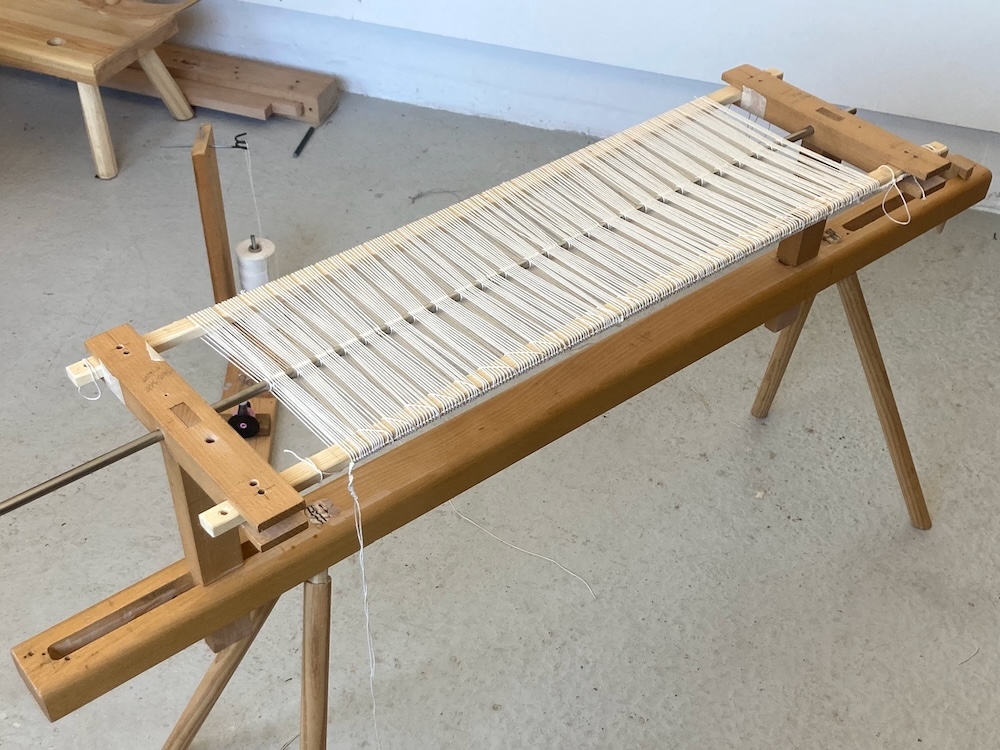
I had begun learning to make heddles in 2024 and had built a heddle-horse, based on historic examples, to do so. I used this, with some adjustments, to replicate the Gressenhall gear. Heddles are tied directly onto a pair of wooden shafts, with the shafts secured in the jig, one complete leaf of heddles being made at time. In this case there are four leaves, with a total of 900 heddles.
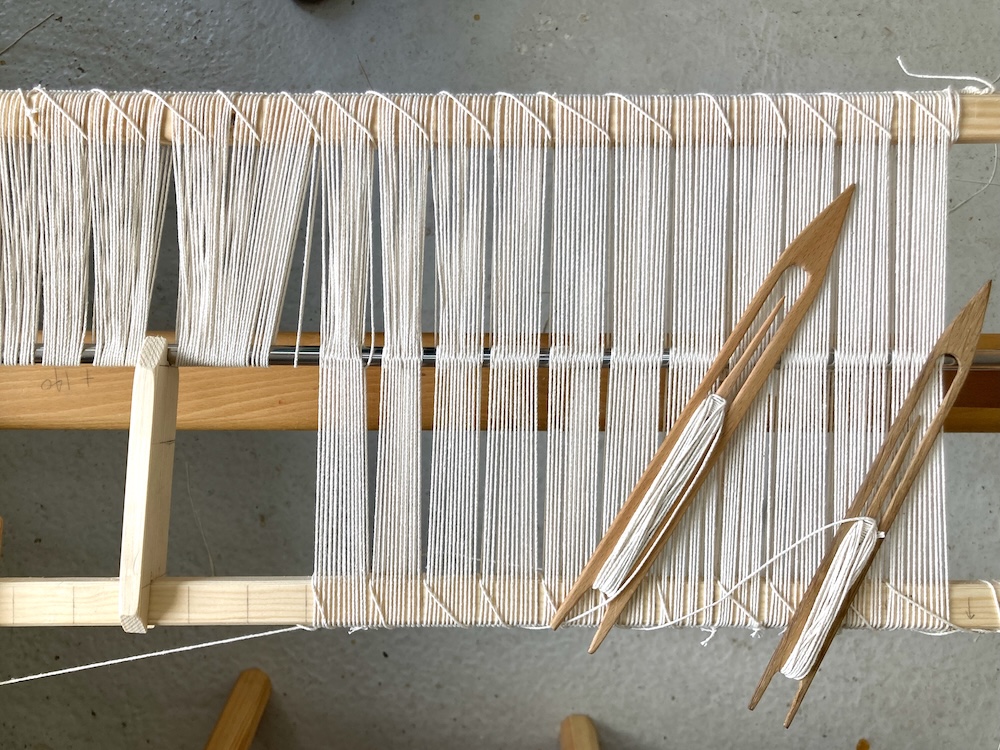
A netting needle loaded with suitable twine 4 is passed around one shaft and the central rod to make a series of ‘doups’, first along one side and then along the other, the second set intersecting with the first. Each doup is individually knotted onto cords running the length of the shaft. Having no ‘eye’, clasped heddles are slightly quicker and easier to tie than conventional heddles.
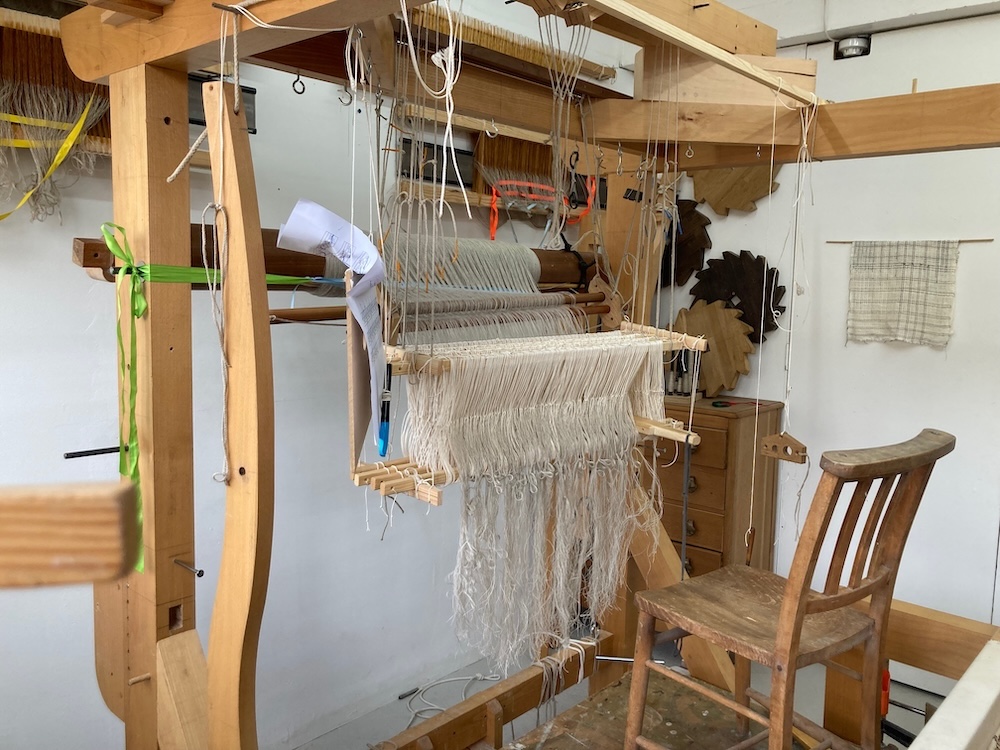
Once completed, the heddles were mounted in my loom for threading the warp. My loom is handmade specifically for weaving linen, modelled on museum examples of Irish linen looms. There is no record of the loom in which the Gressenhall gear was used, but other surviving Lopham looms broadly follow the Irish pattern. 5
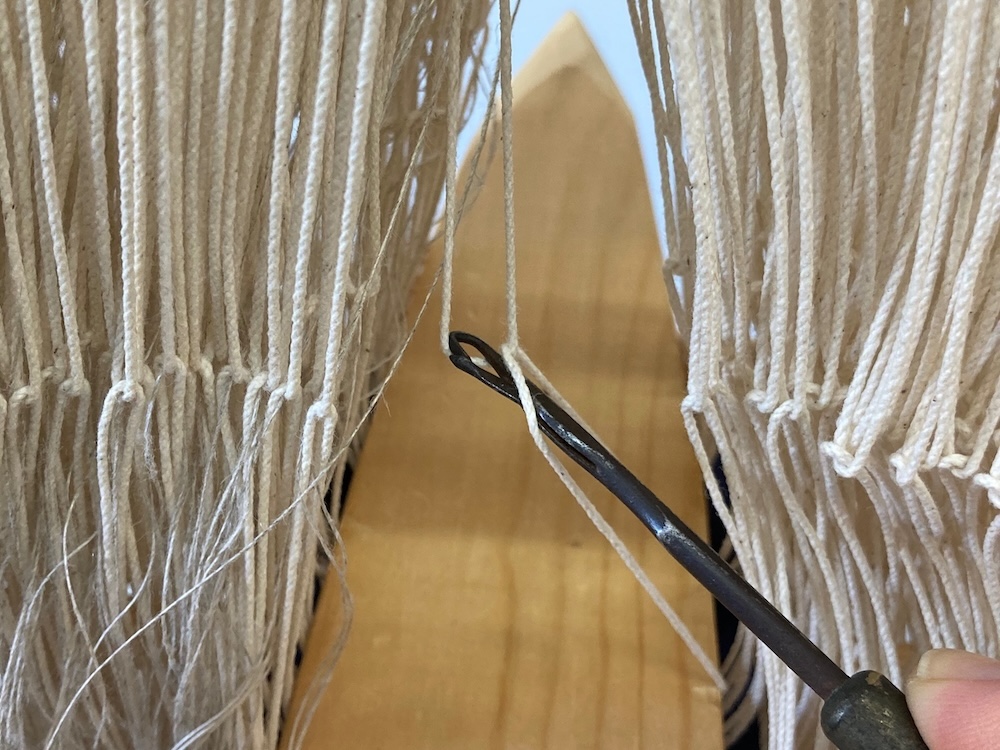
I found the clasped heddles slightly slower to thread than conventional heddles, requiring a double movement with a latched threading hook to coax the warp yarn through both lower and upper doups. Although threading is laborious it was customary to do this only once, tying-on subsequent warps to the thrums of the old.
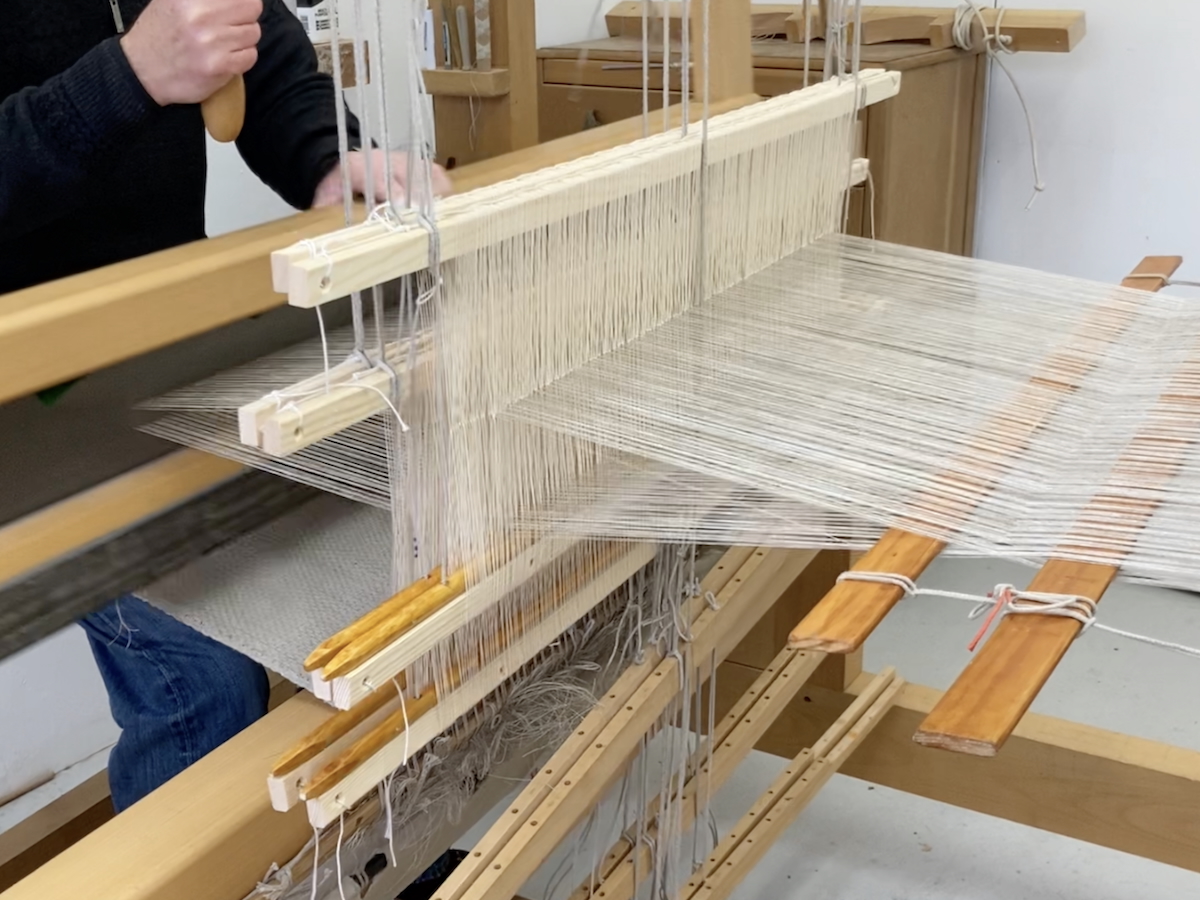
After threading, I prepared the loom for weaving, with the new gear tied up to four treadles for weaving huckaback. It was obvious from the outset that clasped heddles would pinch or clasp the warp yarn during weaving. This is described in Murphy, John (1827)Treatise on the Art of Weaving as an advantage when working with “weak or soft” yarns. 6 The linen yarn I usually work with is neither weak or soft, but I wondered if the use of clasped heddles would affect the interlacement of warp and weft or change how the weft was beaten up in the web. I have woven huckaback many times, on this same loom and with the same yarn. I suspect the clasped heddles helped produce a slightly higher pick density, but further experimentation is needed to confirm this. Otherwise, I could see no significant difference in cloth woven with the clasped heddles.
I did, however, encounter an unexpected problem. As weaving progresses the warp must be advanced through the heddles periodically. I had not anticipated the extent to which the pinching of the clasped heddles would impede this. Although a single warp thread could be pulled through its heddle under moderate tension, the force required to pull 900 threads through the heddles was considerable, causing distress to the warp and upsetting the heddle alignment.
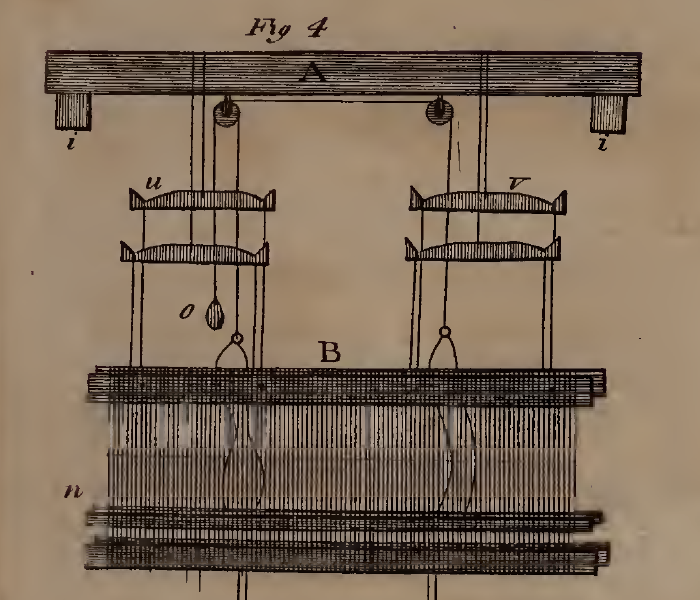
I eventually found a solution in the form of a mechanism for slackening the heddles while maintaining their alignment, described in an overlooked passage and illustration in Murphy’s Treatise. The device, which I was able to reconstruct in the loom, consists of rods inserted through the lower doups of the heddles and connected by cords and pulleys to a handle. Pulling down on the handle raises the rods, slackens the heddles and allows the heddles to be easily nudged back along the warp. As far as I am aware this device is unknown in contemporary craft weaving.
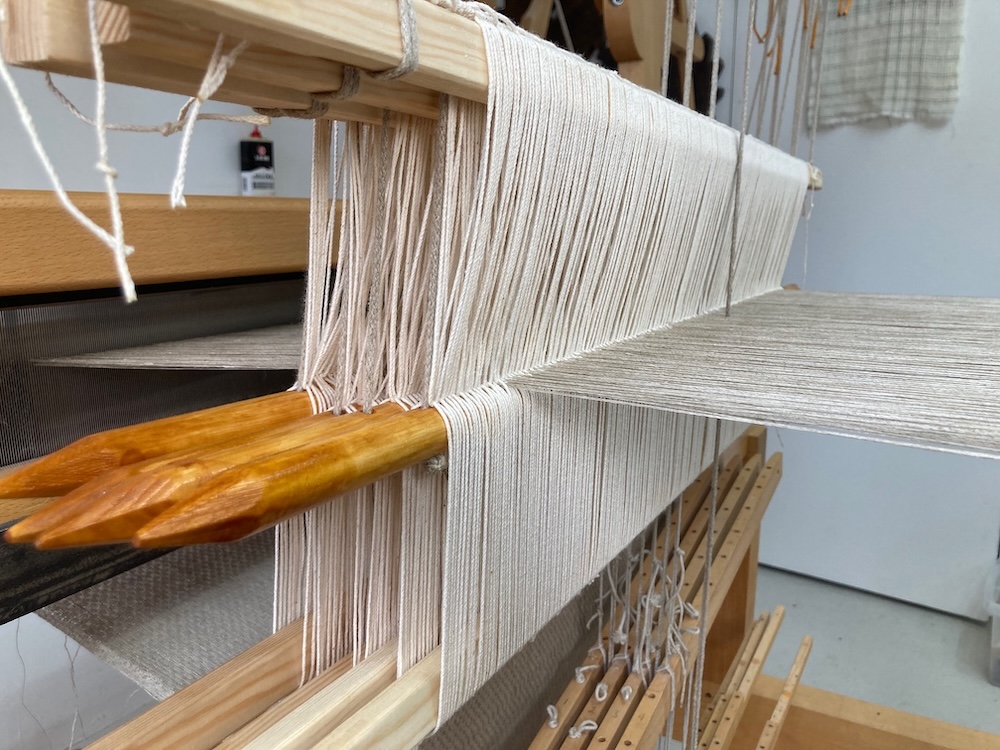
Once I had solved this problem the weaving proceeded smoothly and I was able to make a satisfactory length of huckaback linen comparable in quality to examples in the Norfolk museum collection.
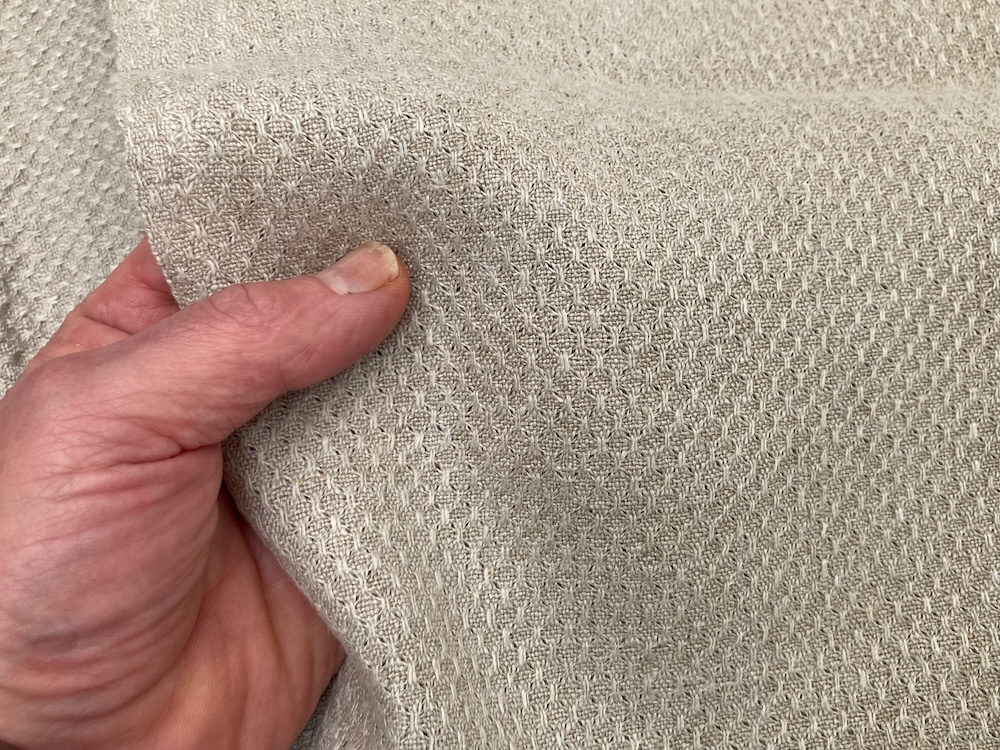
The project has so far uncovered no clear advantage to the clasped heddles for weaving linen, beyond their initial ease of construction and my speculations about pick density. The question of why they were used in Lopham remains unanswered. A more definite finding relates to the unexpected extent to which clasped heddles impede the advancing of the warp, and the resulting re-evaluation of a mechanism for resolving this as described in John Murphy’s Treatise of 1827.
Notes:
- For more about the Lopham linen industry: https://www.maxmosscrop.com/blog/lopham-linen/ ↩︎
- Clasped heddles are described in both Duncan, J. (1808) Practical and Descriptive Essays on the Art of Weaving; and Murphy, J. (1827) Treatise on the Art of Weaving. ↩︎
- For a detailed description see: https://www.maxmosscrop.com/blogs-2025/handmade-clasped-heddles/ ↩︎
- I used NM 20/6 cotton warp yarn, having first tried 20/9 and finding it too heavy, causing congestion between heddles and warp. ↩︎
- see for example my post about the loom in Bankfield Museum, Halifax: https://www.maxmosscrop.com/blogs-2023/lopham-looms-the-bankfield-loom/ ↩︎
- Murphy. p. 2. “Should the yarn be weak or soft in the undressed state, the clasps, when drawn together, prevent it, in a considerable degree, from being unequally strained behind the mounting.” ↩︎