This is the last of four posts about a selection of woven linens in the collection of the Victoria & Albert Museum, from my study visits to the V&A East Storehouse in 2026.
.
.
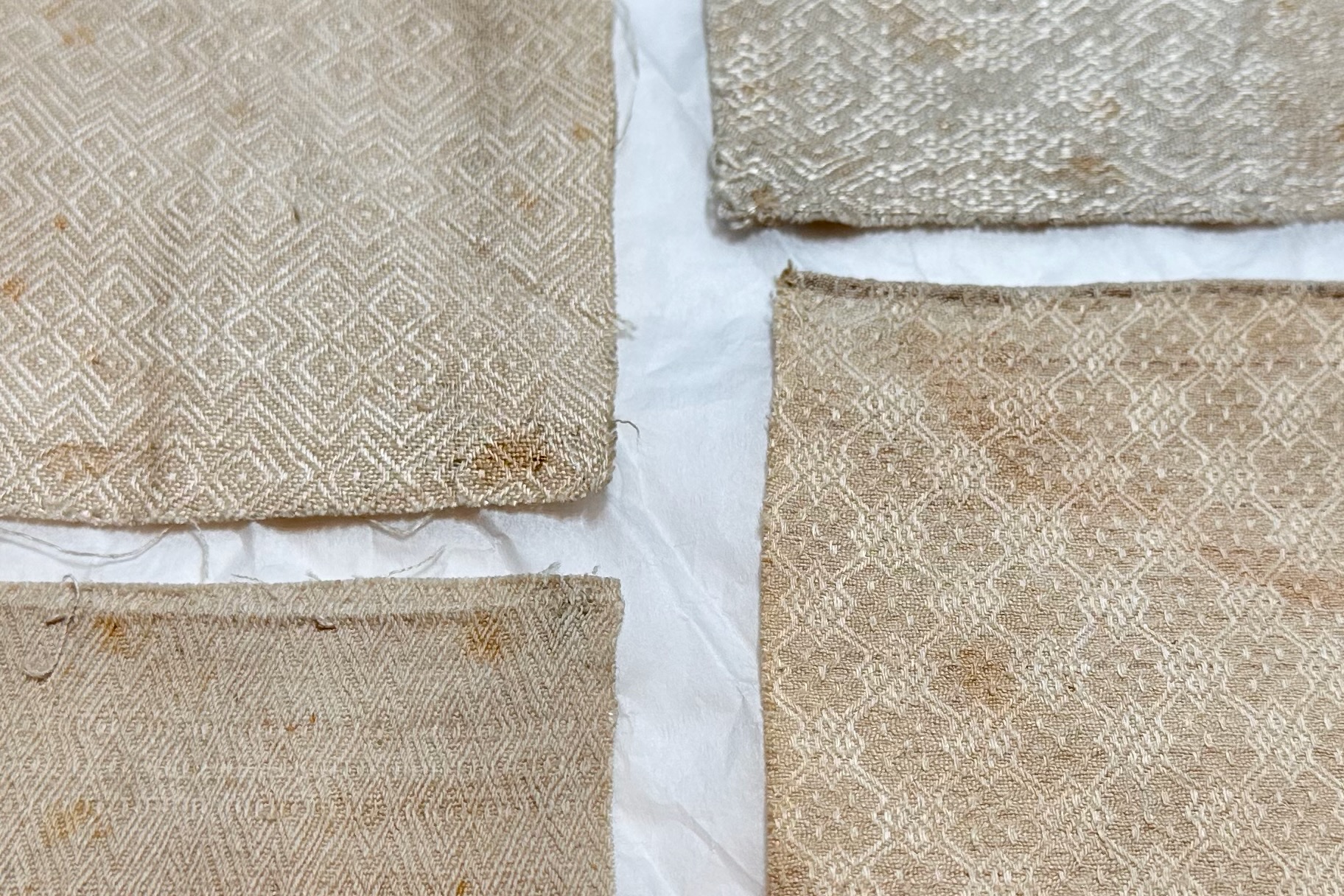
In this post I share photographs and details of eight pieces of linen woven in a variety of complex point-draft patterns. Three are identified as German, three as Flemish or Dutch, and two as Northern European, with dates ranging from 1200 to 1699. All appear to be unbleached, with the natural golden-grey colour of flax. All of these patterns were woven on looms with multiple leaves of heddles using a variety of M and W forms in the draught and treadling sequences. They belong to a class of linens known in German as Gebrochene Arbeit (broken work) as opposed to Hin und Weider Arbeit (back-and-forth work) used for the simpler bird’s eye patterns. 1
.
I treat the eight pieces in order of Accession Number:
.
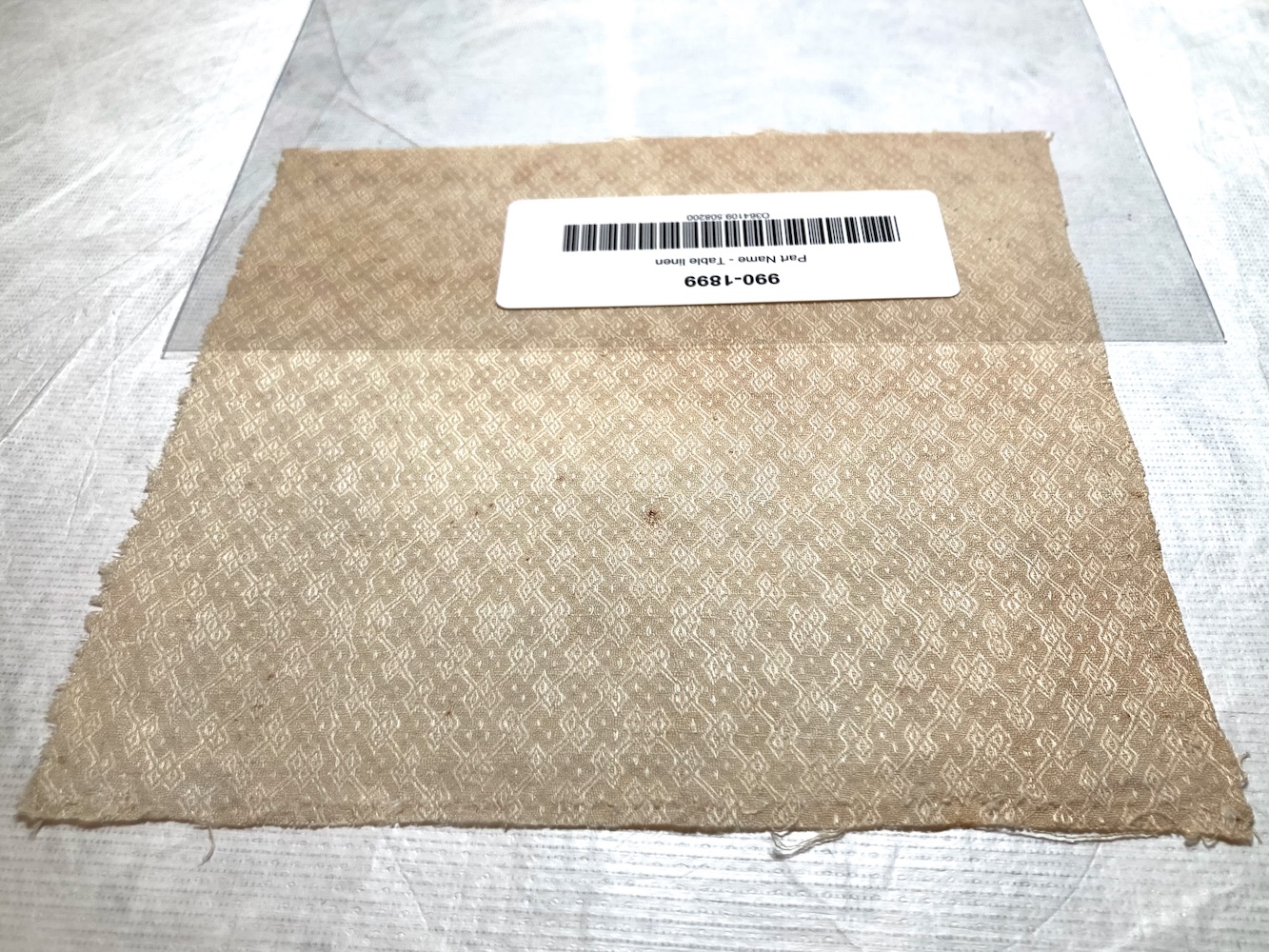
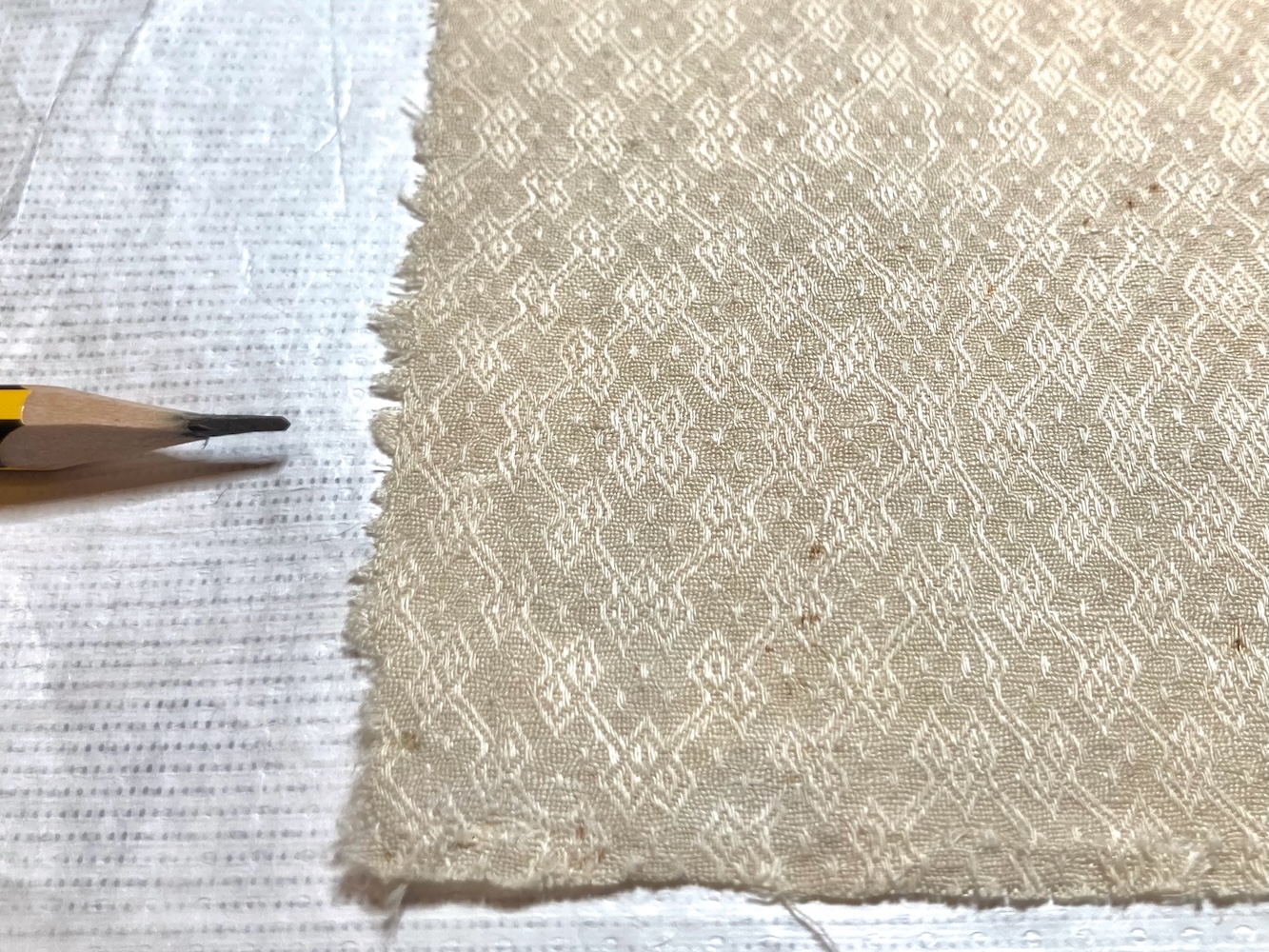
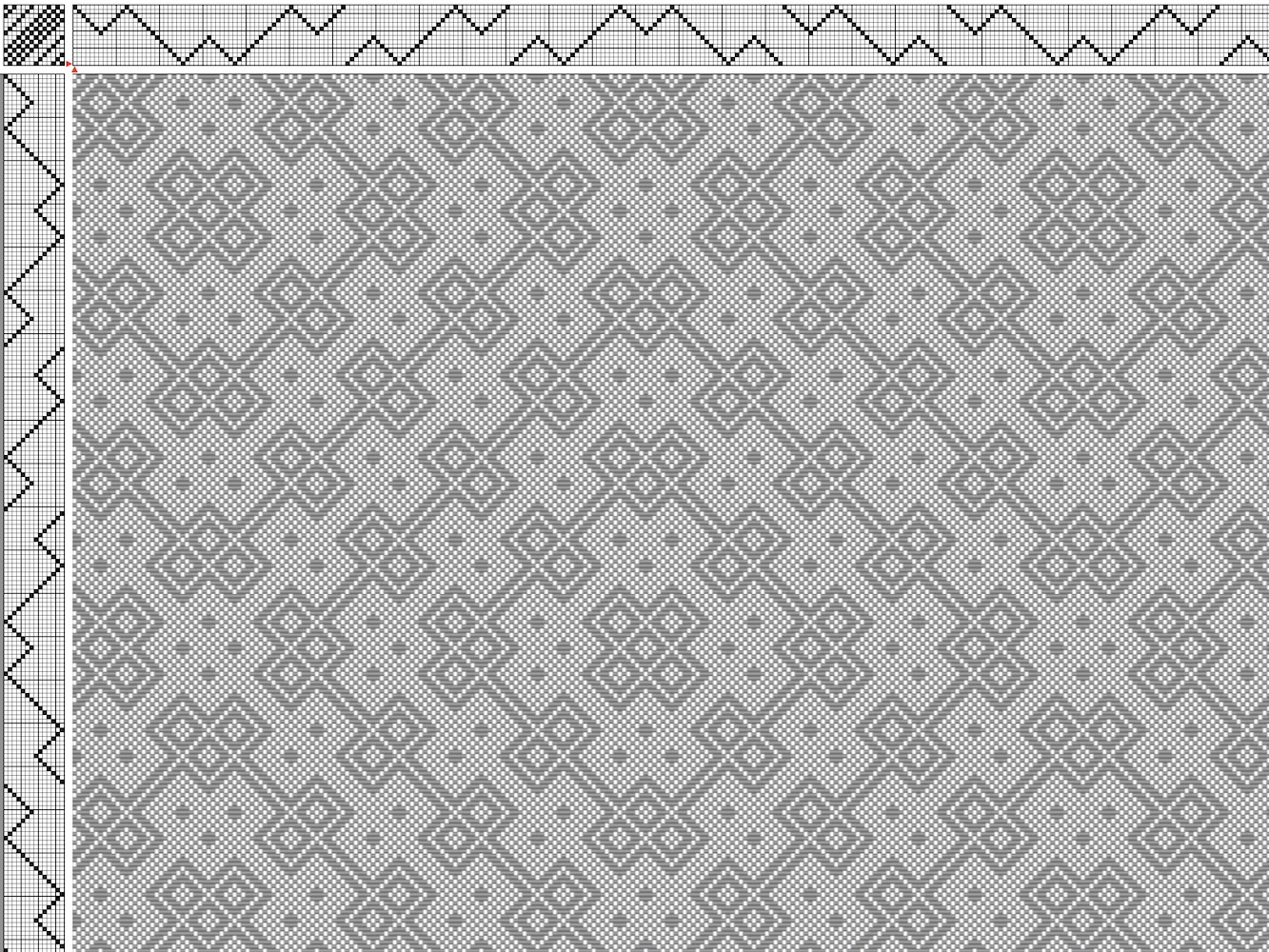
Accession # 990-1899; System # O364109
.




.
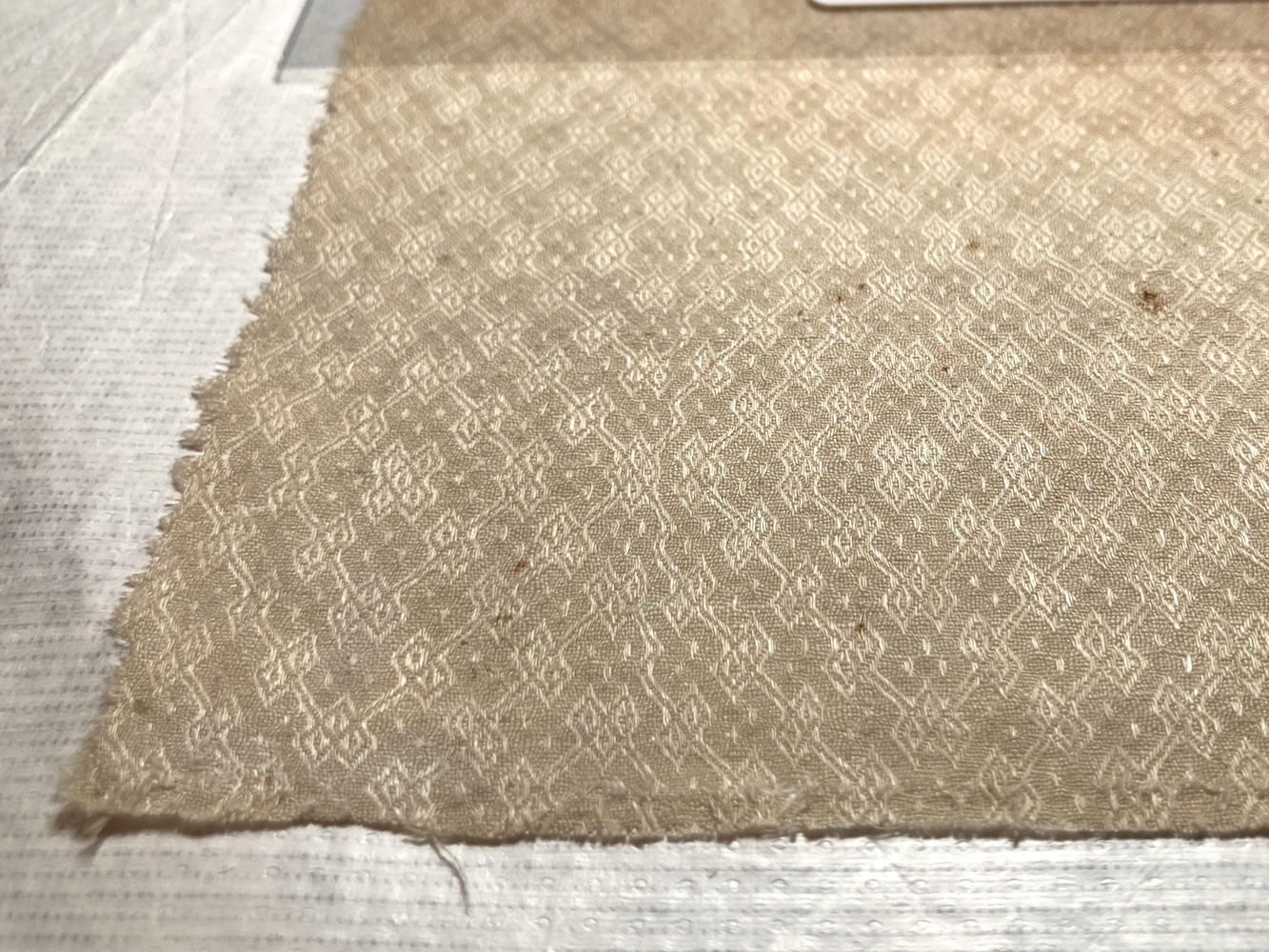
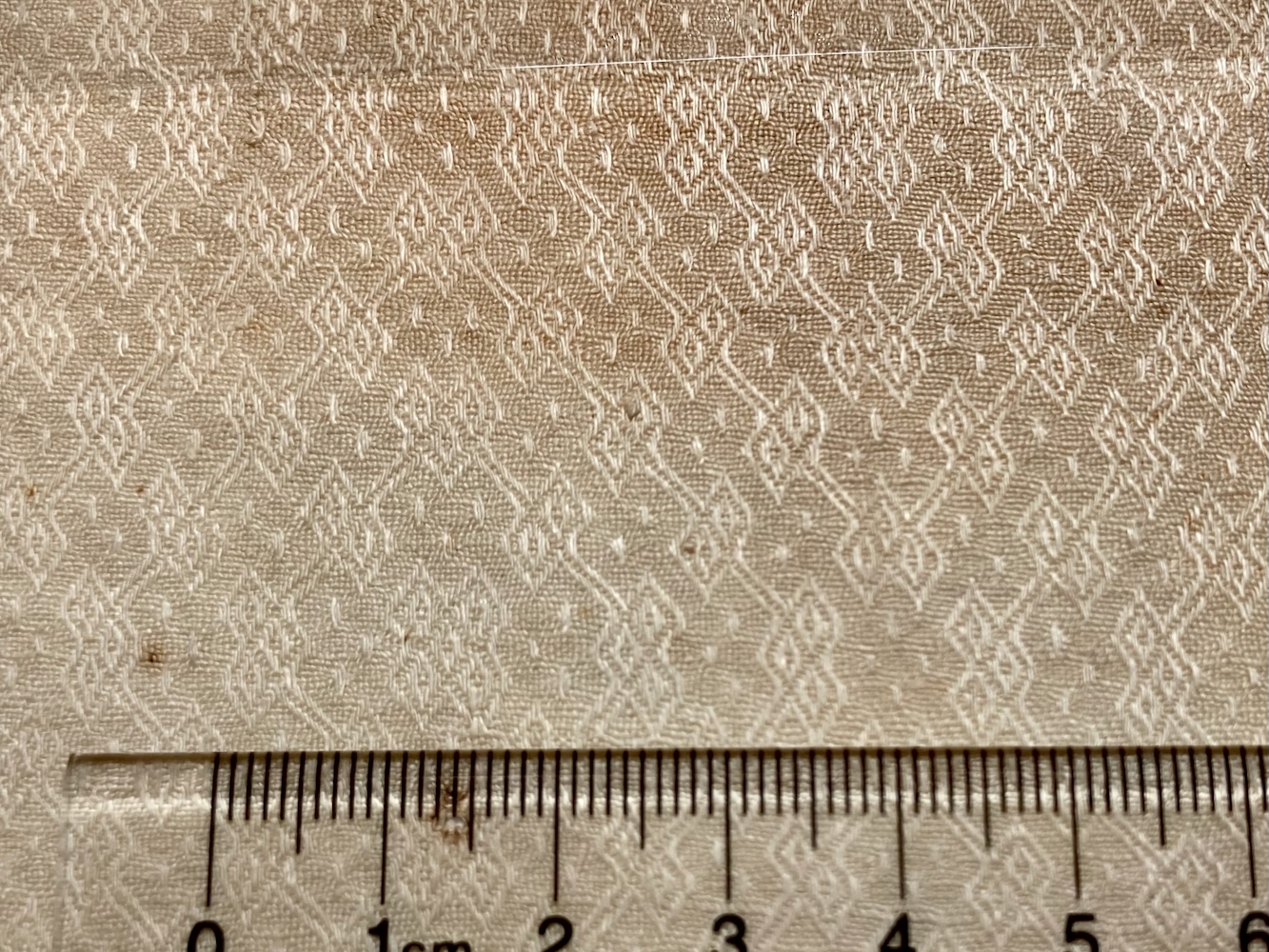
Description from V & A website: Damask, 1500s, Northern European.
Contrary to the description above, this is not damask. My speculative draft in the images above shows it woven on 14 leaves, with 202 ends and picks in one repeat. There is some departure from symmetry in the cloth, a result of mis-treadling. It is very fine. Dimensions are 180 x 190mm.
V & A catalogue record URL: https://collections.vam.ac.uk/item/O364109/woven-linen
…..
…..
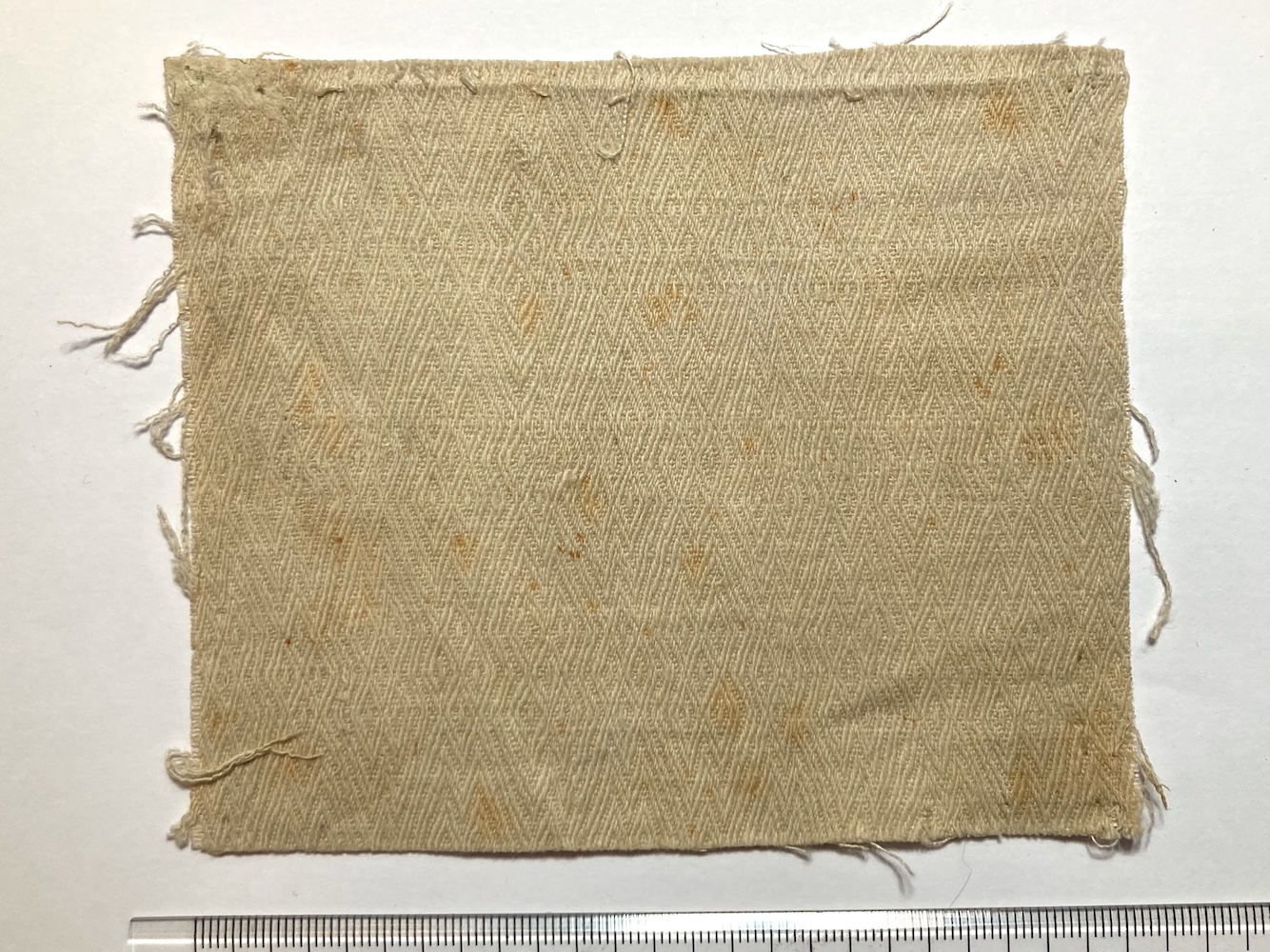
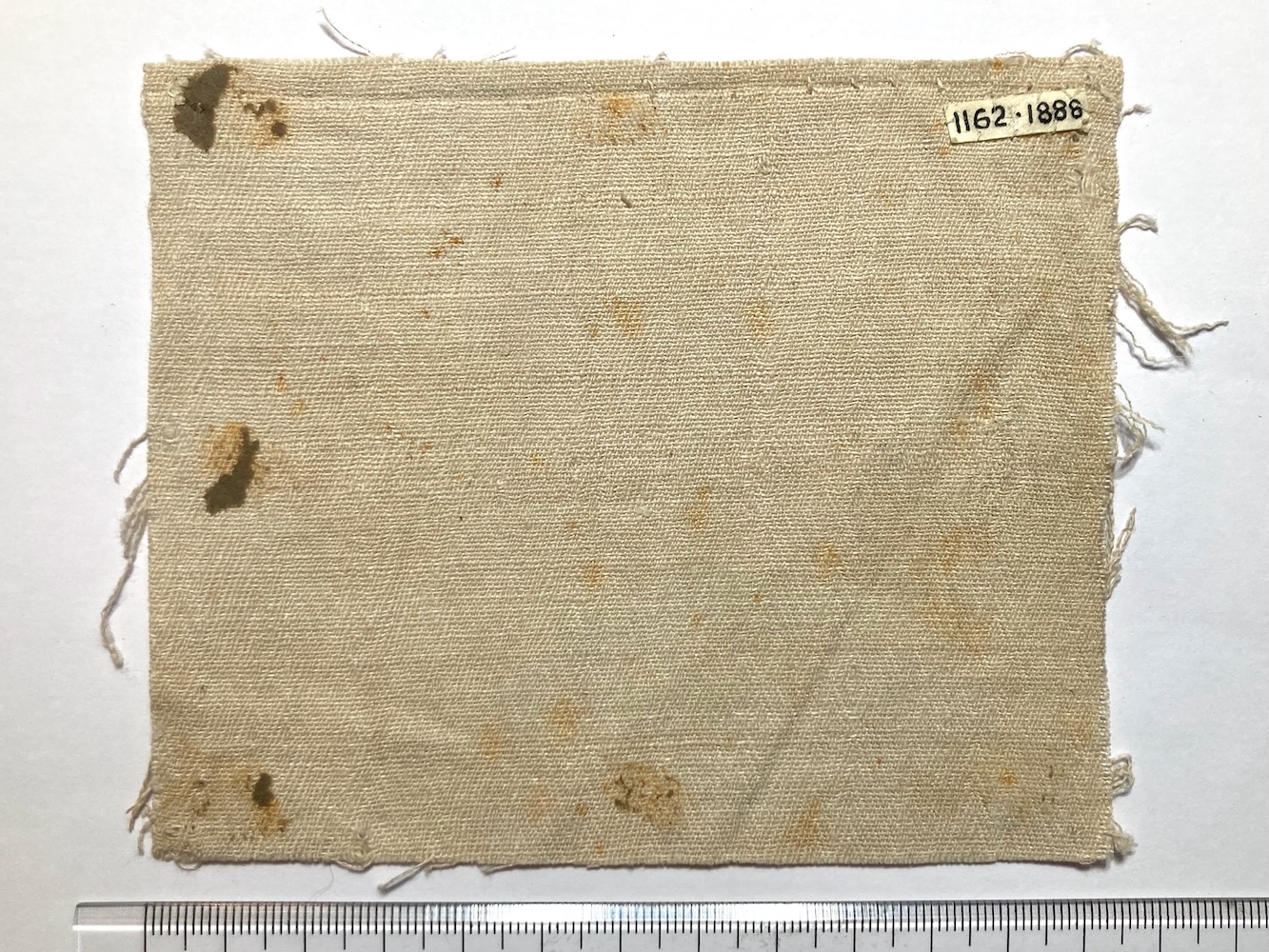
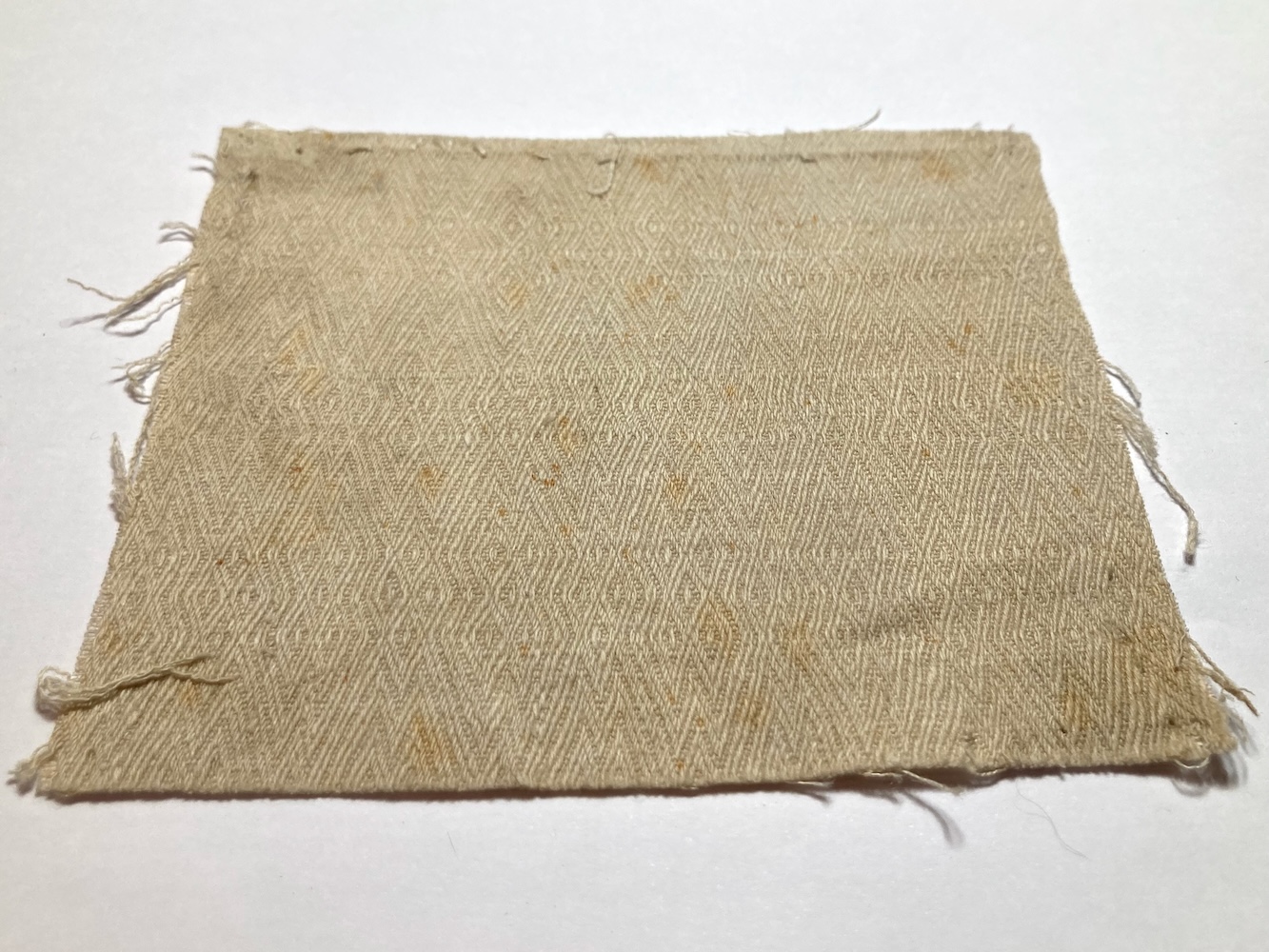
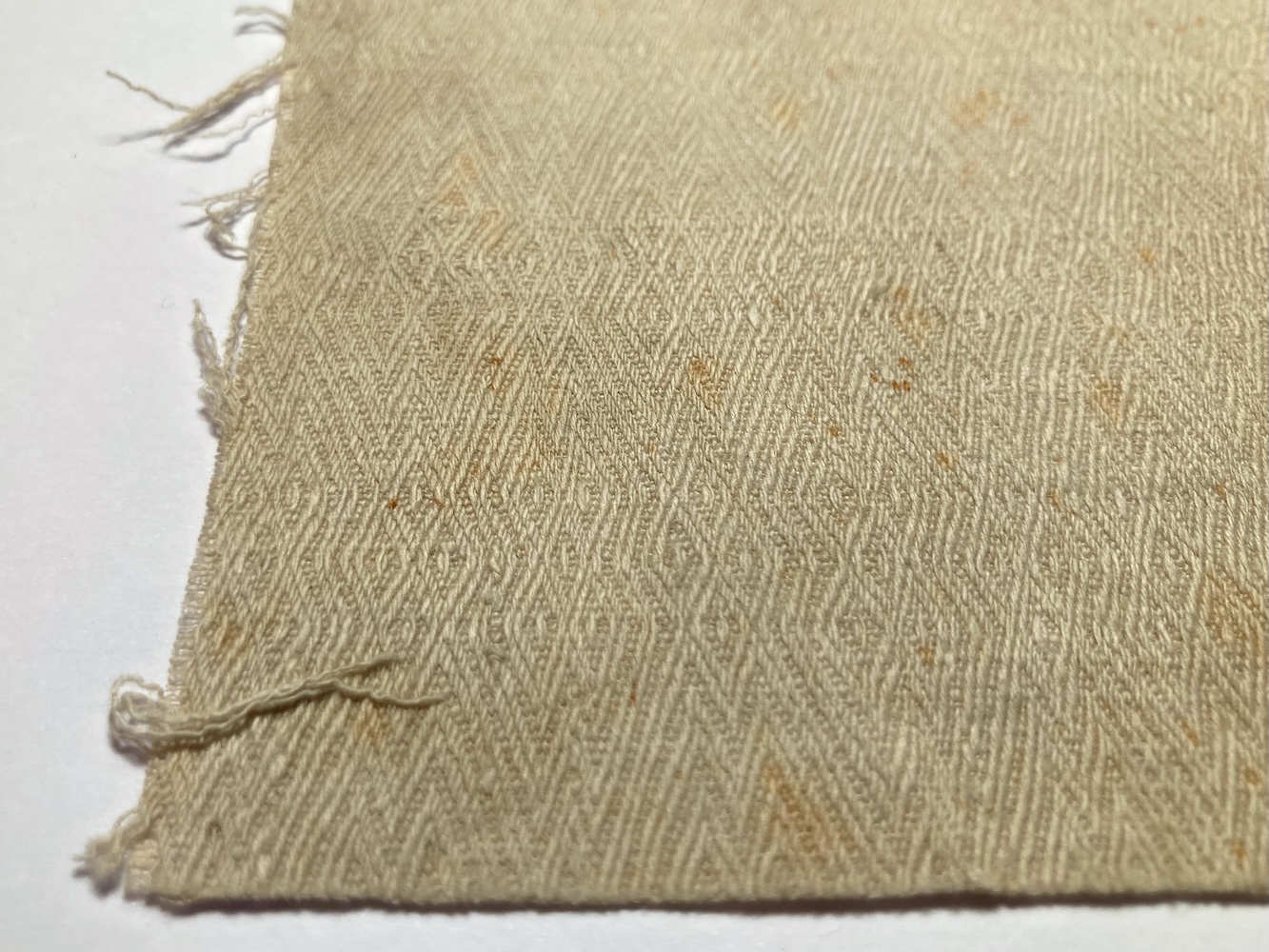
Accession # 1162-1888; System # OO259582
.
.
Description from V & A website: 1200-1399, German? Diaper pattern
Dimensions are 105 x 125mm. The weave pattern is clearer on one side, and is somewhat compressed with weft density greater than warp density.
V & A catalogue record URL: https://collections.vam.ac.uk/item/OO259582/woven-linen
…..
…..
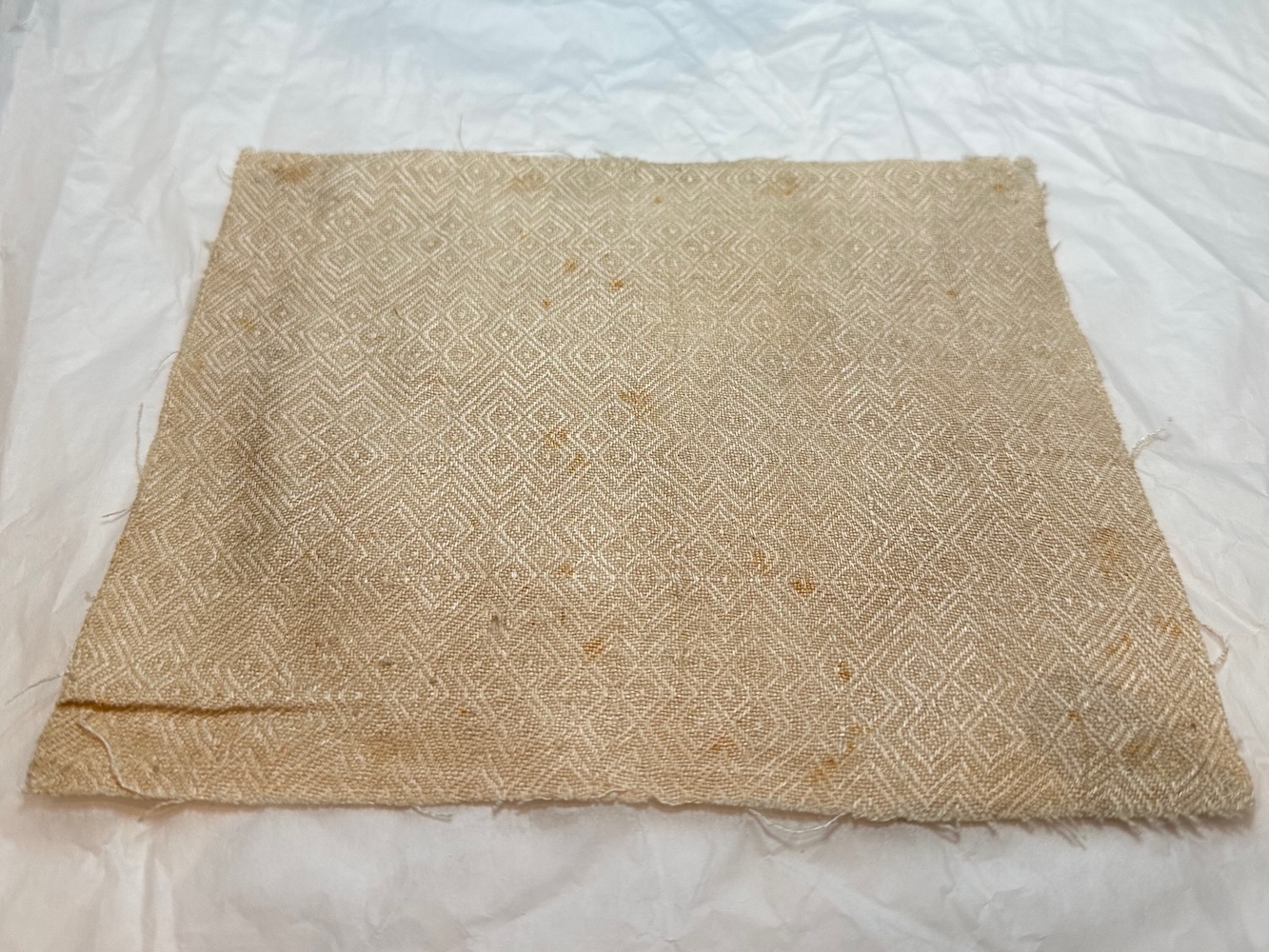
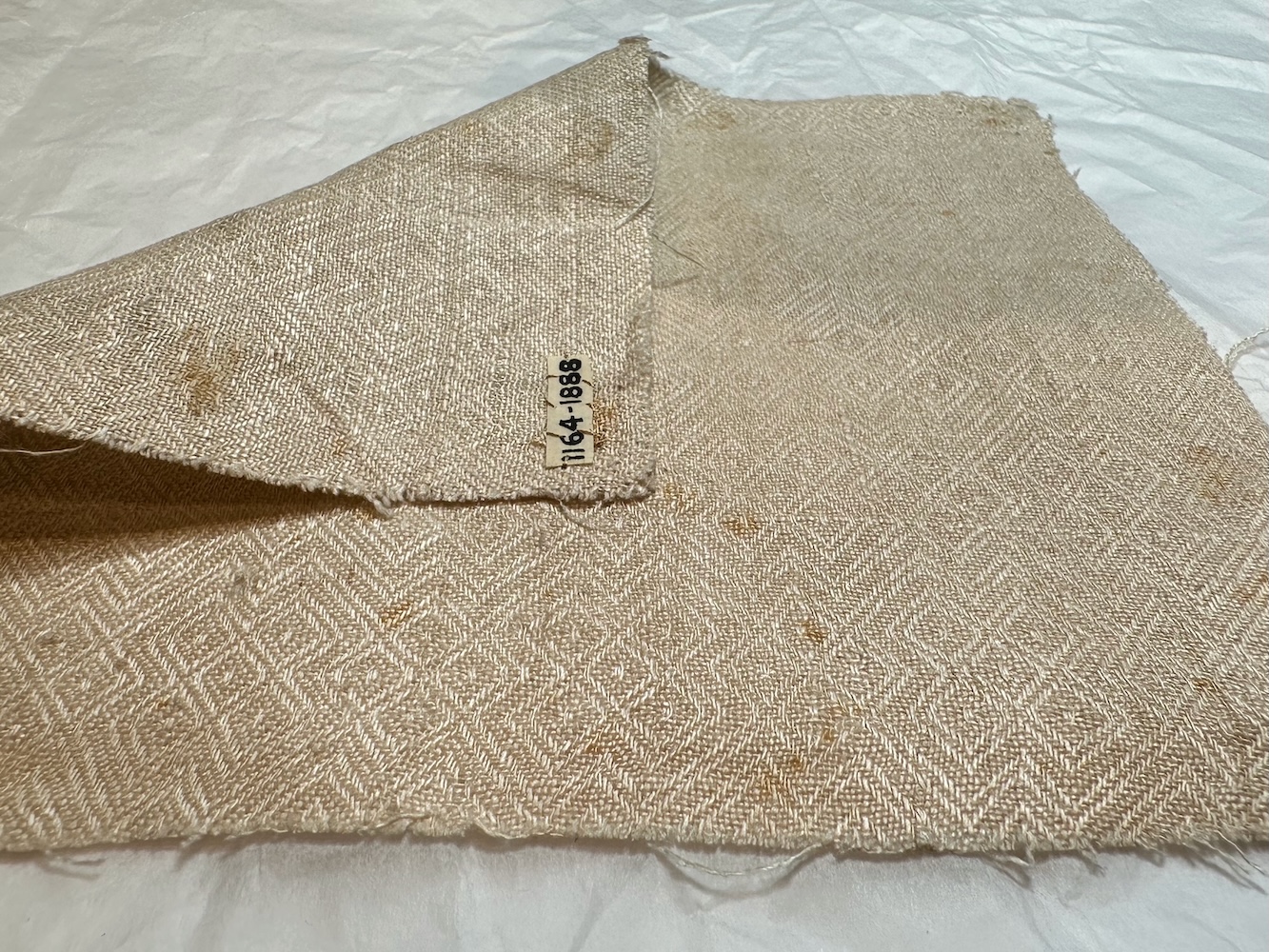
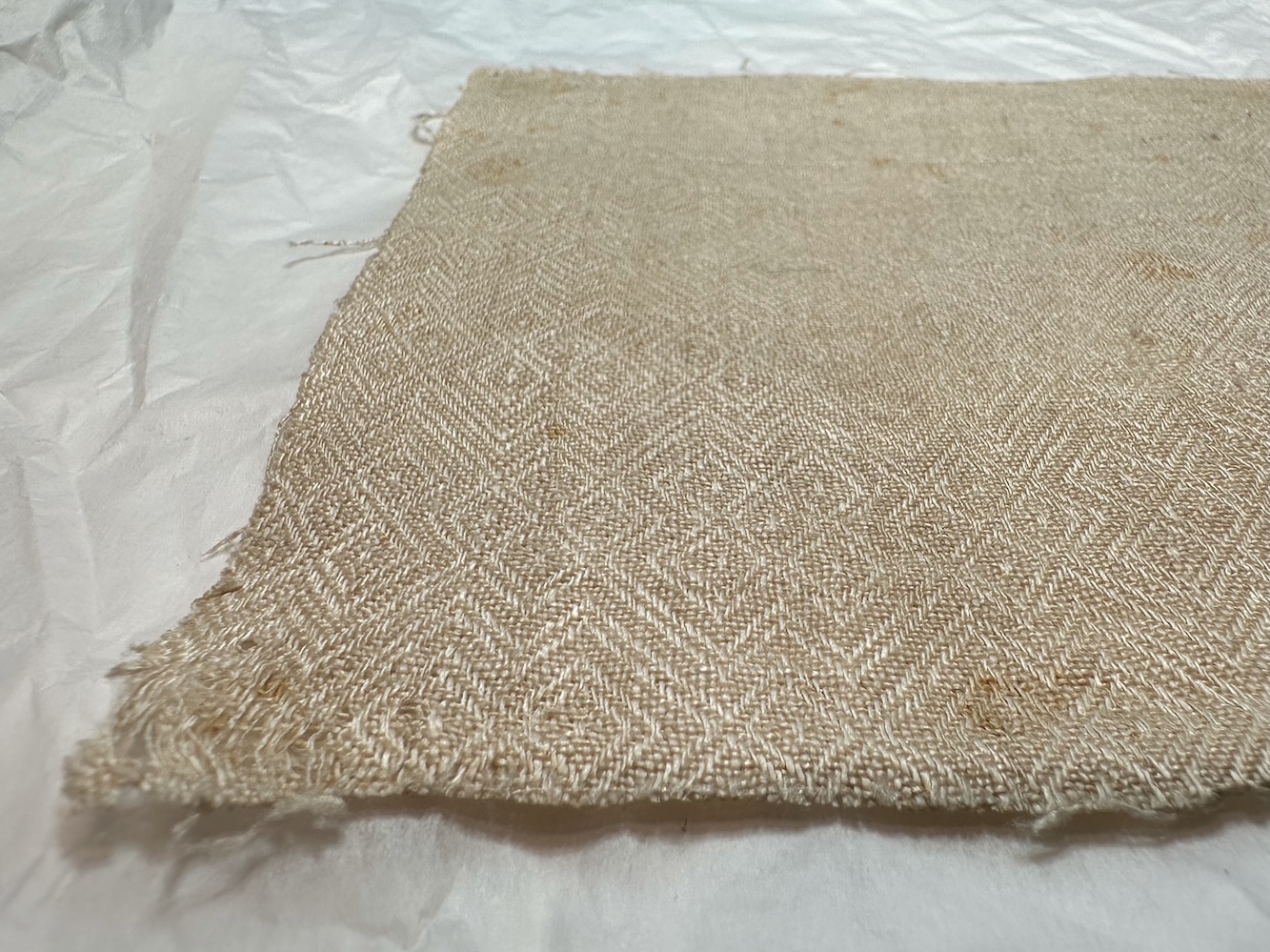
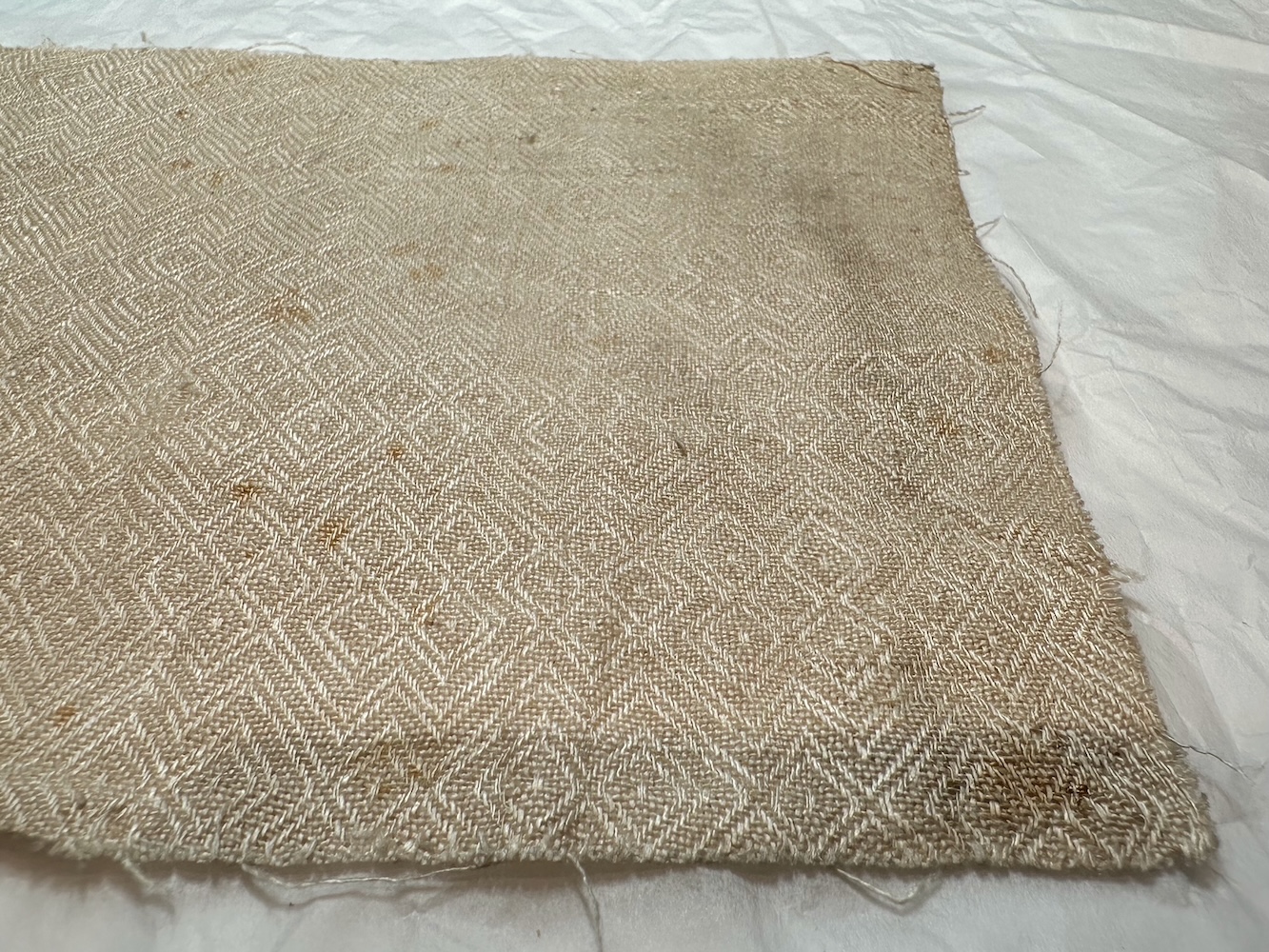
Accession # 1164-1888; System # O259575
.
.
Description from V & A website: 1500s or 1600s, German; Diaper pattern.
The V & A catalogue record mistakenly identifies this piece with a photograph in Patricia Baines (1989) Linen: Hand Spinning and Weaving, Fig. 91, which is actually 1164B (below).
Dimensions are 185 x150 mm
V & A catalogue record URL: https://collections.vam.ac.uk/item/O259575/woven-linen
…..
…..
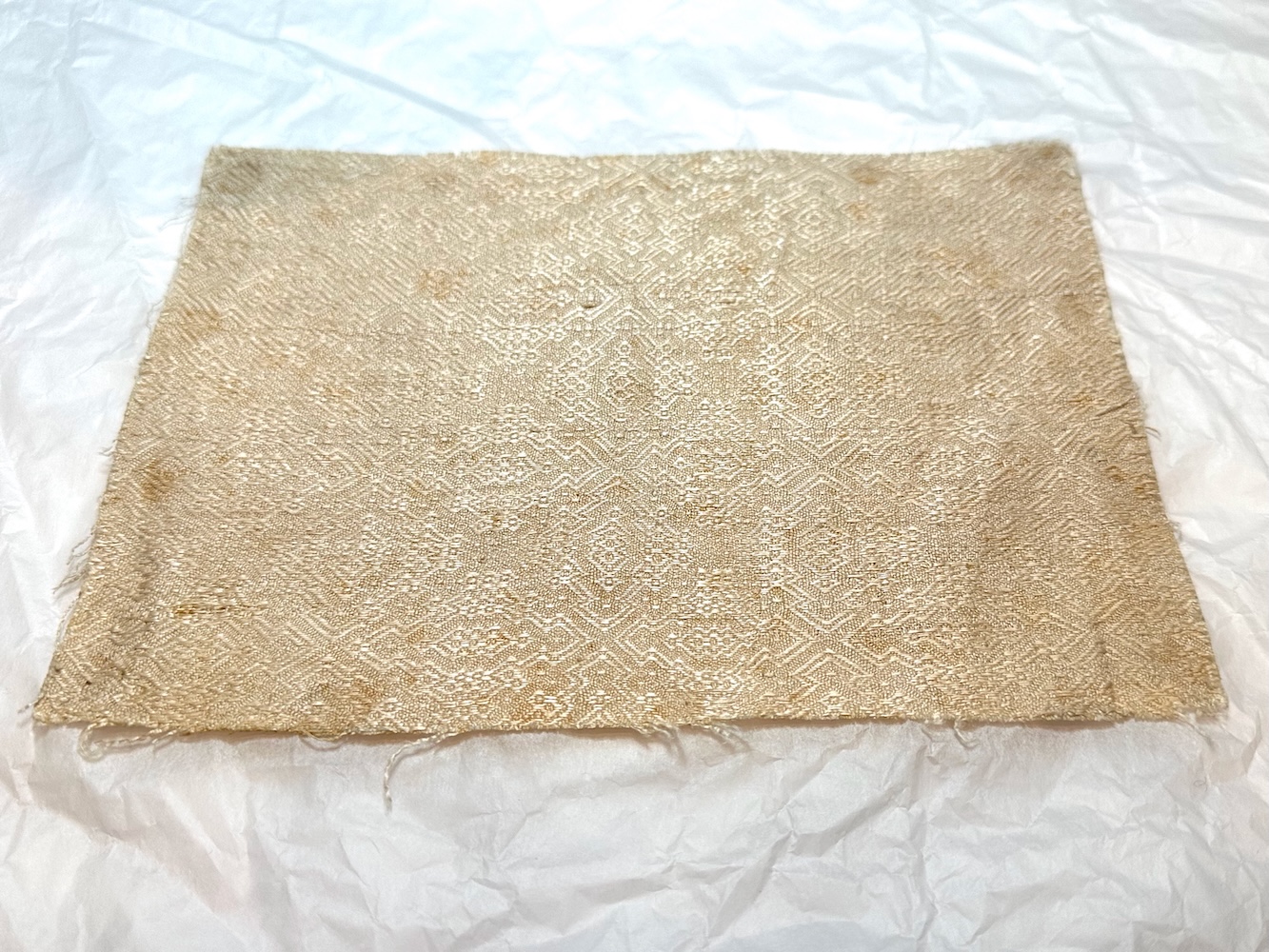
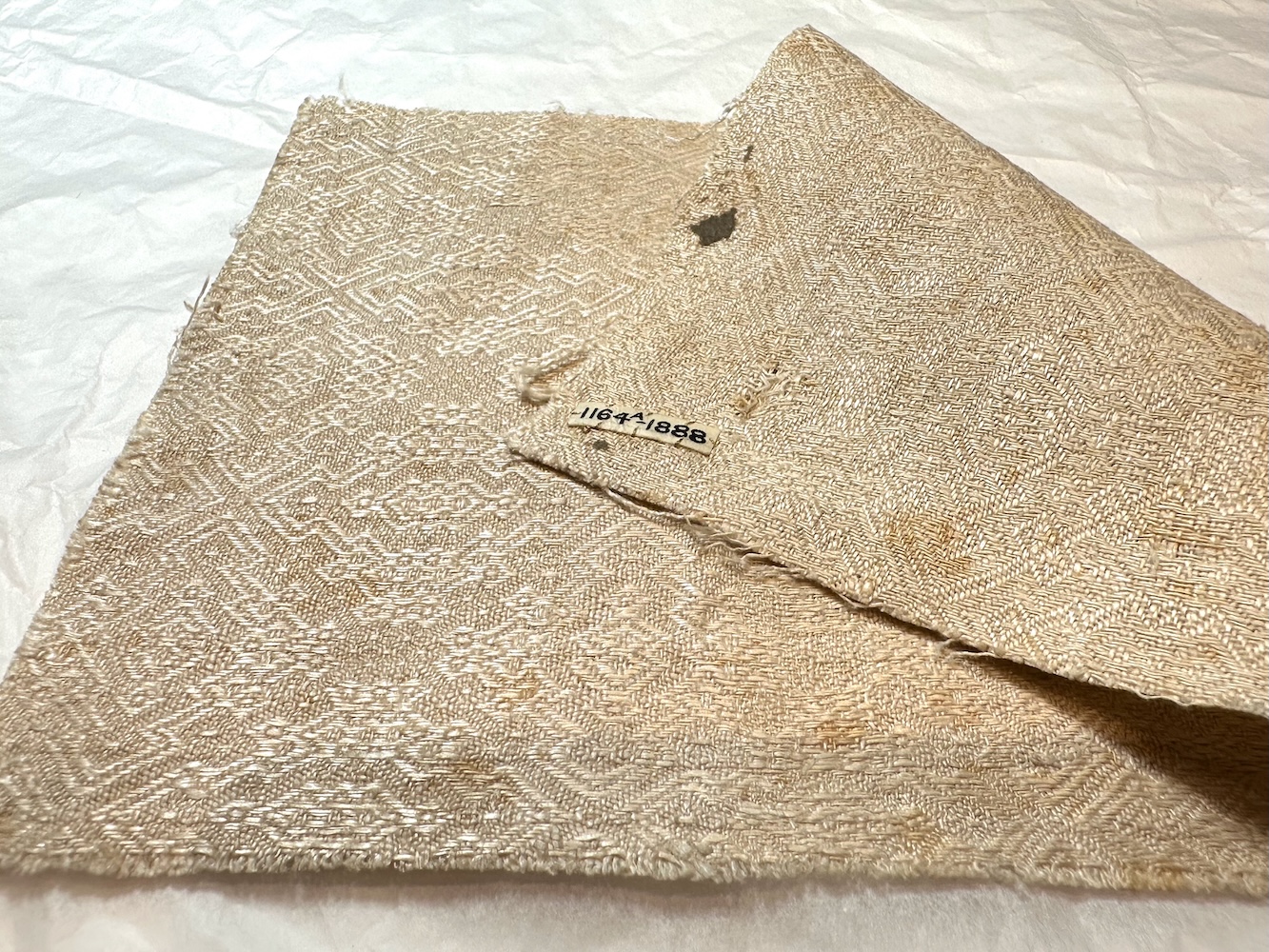
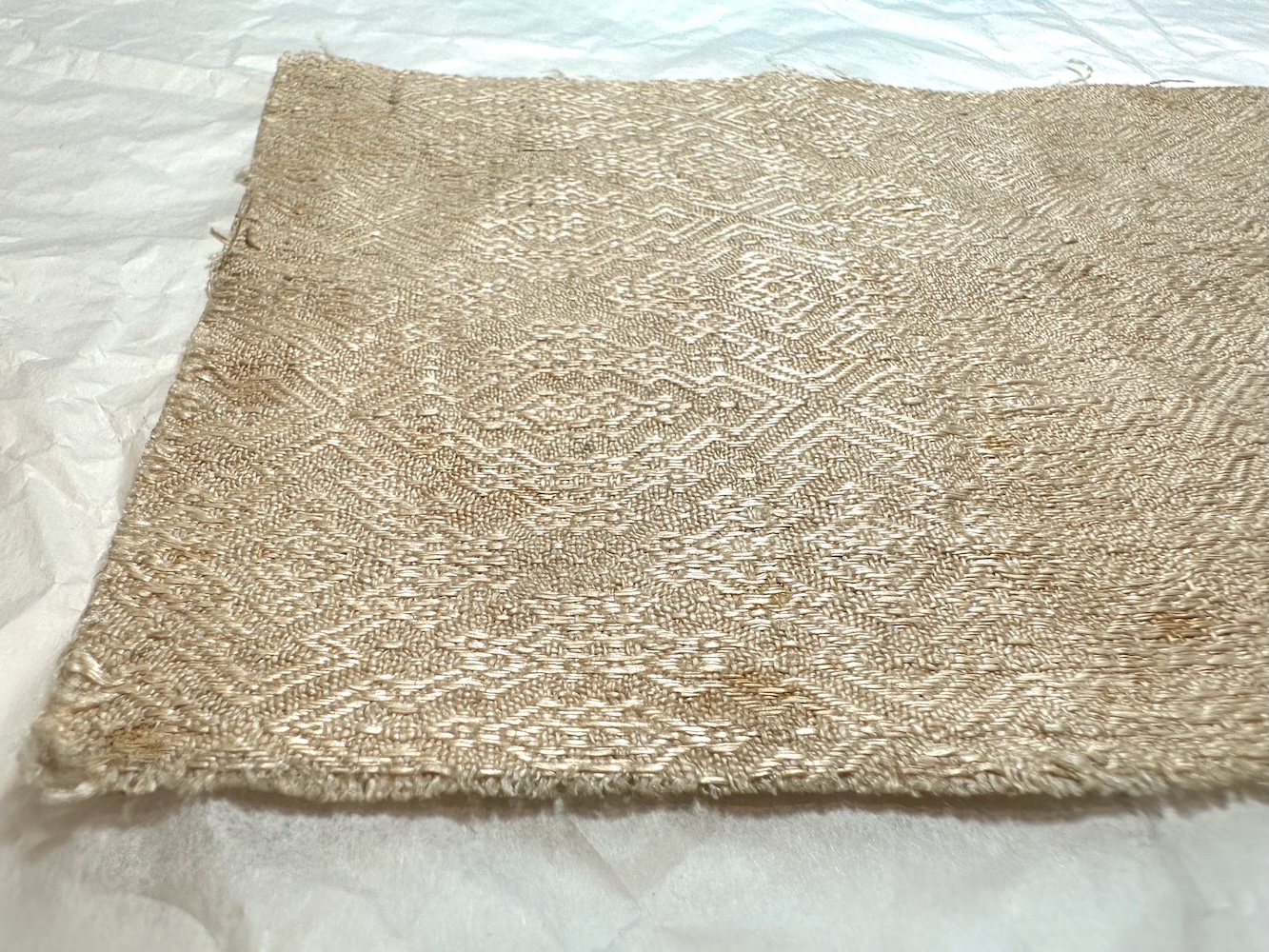
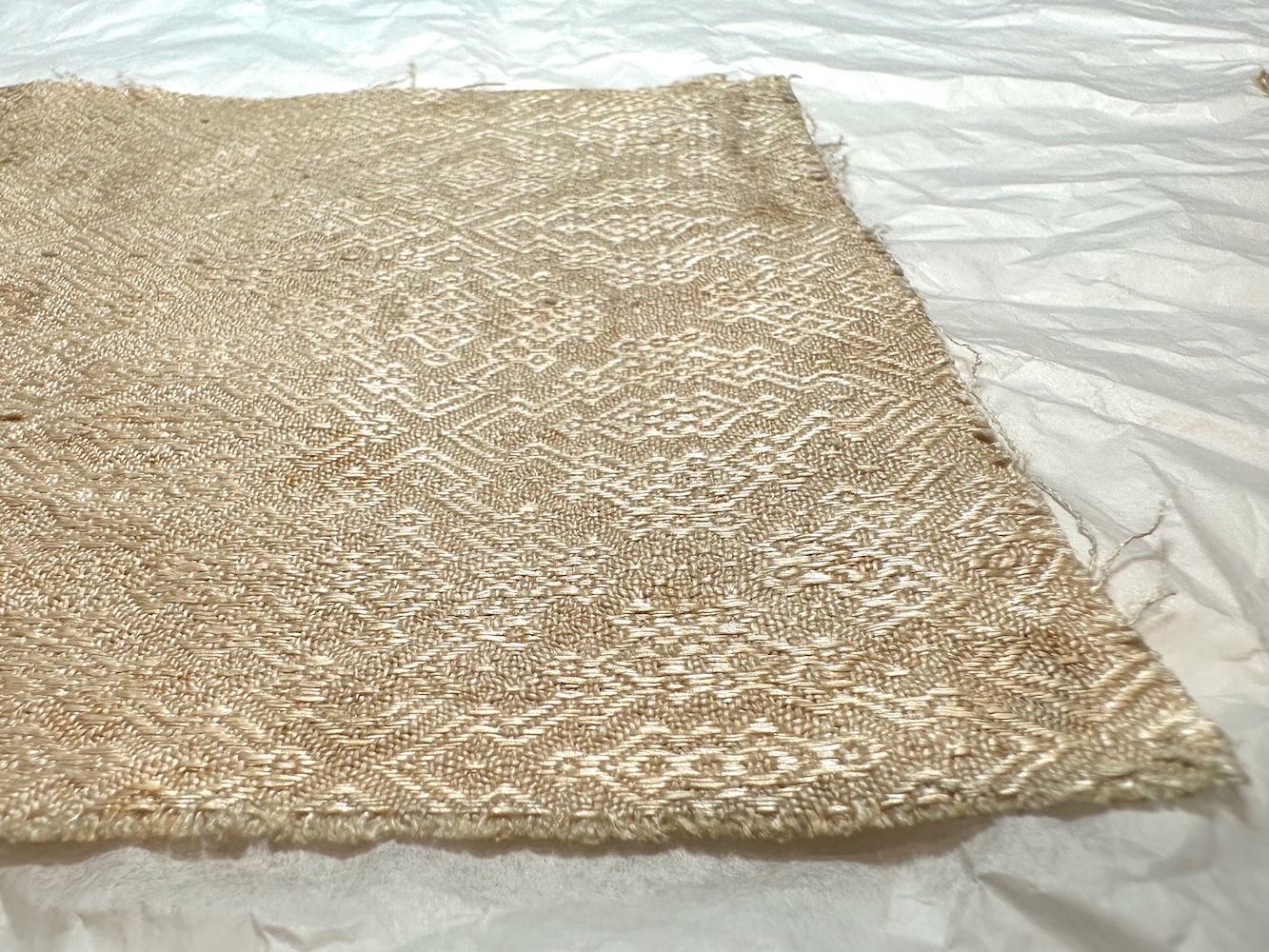
Accession # 1164A-1888; System # O258721
.
.
Description from V & A website: 1400-1699, Flemish or Dutch
Dimensions are 155 x 215mm.
V & A catalogue record URL: https://collections.vam.ac.uk/item/O258721/woven-linen
…..
…..
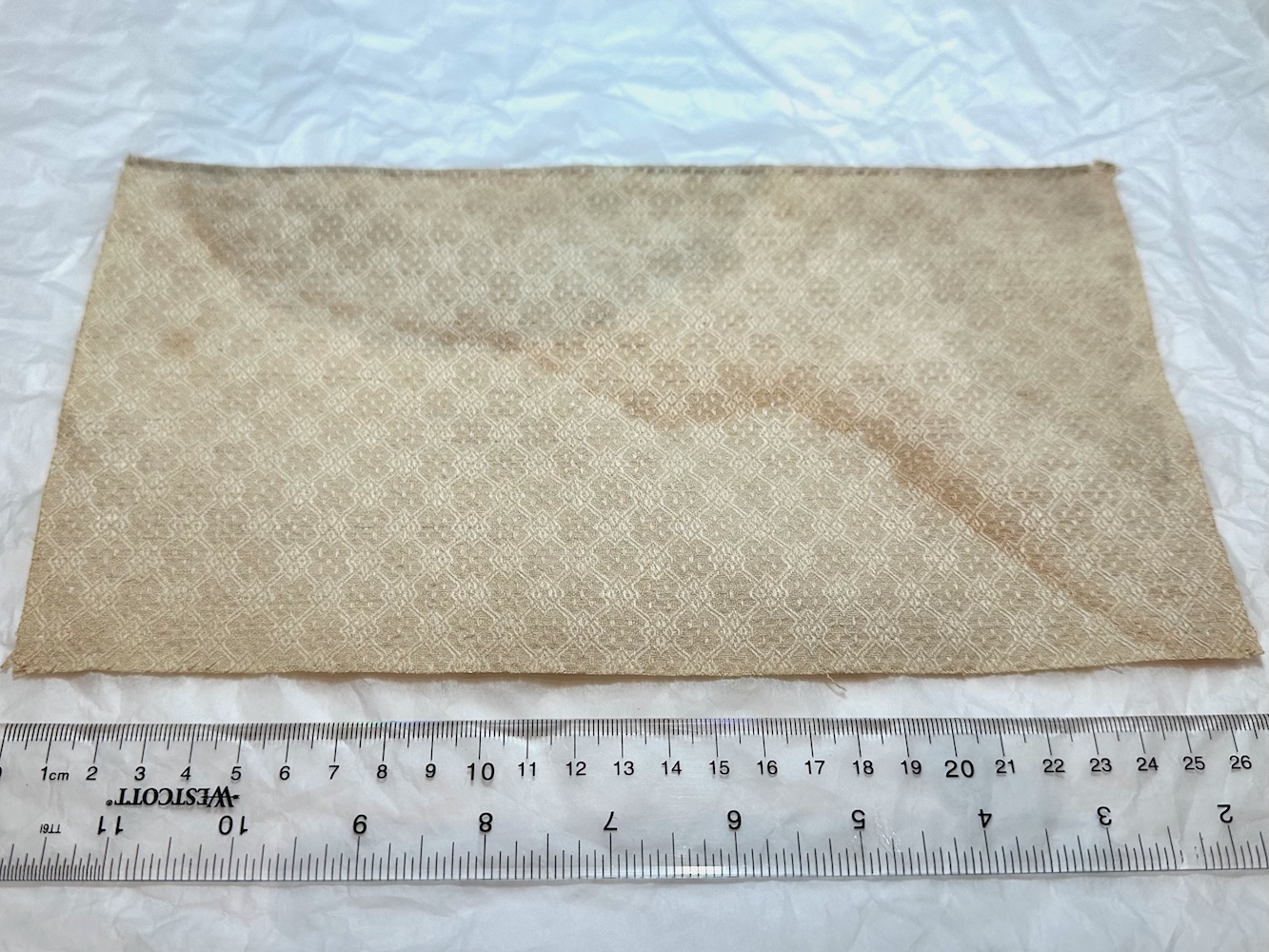
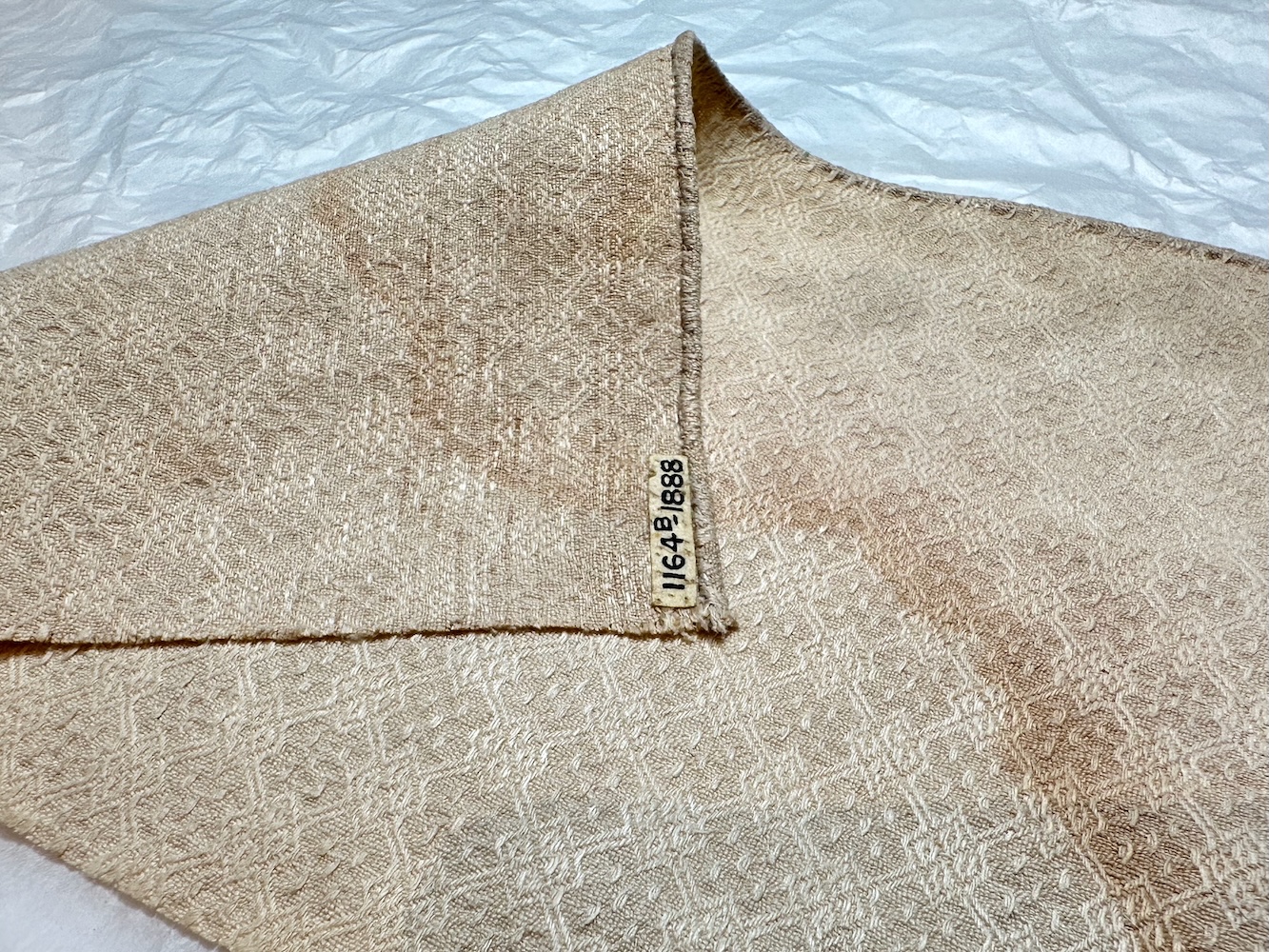
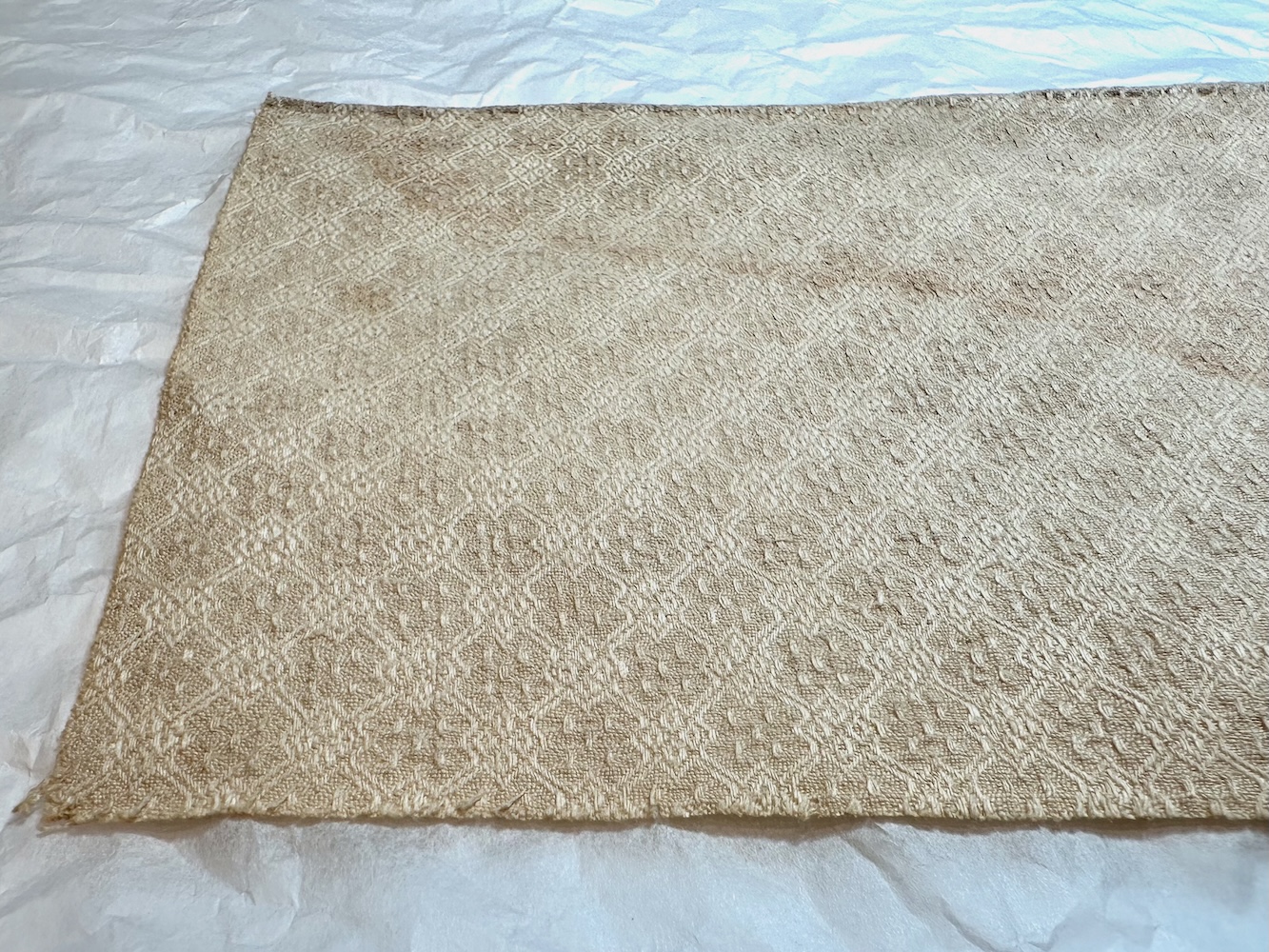
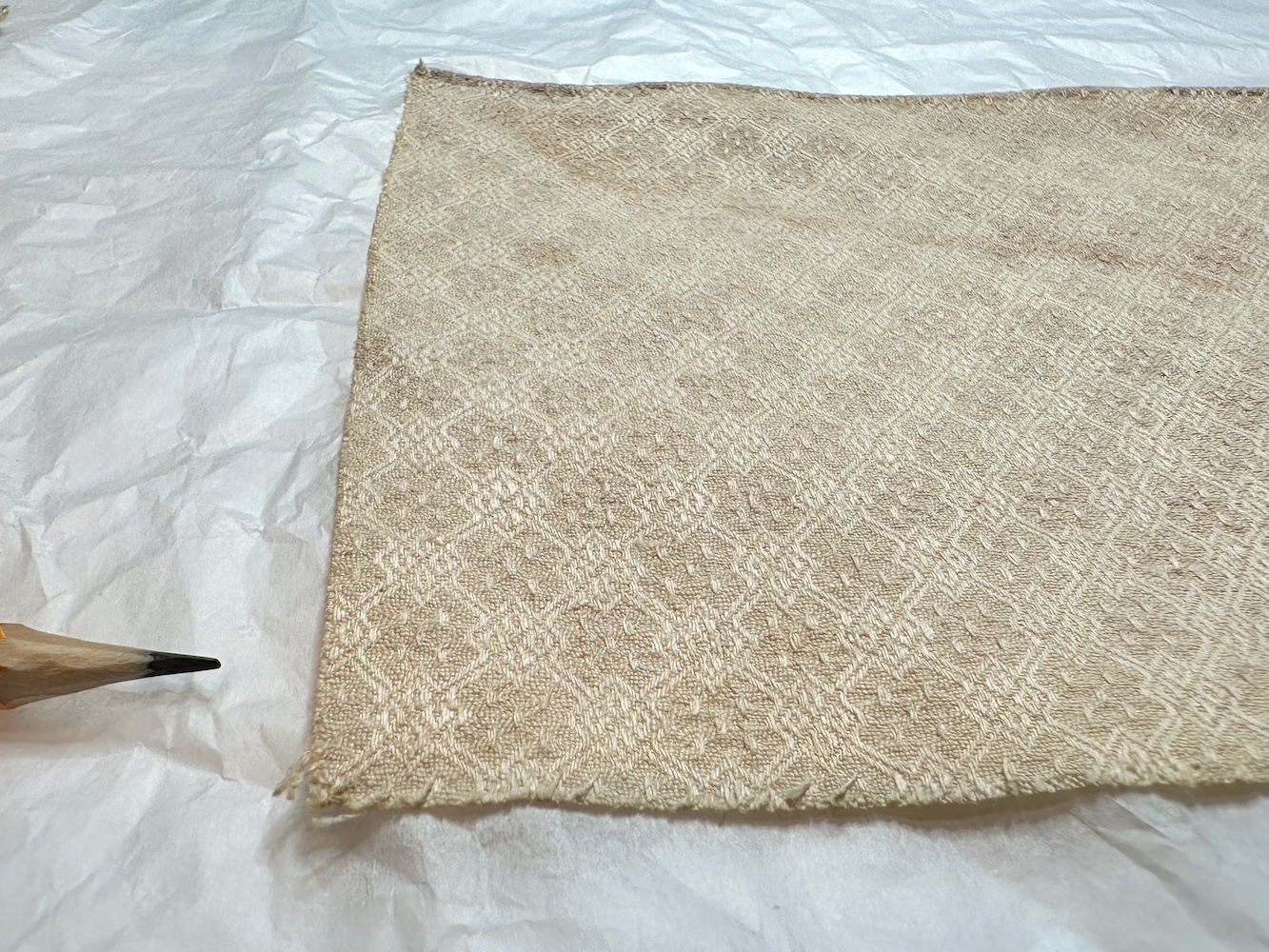
Accession # 1164B-1888; System # O364112
.
.
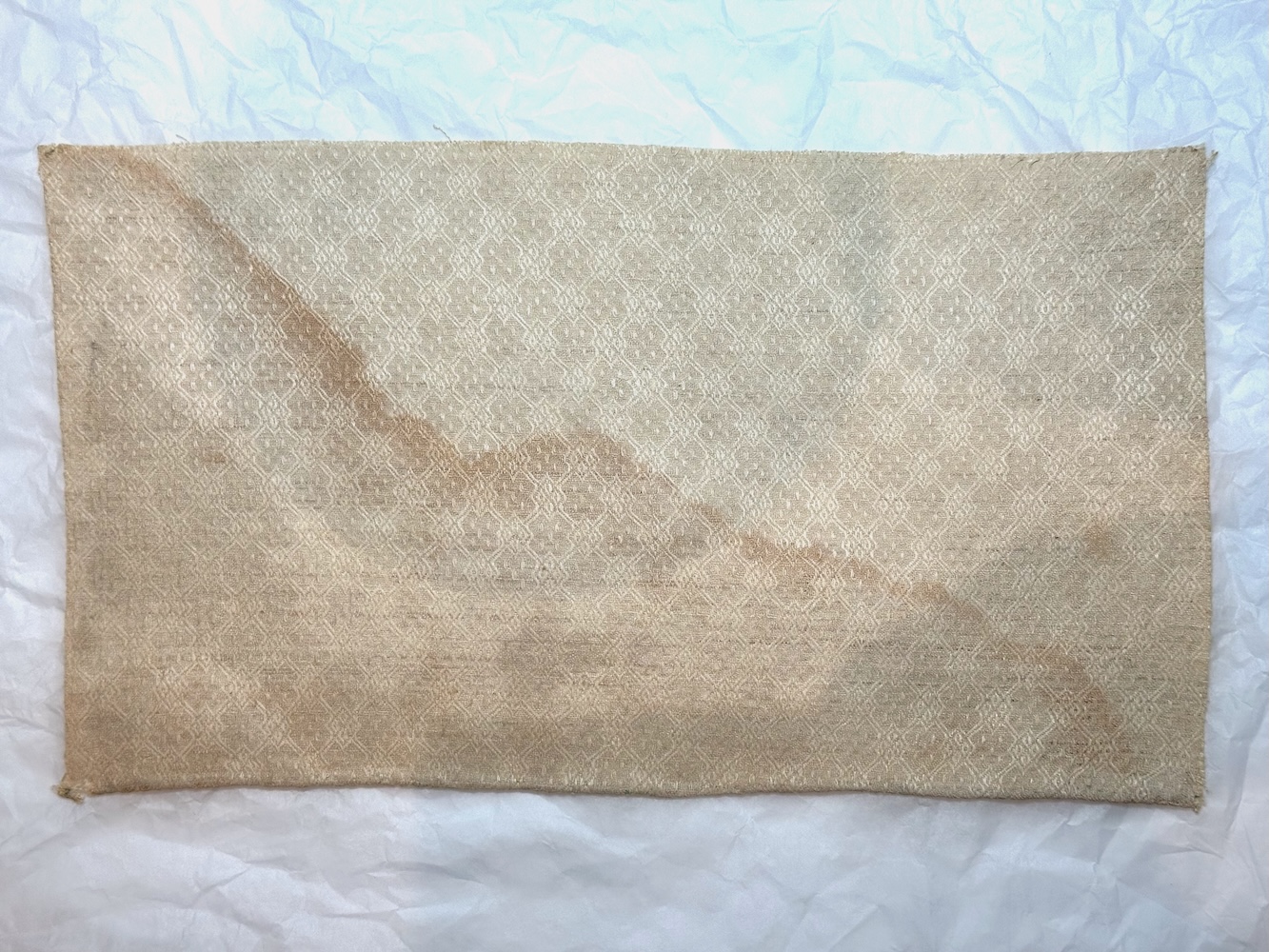
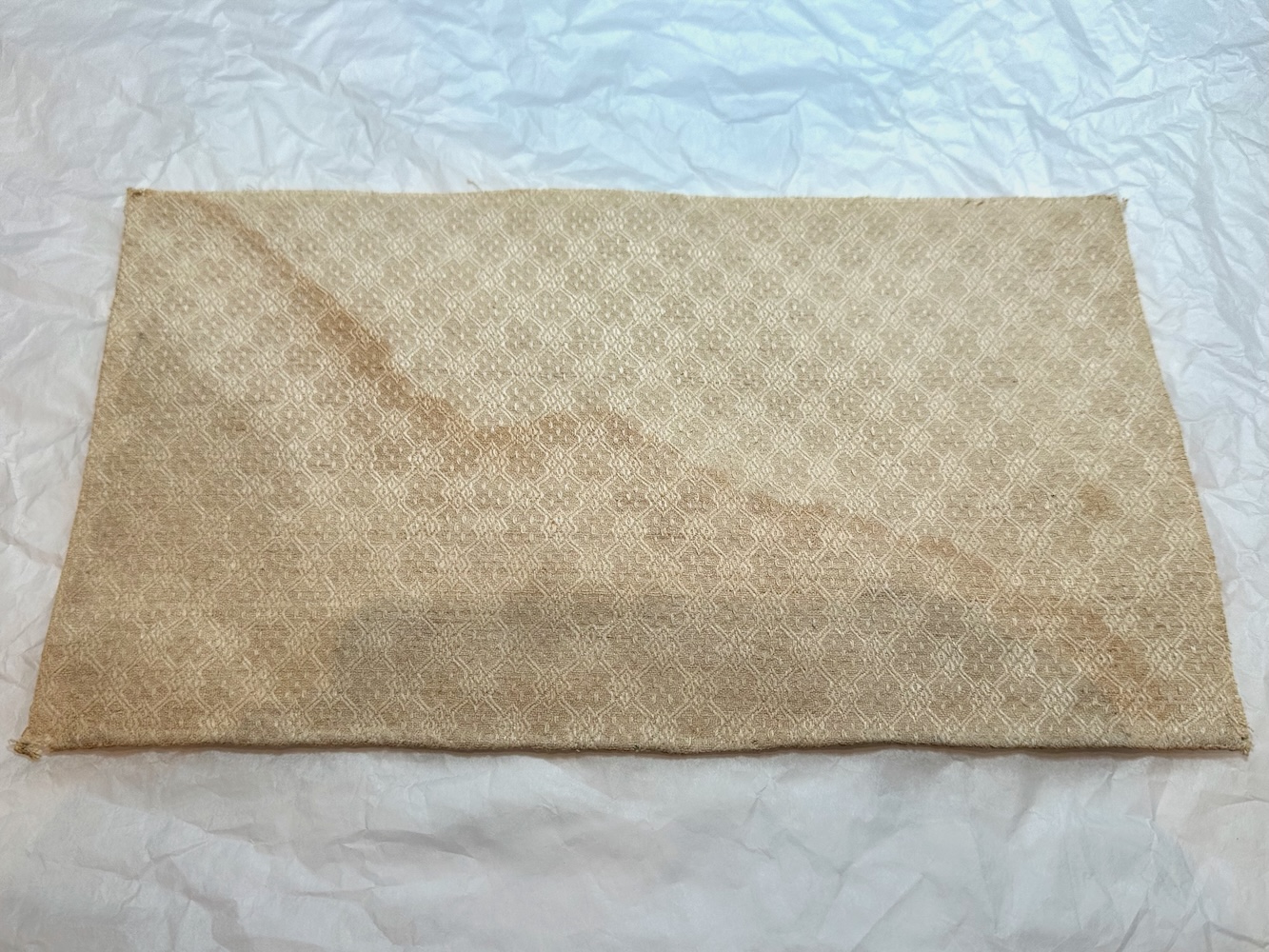
Description from V & A website: damask, 1500s, Northern European
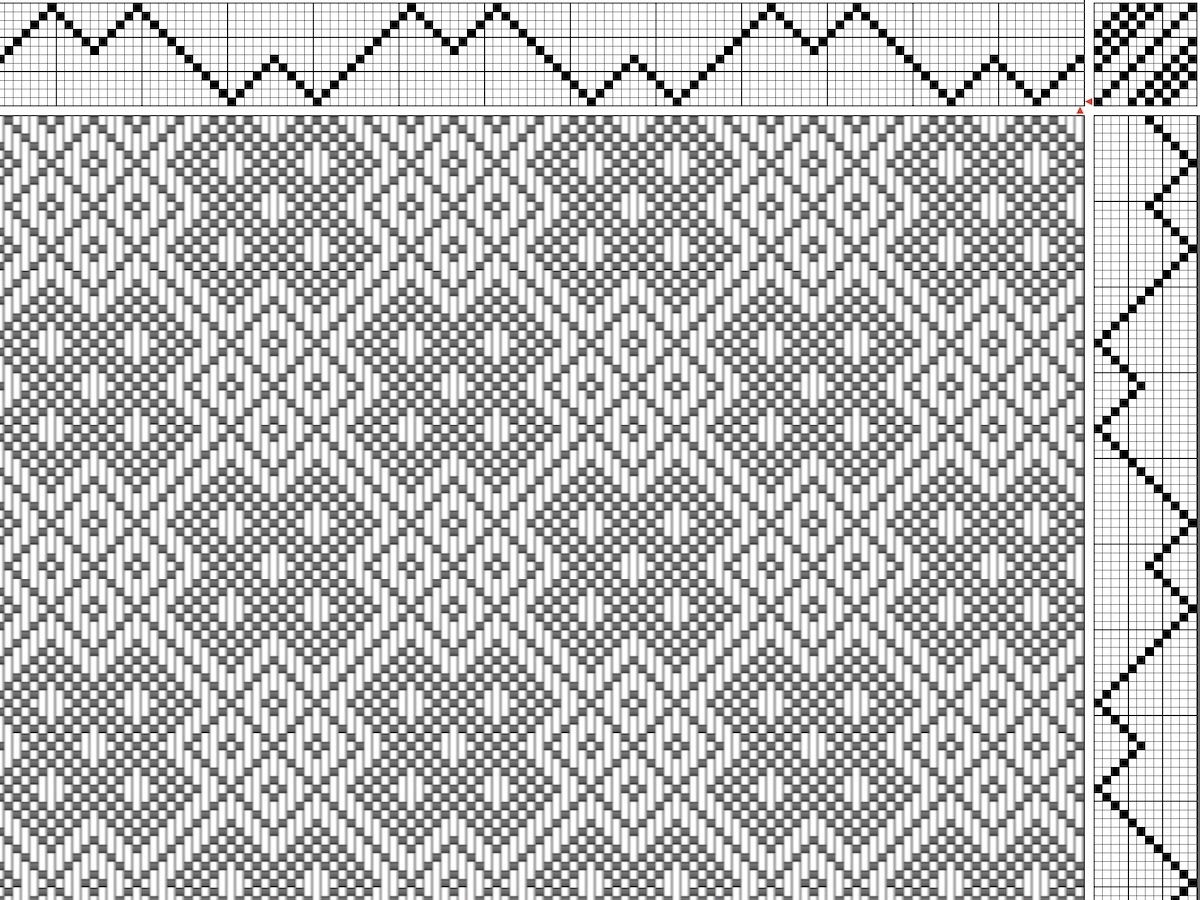
Contrary to the description above, this is not damask. I include a speculative draft on 12 leaves amongst the images above .
Dimensions are 155 x 270 mm. Large stain across the piece.
This is the piece illustrated in Patricia Baines (1989) Linen: Hand Spinning and Weaving, Fig. 91. Her draft on the opposite page is a simplified version on 8 leaves.
V & A catalogue record URL: https://collections.vam.ac.uk/item/O364112/woven-linen
…..
…..
Accession # 1166-1888; System # O259574
.
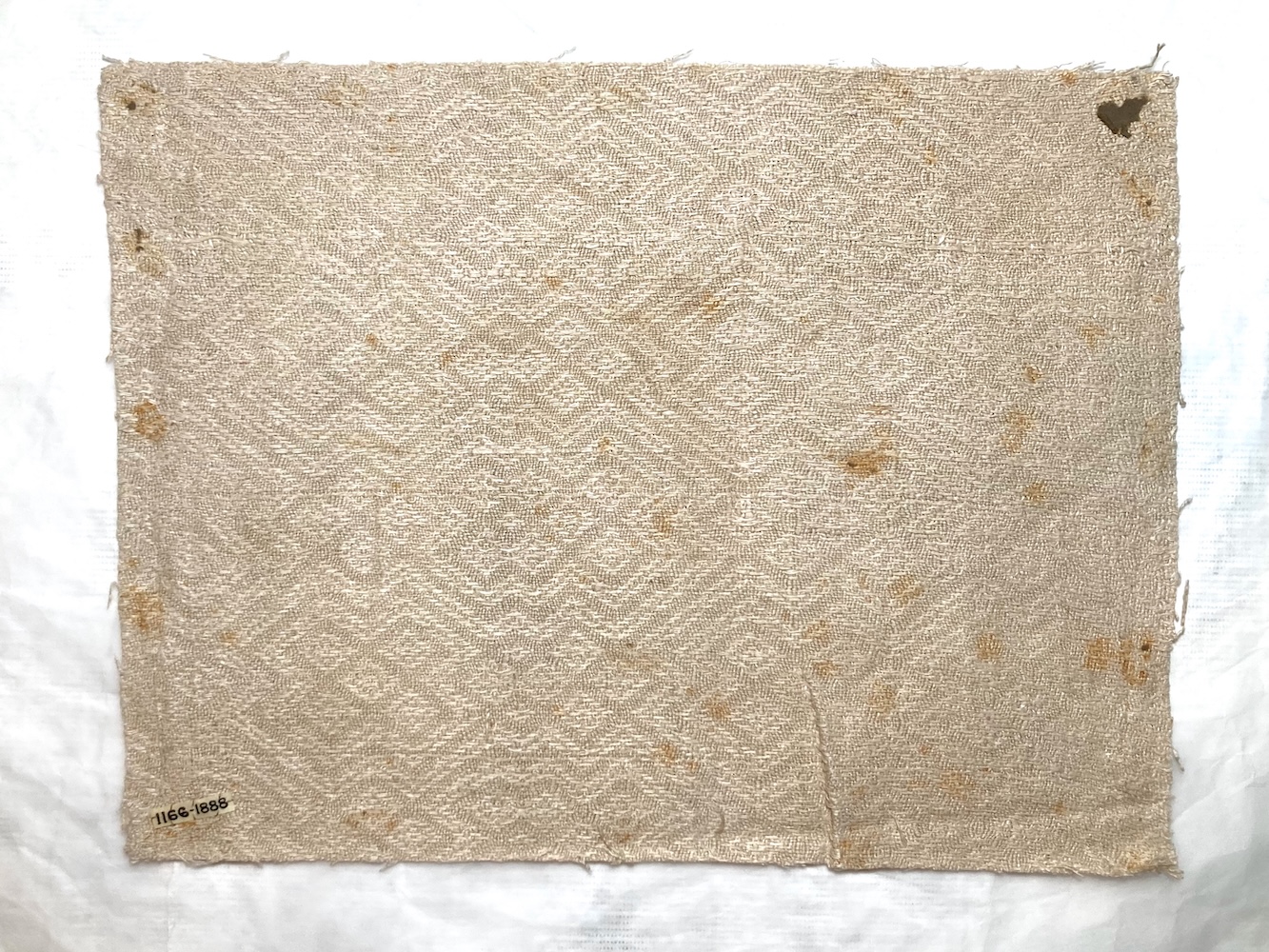
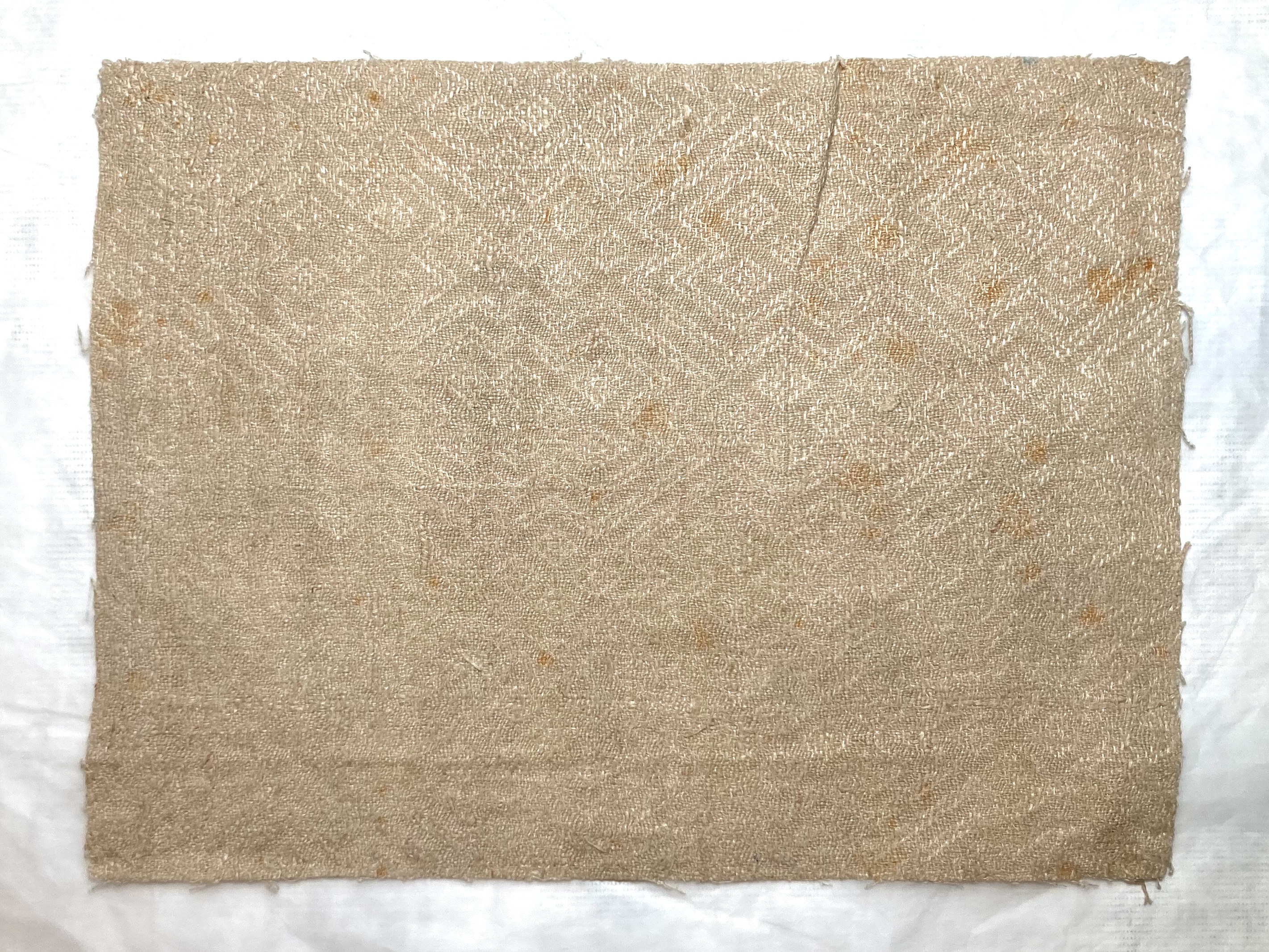
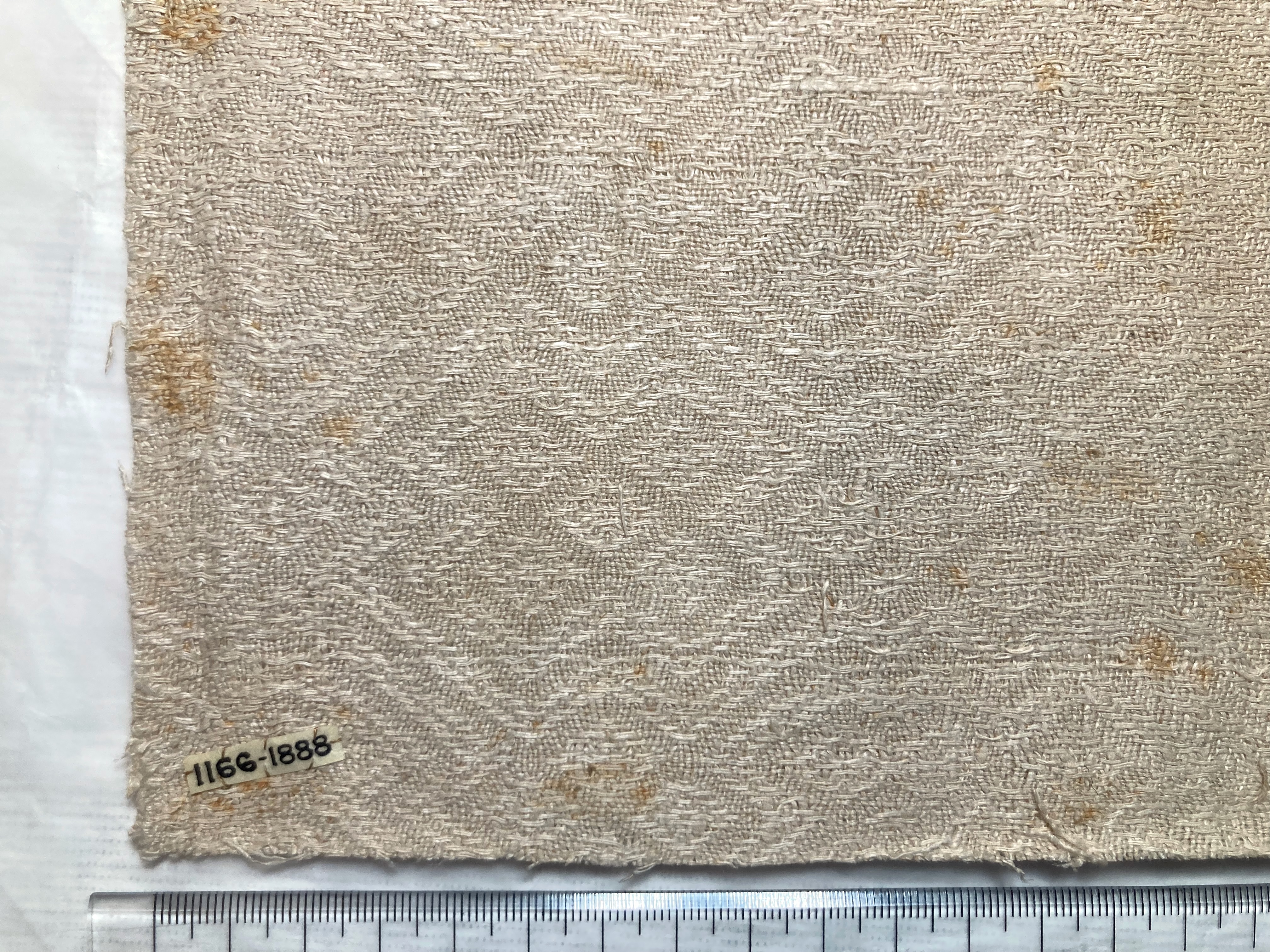
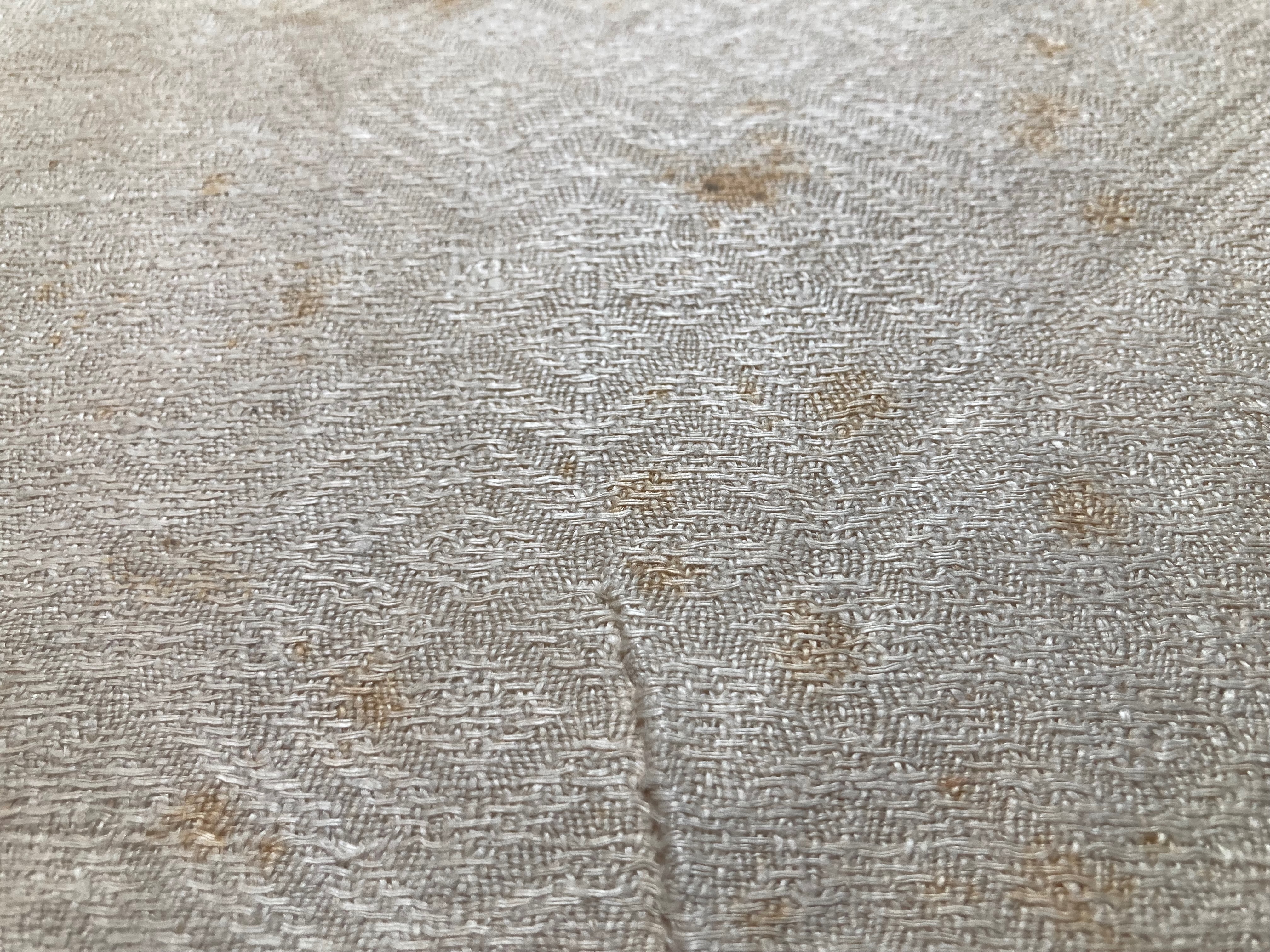
Description from V & A website: 1400s-1500s, Flemish ? Diaper pattern
Dimensions are 205 x 265mm
Similar to 1164, looser and less pronounced. Woven with doubled warp ends (pairs of adjacent warp ends have the same interlacement).
V & A catalogue record URL: https://collections.vam.ac.uk/item/O259574/woven-linen
…..
…..
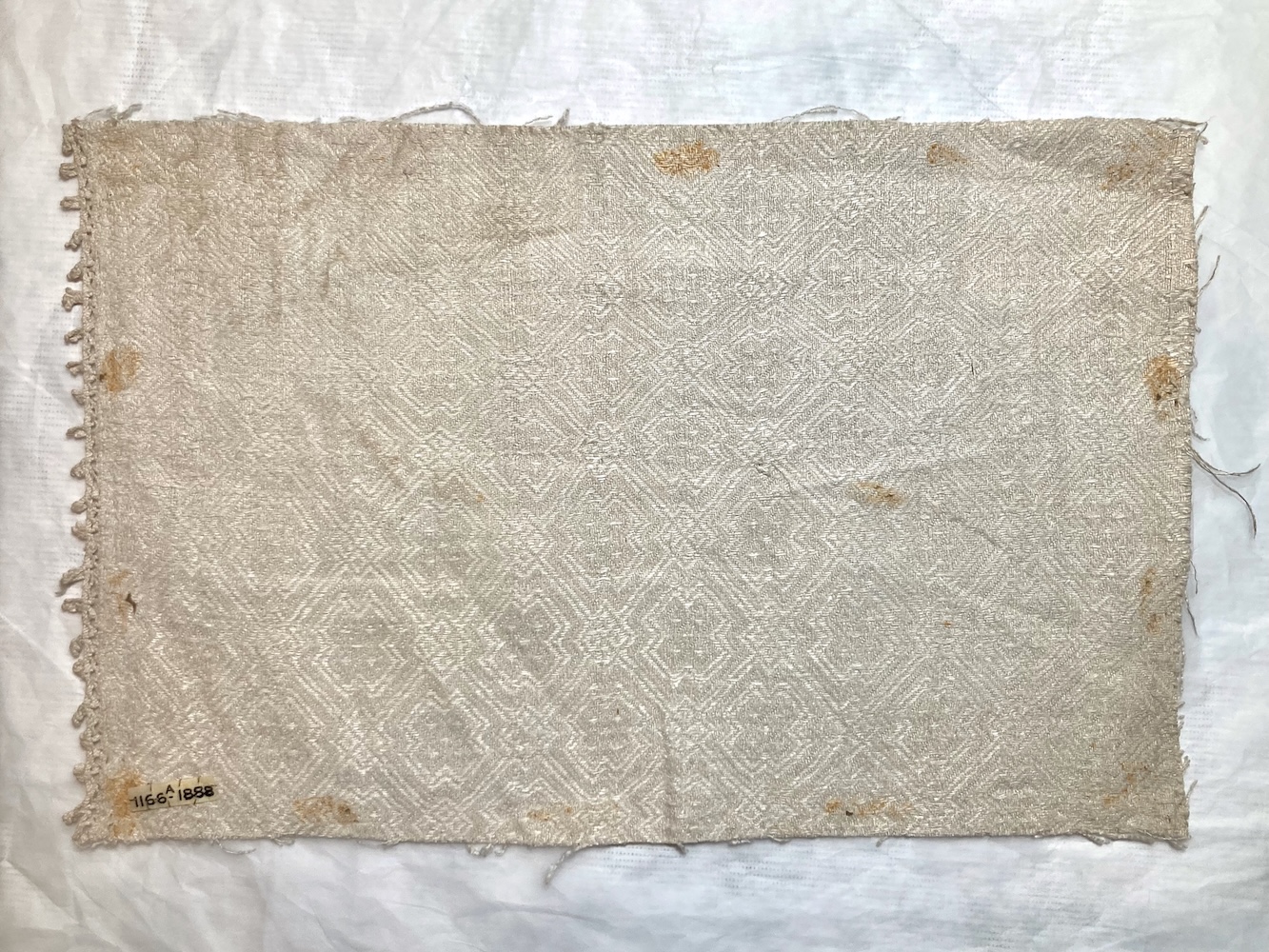
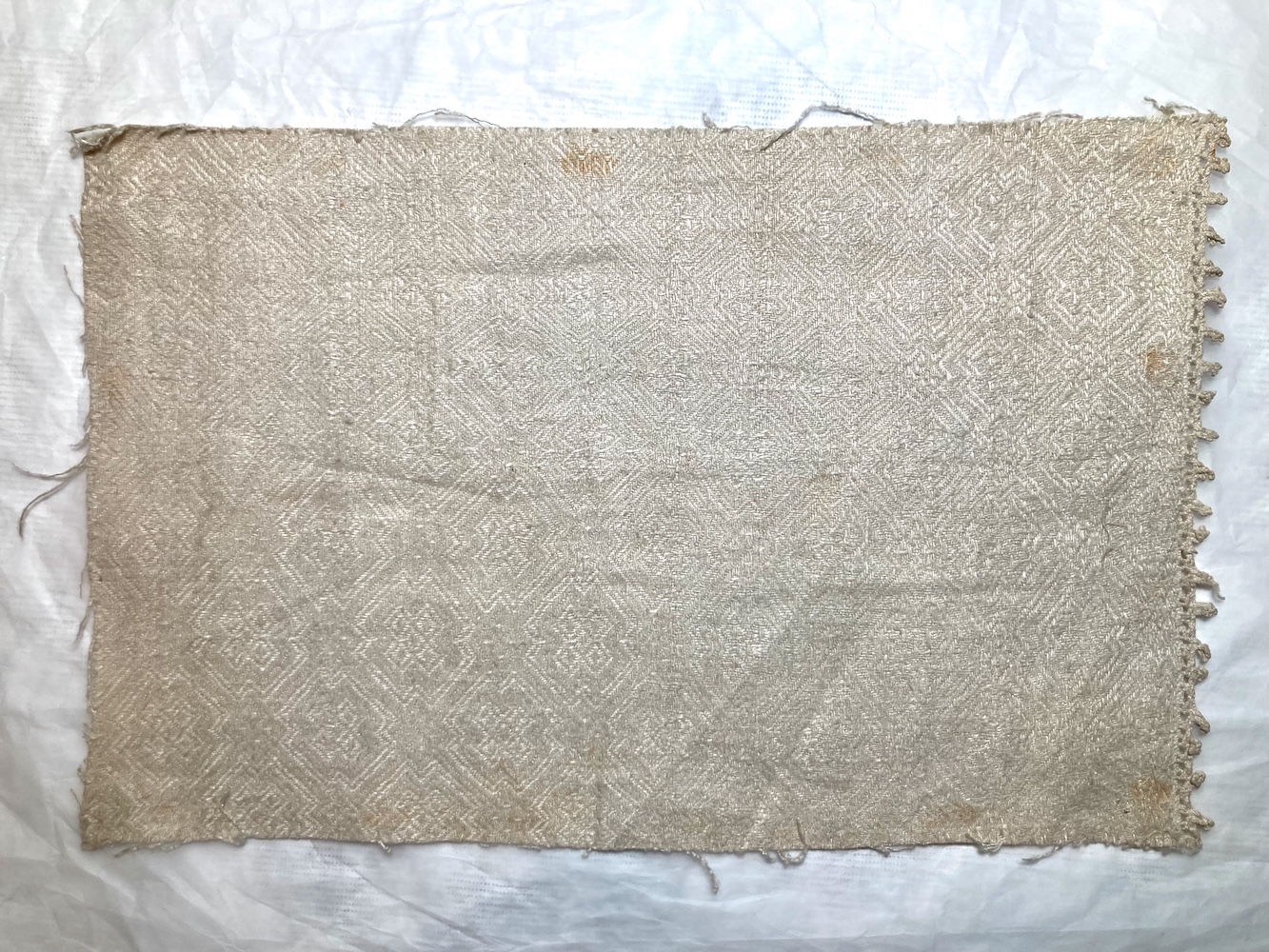
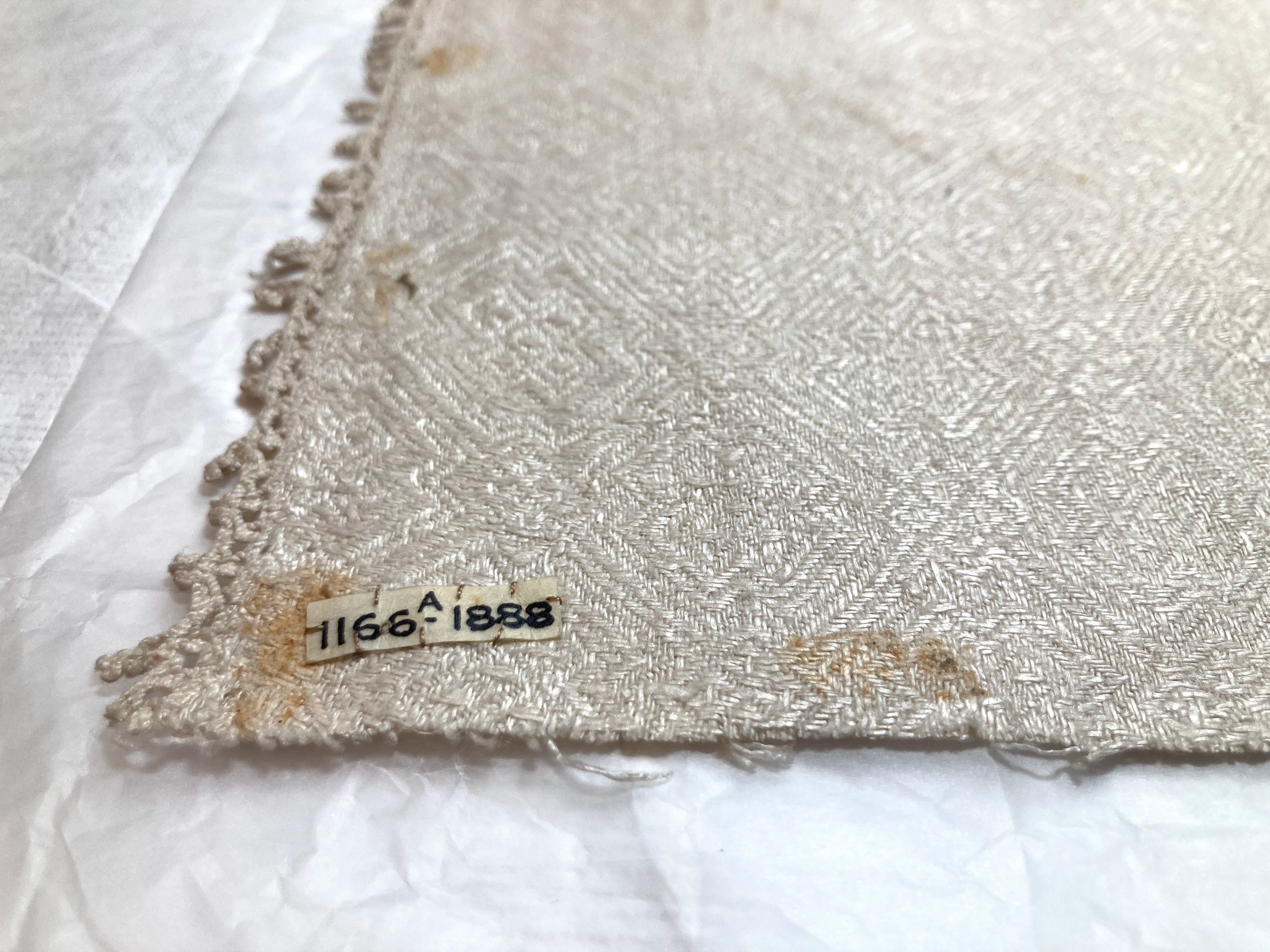
Accession # 1166A-1888; System # O259573
.
.
Description from V & A website: 1400s-1500s, Flemish?; Diaper pattern
Dimensions are 180 x 275mm
V & A catalogue record URL: https://collections.vam.ac.uk/item/O259573/woven-linen
…..
…..
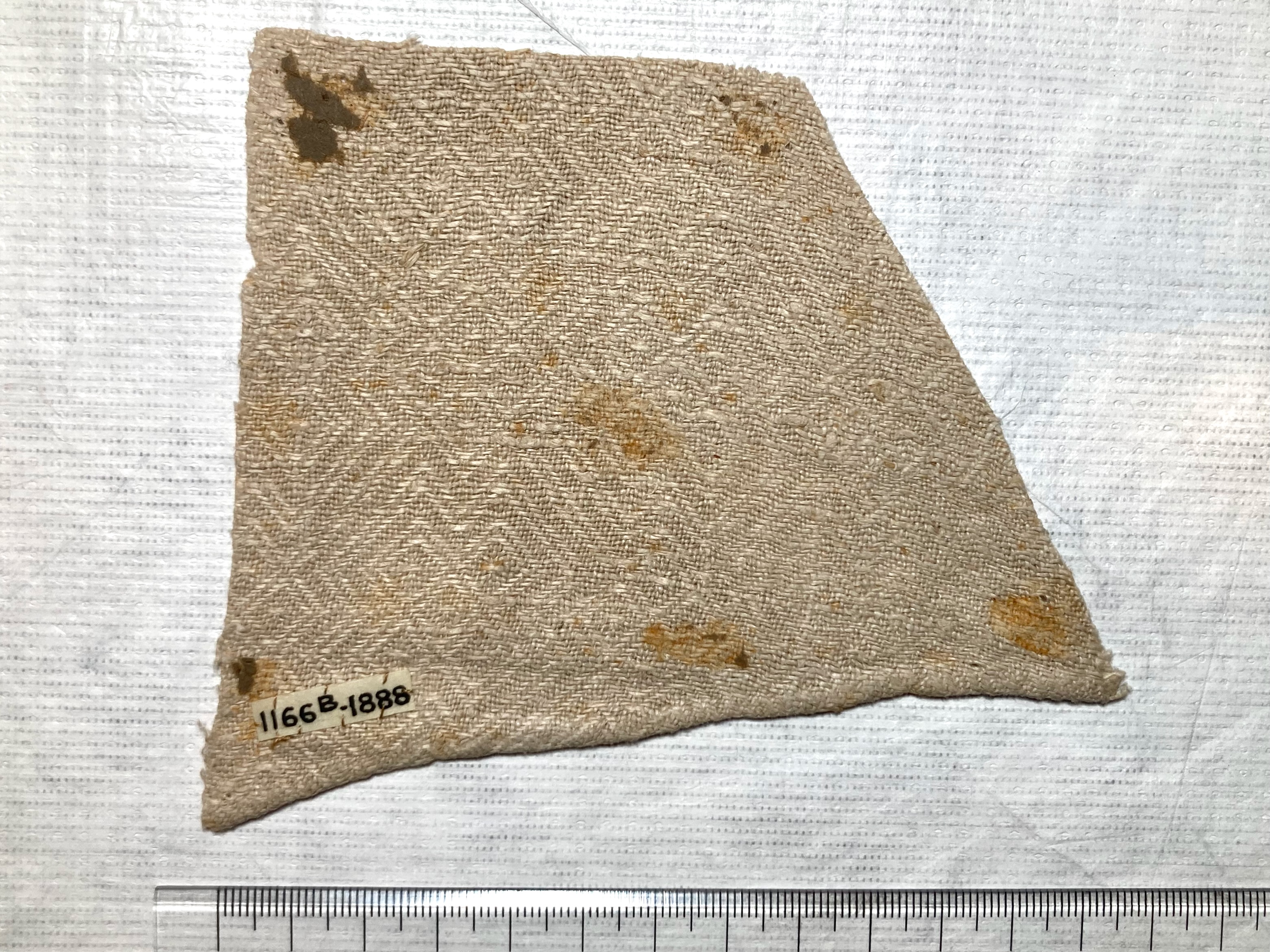
Accession # 1166B-1888; System # O259572
.
.
Description from V & A website: 1300s, German, diaper pattern.
Piece is an irregular shape, approximately 110 x 130mm
V & A catalogue record URL: https://collections.vam.ac.uk/item/O259572/woven-linen
…..
…..
- The following extract from an article by Patricia Hilts provides more context:
The twills in early pattern books were not simple three or four-shaft weaves, but complex designs that typically required twelve, sixteen or more shafts and were intended for professional linen weavers. In German-speaking areas, linen weavers recognized two basic types of complex twill patterns. The first type was based upon a diamond grid that often contained stylized stars or flowers. The tie-ups for such patterns showed one-quarter of the pattern. The draft was usually not shown because it was simply a point threading in which each repeat ran from one up through the number of shafts required and then back down to one. German weavers called these patterns hin und wieder Arbeit, literally, back-and-forth work. The second type of twill pattern used a complex draft containing many breaks and reversals, and German weavers called these patterns gebrochene Arbeit, literally, broken work. One typical example of a draft for this type of twill resembles an M followed by a W. Gebrochene twills required a simple tie-up composed of diagonal lines, and the combination of zig-zag draft and diagonal tie-up could produce complex maze-like designs. Although most of the weaving manuscripts that have been studied were written in German, both types of twill patterns existed throughout Europe. Diamond patterns on textiles similar to the hin und wieder twills in early manuscripts have been found in Europe from the early Middle Ages. Textiles with twill patterns similar to those produced from gebrochene drafts survive from the beginning of the sixteenth century. One of the earliest representations of such a twill pattern comes from the Autun triptych of 1515, and an example from a piece of linen found in Sweden that was used as the lining of a chasuble has been dated to circa 1500.
Patricia Hilts: An Early Scandinavian Manuscript for Multi-Shaft Pattern Weaving from the Deichman Collection in Oslo. Norwegian Textile Letter. Vol IX, Nos. 3 & 4, May & August 2003. ↩︎